How Much Does a Private Jet Really Cost in 2026?
Purchase price is only the entry ticket. We break down acquisition, fixed and variable costs, and depreciation by aircraft category so you can see the true annual bill.
By JetAtlas · Published 2026-05-12 · 8 min read · How we check facts
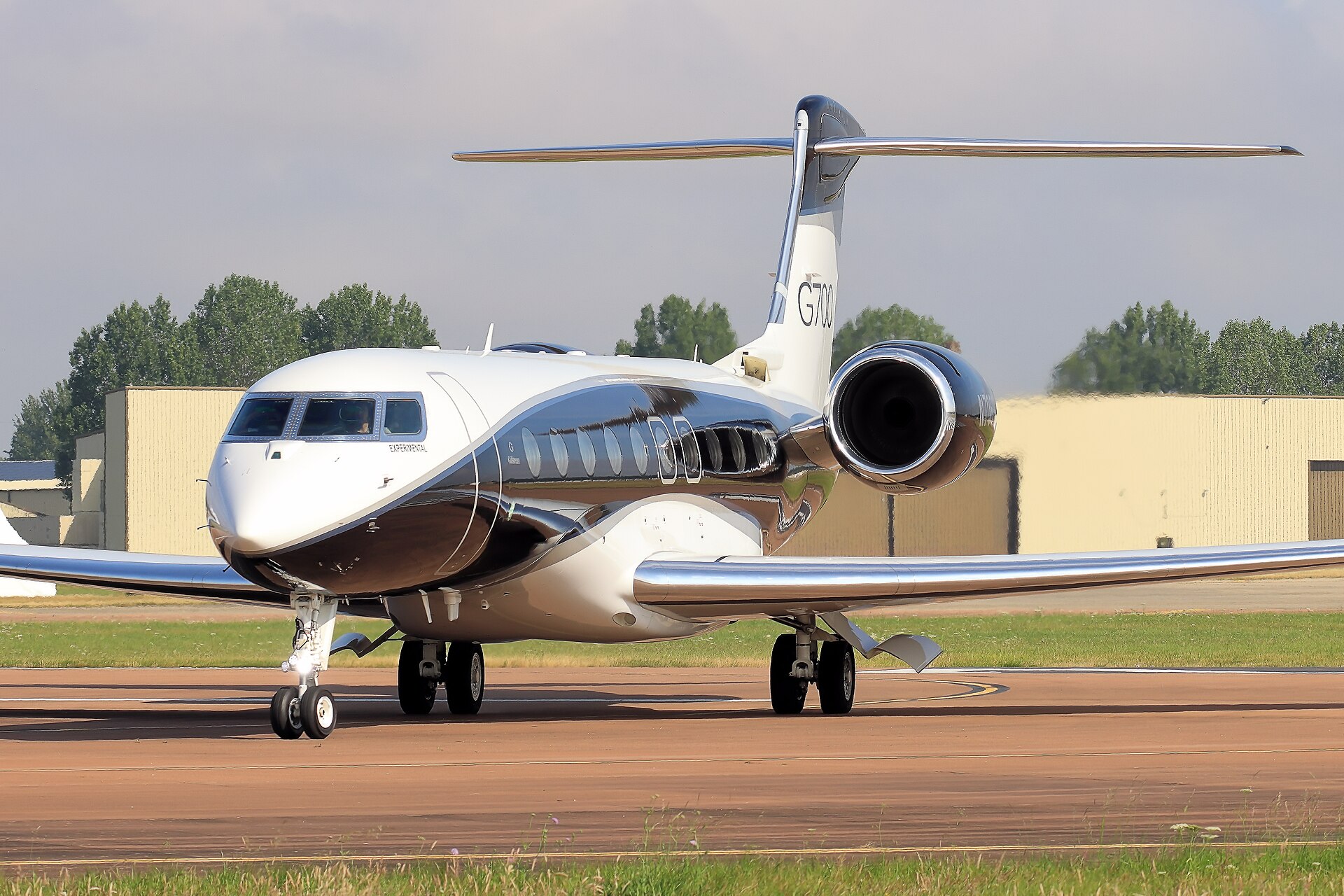
The sticker price on a business jet is the number everyone quotes and the number that matters least. A new Gulfstream G700 lists in the high seventies of millions of dollars; a well-kept fifteen-year-old Citation CJ2+ can be had for less than the price of a Manhattan apartment. Yet both owners will discover the same truth within a year: the aircraft is a cost engine, and the purchase price simply sets the engine size.
This guide walks through the four layers of private jet cost in 2026: acquisition, fixed annual costs, variable (per-hour) costs, and depreciation. The figures are representative ranges drawn from operator budgets, broker data and manufacturer programme pricing. Your own numbers will differ, but the structure will not.
Layer one: acquisition
New aircraft pricing in 2026 reflects a seller's market that has persisted since 2021. Manufacturers delivered 854 business jets in 2025, an 11.8 percent increase on 2024 according to GAMA, yet backlogs at Gulfstream, Bombardier, Dassault, Textron Aviation and Embraer remain at roughly two to three years of production. Discounts are thin, and delivery positions themselves trade at a premium.
| Category | Representative models | Typical new price (USD) | Typical 8-10 year old pre-owned (USD) |
|---|---|---|---|
| Very light | HondaJet Elite II, Citation M2 Gen2, Vision Jet | 3.5-7 million | 2-4 million |
| Light | Phenom 300E, Citation CJ4 Gen2, PC-24 | 10-13 million | 5-8 million |
| Midsize | Citation XLS Gen2, Praetor 500, Citation Latitude | 14-19 million | 7-11 million |
| Super-midsize | Challenger 3500, Praetor 600, Citation Longitude, G280 | 21-30 million | 12-18 million |
| Large | Challenger 650, Falcon 2000LXS, G500 | 32-50 million | 15-25 million |
| Ultra-long-range | Global 7500/8000, G700/G800, Falcon 8X | 60-80 million | 35-55 million |
| Bizliner | ACJ320neo, BBJ 737-8 | 100-130 million (green plus completion) | 50-90 million |
Add to the headline price the costs that arrive at closing: pre-purchase inspection (30,000 to 150,000 dollars depending on size), legal and escrow fees, registration, and in many jurisdictions sales or import tax. For a European buyer importing a US-registered aircraft, VAT alone can add 20 percent unless the structure is designed carefully.
Layer two: fixed annual costs
Fixed costs are incurred whether the aircraft flies 50 hours or 500. They are the reason under-utilised jets are so painful to own.
- Crew. Two pilots for a light jet cost 250,000 to 350,000 dollars a year in salary, benefits and recurrent training; a large-cabin crew with a cabin attendant runs 600,000 to 900,000 dollars. Pilot pay has risen sharply since 2022 as fractional operators and airlines compete for the same talent.
- Hangar. From 40,000 dollars a year at a regional US airport for a light jet to 300,000 dollars or more for a Global at Teterboro, Farnborough or Hong Kong.
- Insurance. Hull and liability premiums of roughly 0.5 to 1.5 percent of hull value, with rates softening slightly in 2025-2026 after a hard market.
- Management fees. If an aircraft management company runs the operation, expect 10,000 to 30,000 dollars a month, partly offset by fuel and insurance discounts they negotiate on a fleet basis.
- Subscriptions and navigation data. Avionics databases, charts, satellite communications and cabin connectivity plans: 50,000 to 250,000 dollars a year, with airborne connectivity now the fastest-growing line.
- Calendar maintenance and inspections. Annual and periodic inspections that arrive by date rather than by hour.
Layer three: variable costs per flight hour
Variable costs scale with utilisation. The direct operating cost figures below assume 2026 US fuel prices of roughly 6 to 7.50 dollars per gallon at FBOs and include engine and airframe programme accruals.
| Category | Fuel (USD/hr) | Maintenance and engine programmes (USD/hr) | Other variable (crew expenses, landing, handling, catering) | Approximate direct cost per hour |
|---|---|---|---|---|
| Very light | 500-700 | 400-600 | 200-300 | 1,200-1,600 |
| Light | 800-1,100 | 600-900 | 300-400 | 1,800-2,400 |
| Midsize | 1,100-1,500 | 800-1,100 | 400-500 | 2,400-3,100 |
| Super-midsize | 1,500-2,000 | 1,000-1,400 | 500-700 | 3,100-4,000 |
| Large | 2,200-2,900 | 1,300-1,800 | 700-900 | 4,300-5,600 |
| Ultra-long-range | 3,000-3,800 | 1,600-2,200 | 900-1,200 | 5,600-7,200 |
Two observations. First, fuel remains the largest single variable cost, which is why the newest generation of engines (Pratt and Whitney PW800 series, Rolls-Royce Pearl, GE Passport) matters to the budget as much as to the brochure. Second, hourly engine programmes such as Rolls-Royce CorporateCare, Pratt and Whitney ESP, Honeywell MSP and JSSI convert lumpy overhaul bills into predictable accruals, and they meaningfully improve resale value.
Layer four: depreciation, the invisible bill
Depreciation is the cost no invoice ever shows, and over a typical five-year hold it is often the largest of all. A new business jet generally loses 10 to 15 percent of its value in the first year and then a further 5 to 8 percent annually, although the 2021-2024 cycle temporarily reversed this for late-model aircraft. By year ten, most categories retain 40 to 55 percent of their original price. Ultra-long-range flagships with strong global demand and light jets from dominant product lines hold value best; orphaned models and aircraft with expensive upcoming inspections hold it worst.
For US buyers, bonus depreciation on qualifying business-use aircraft was restored to 100 percent in 2025 legislation, which materially changes the after-tax cost of ownership for companies that can use the deduction. Take advice: the rules on business use, personal use and recapture are strict.
Putting it together: an annual budget
Consider three owners each flying 300 hours a year.
| Light jet (Phenom 300E) | Super-midsize (Challenger 3500) | Ultra-long-range (Global 7500) | |
|---|---|---|---|
| Fixed costs | 700,000 | 1,300,000 | 2,400,000 |
| Variable costs at 300 hours | 650,000 | 1,050,000 | 1,950,000 |
| Depreciation (year three) | 650,000 | 1,500,000 | 4,000,000 |
| Cost of capital at 6 percent | 700,000 | 1,600,000 | 4,400,000 |
| All-in annual cost | 2.7 million | 5.5 million | 12.8 million |
| All-in cost per hour | 9,000 | 18,000 | 43,000 |
Compare those per-hour figures with charter rates of roughly 5,500 dollars for a light jet, 9,000 dollars for a super-midsize and 16,000 to 20,000 dollars for an ultra-long-range aircraft, and the logic of ownership becomes clear. Below about 200 to 250 hours a year, charter or fractional is usually cheaper. Above 350 to 400 hours, whole ownership begins to pay, and the qualitative benefits of having your own aircraft, crew and schedule become the deciding factors.
Five ways owners reduce the bill
- Place the aircraft on a Part 135 or AOC charter certificate and let a management company sell empty capacity, typically recovering 15 to 30 percent of fixed costs.
- Enrol engines and airframe on hourly programmes before purchase; a mid-life aircraft without programme coverage can face a 1 to 3 million dollar engine event.
- Base the aircraft where hangar and fuel are cheaper, even if that means a short repositioning flight.
- Buy the aircraft for the trips you fly 80 percent of the time, not the two long missions a year. The range premium is expensive to carry.
- Model the exit. A well-timed sale in a strong market, with complete records and fresh inspections, is worth more than any fuel discount.
The honest answer to the question in the title is that a private jet costs between two and thirteen million dollars a year to own and fly at a meaningful utilisation, depending on category. The sticker price merely tells you which column you are in.
Mentioned in this story
More insights

What luxury really means on a VIP airliner
A VIP airliner is not just a larger private jet. Its real luxury is measured in certified space, sleep, quiet systems, completion time, crew workflow and the ability to carry a household or delegation across oceans without turning the cabin into theatre.
Farnborough, Biggin Hill or Luton: choosing a London private jet airport
Compare the final ground destination, operating window, aircraft requirements and handling arrangements before choosing a London airport.
Teterboro, Westchester or Morristown: choosing a New York private jet airport
Compare the airport and ground destination together, then check handling, timing, noise requirements and a fallback before accepting a charter proposal.