Ownership Models Compared: Full Ownership vs Fractional vs Jet Card vs Charter
A decision framework for choosing between whole ownership, fractional shares, jet cards and on-demand charter, with break-even hours by aircraft category.
By JetAtlas · Published 2026-05-20 · 7 min read · How we check facts
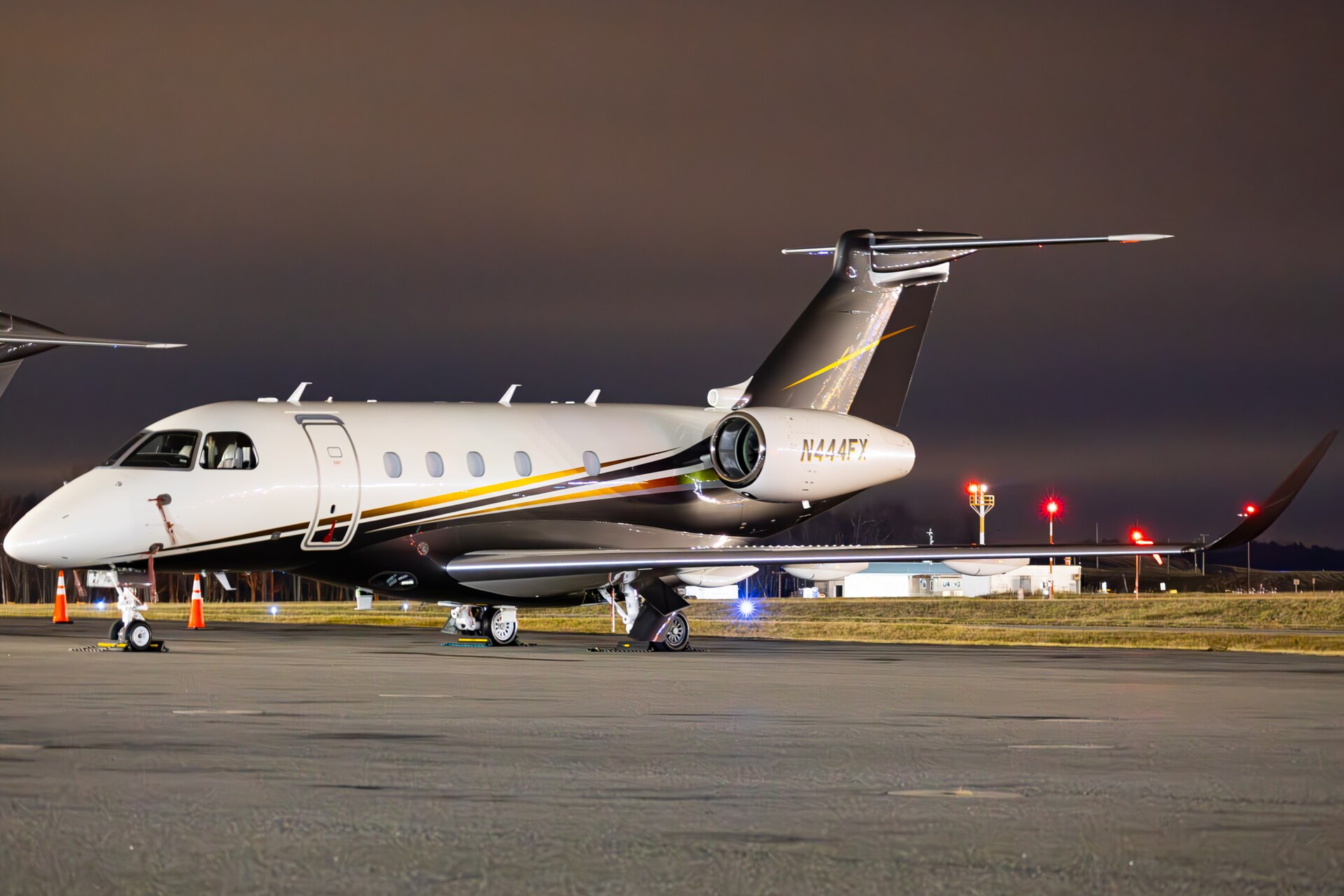
There are four ways to fly privately on a regular basis, and the industry has spent thirty years building products at every point between them. The core trade-off has not changed: the more capital you commit and the longer you commit it, the lower your cost per hour and the greater your control. The less you commit, the more you pay per hour and the more you depend on someone else's fleet on a busy Friday.
This guide sets out the four models, the questions that decide between them, and a break-even table by aircraft category.
The four models in brief
Full ownership. You buy the aircraft outright or through a finance lease, hire or contract the crew, and either run the operation yourself or hand it to a management company. Capital commitment is total; control is total. Utilisation below 200 hours a year is hard to justify on cost alone.
Fractional ownership. You buy a share of a specific aircraft, typically from one-sixteenth (about 50 hours a year) to one-half (400 hours), under a five-year contract with a monthly management fee and an occupied hourly rate. The operator, NetJets, Flexjet, Airshare, PlaneSense and a handful of others, guarantees availability on short notice, usually with as little as ten hours, and swaps aircraft across its fleet so you rarely fly your own tail number. At the end of the term the operator buys the share back at fair market value less a remarketing fee.
Jet card. A prepaid block of hours, usually 25 or 50, on a defined aircraft category at a fixed hourly rate, valid for 12 to 24 months. No asset, no residual value risk, no long commitment, but the highest hourly cost of the committed models and blackout or peak-day rules that matter more than the brochure suggests.
On-demand charter. You book trip by trip through a broker or operator. No commitment beyond the flight. Pricing floats with the market, quality varies by operator, and availability on peak days is not guaranteed. Empty-leg deals can reduce the cost of a one-way flight by 50 to 75 percent if your dates are flexible.
The comparison
| Full ownership | Fractional | Jet card | Charter | |
|---|---|---|---|---|
| Upfront capital | Full price (5-80 million USD) | Share price (0.5-30 million USD) | Prepaid hours (150,000-500,000 USD) | None |
| Commitment | Indefinite | Typically 5 years | 12-24 months | Per trip |
| Guaranteed availability | Your own aircraft | Yes, usually 10-48 hours notice | Yes, with peak-day rules | No |
| Consistency of aircraft and crew | Highest | High (fleet standard) | Medium | Variable |
| Effective cost per hour (light jet) | 7,000-10,000 at 300 hrs | 8,000-10,000 | 8,500-11,000 | 5,000-7,500 |
| Effective cost per hour (large cabin) | 20,000-30,000 at 400 hrs | 16,000-22,000 | 18,000-24,000 | 12,000-18,000 |
| Residual value exposure | Full | Shared via buyback | None | None |
| Tax treatment (US) | Depreciation available for business use | Depreciation on share | Expense | Expense |
| International reach | Anywhere you certify for | Mostly regional fleets, some intercontinental | Regional | Global |
Two cautions on the hourly figures. Fractional and card rates are quoted for occupied hours only, while ownership costs are usually expressed per flight hour including repositioning. And charter looks cheapest per hour until you add round-trip pricing: on a one-way flight the operator charges for the aircraft to return home, which is why the charter number can double on the wrong routing.
The break-even table
The hours below are approximate crossover points at which a lower-commitment model stops being cheaper than the next one up. They assume 2026 US pricing, a mix of one-way and round-trip missions, and a five-year horizon.
| Category | Charter to jet card | Jet card to fractional | Fractional to full ownership |
|---|---|---|---|
| Light (Phenom 300E, CJ4 Gen2) | 25-40 hours | 60-100 hours | 250-300 hours |
| Midsize (Latitude, Praetor 500) | 25-40 hours | 60-100 hours | 250-300 hours |
| Super-midsize (Challenger 3500, Praetor 600) | 30-50 hours | 75-125 hours | 275-350 hours |
| Large and ultra-long-range (Global 7500, G700) | 40-60 hours | 100-150 hours | 300-400 hours |
The bands are wide because so much depends on routing. An owner who flies mostly round trips of three to five hours from a single base reaches ownership break-even sooner. A traveller whose trips are one-way, irregular and international gets more value from a fractional or charter model that absorbs the repositioning.
Five questions that decide the answer
- How many hours, honestly? Most first-time buyers overestimate by 30 to 50 percent. Look at the last two years of commercial and charter flying and count block hours, not trips.
- How predictable is your schedule? Fractional and card products punish last-minute peak-day travel with surcharges and longer notice periods. Owners with a dedicated crew do not.
- Do you need one aircraft type or several? Fractional programmes let you move between a light jet for a domestic hop and a large cabin for a transatlantic flight. Owners are stuck with what they bought unless they charter to fill gaps.
- Where do you fly? The big fractional fleets are strongest in North America and Europe. A principal based in Dubai or Singapore who flies intercontinentally is usually better served by ownership with a management company, or by a global charter operator such as VistaJet on a subscription contract.
- What is your tax position? In the United States, restored 100 percent bonus depreciation for business-use aircraft has tilted the calculation toward ownership and fractional shares for companies with the taxable income to absorb the deduction. Elsewhere, VAT and import structures can matter as much as the operating economics.
Hybrid strategies
The most experienced flyers rarely pick just one model. A common pattern is a whole or fractional aircraft for the 80 percent of missions that are predictable, plus a jet card or charter relationship for overflow, peak days and the occasional mission that needs a different cabin. Owners increasingly put their aircraft on a charter certificate to recover fixed costs, effectively becoming suppliers to the charter market they once bought from.
Fractional operators are also blurring the lines. NetJets and Flexjet now sell leases as well as shares, cards alongside fractions, and, in Flexjet's case, a limited right to resell unused hours. Airshare has popularised day-based rather than hour-based contracts, which suit short frequent hops.
The bottom line
If you fly fewer than 50 hours a year, charter and keep your capital. Between 50 and 150 hours, a jet card or small fractional share buys you guaranteed access without an asset to manage. From 150 to 300 hours, fractional ownership is typically the sweet spot, particularly if your missions vary in length. Above 300 hours, or whenever control, privacy and a consistent crew matter more than the last dollar per hour, whole ownership with professional management is the model the industry was built around.
Mentioned in this story
More insights

What luxury really means on a VIP airliner
A VIP airliner is not just a larger private jet. Its real luxury is measured in certified space, sleep, quiet systems, completion time, crew workflow and the ability to carry a household or delegation across oceans without turning the cabin into theatre.
Farnborough, Biggin Hill or Luton: choosing a London private jet airport
Compare the final ground destination, operating window, aircraft requirements and handling arrangements before choosing a London airport.
Teterboro, Westchester or Morristown: choosing a New York private jet airport
Compare the airport and ground destination together, then check handling, timing, noise requirements and a fallback before accepting a charter proposal.