Sustainability in Business Aviation: SAF, Book-and-Claim, Carbon Offsets, eVTOL and What Buyers Should Do Now
Mandates are arriving, supply is scarce, and the tools available to an owner in 2026 are better than the debate suggests. A practical guide to what works, what does not, and what to build into a purchase.
By JetAtlas · Published 2026-08-13 · 9 min read · How we check facts
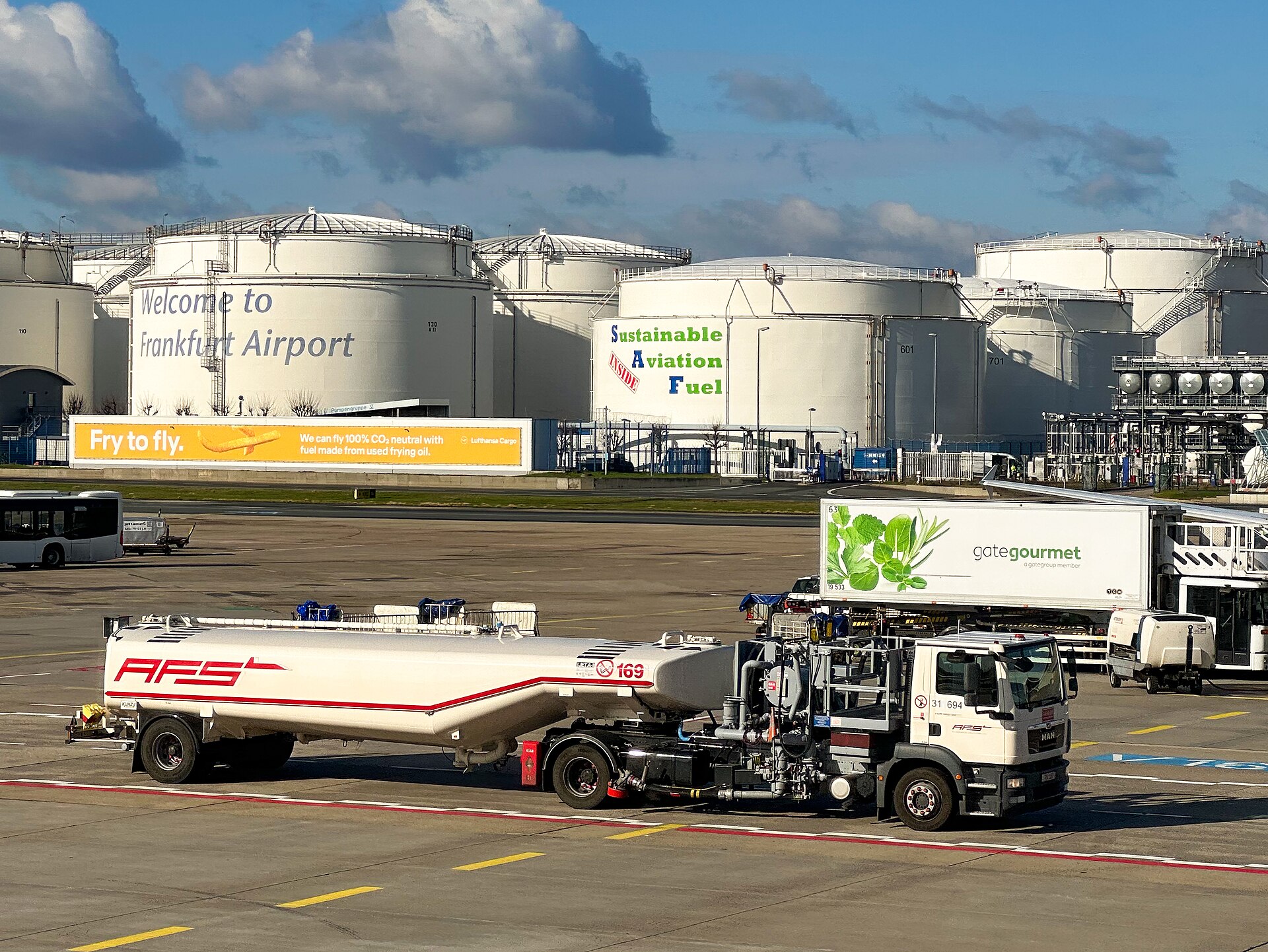
Business aviation produces roughly 2 percent of aviation's carbon emissions and a far larger share of its public scrutiny. For owners, the question in 2026 is no longer whether to act but how, because mandates are now law in the two largest markets outside the United States, lenders and corporate boards are asking for emissions data, and the tools available have matured. This report sets out where sustainable aviation fuel actually stands, how book-and-claim works, what carbon offsets can and cannot do, where electric and hybrid aircraft fit, and what a buyer should build into an acquisition today.
Where SAF stands
Sustainable aviation fuel is a drop-in replacement for Jet A made from waste oils, agricultural residues, municipal waste or, in its synthetic form, captured carbon and green hydrogen. Blended at up to 50 percent with conventional fuel under current standards, it reduces lifecycle emissions by 60 to 90 percent depending on feedstock. Every business jet in production can fly on it without modification, and Gulfstream, Bombardier, Dassault, Embraer and Textron have all demonstrated 100 percent SAF flights.
The problem is volume. SAF was about half of one percent of global jet fuel in 2024 and is expected to reach roughly 1 to 1.5 percent in 2026, with production concentrated in the United States, Europe and Singapore. It costs two to four times the price of conventional fuel, and it is physically available at a few dozen business aviation airports worldwide, mostly in California, the US Northeast, the UK, France, the Netherlands, Scandinavia and Singapore.
| Region | Mandate or incentive | 2026 status |
|---|---|---|
| European Union | ReFuelEU Aviation: 2 percent SAF blend at EU airports from 2025, 6 percent in 2030, 20 percent in 2035, 70 percent in 2050 | In force; applies to fuel suppliers, so business jets fuelling in the EU receive the blend automatically |
| United Kingdom | SAF mandate: 2 percent in 2025 rising to 10 percent in 2030 and 22 percent in 2040 | In force, structured similarly to the EU |
| United States | No mandate; tax credits for SAF producers under the 45Z clean fuel credit, plus state programmes led by California, Illinois and Washington | Credits reduced and restructured in 2025 legislation; supply growing more slowly than forecast |
| Singapore | 1 percent SAF levy-based mandate from 2026, rising to 3-5 percent by 2030 | In force |
| Japan | 10 percent SAF target for 2030 | Policy stage |
| Middle East | No mandates; Abu Dhabi and Saudi Arabia investing in production | Emerging |
For a business jet owner the practical effect is that flights refuelling in the EU or UK already carry a small SAF blend, the cost of which appears as a few cents per litre on the fuel invoice. Buying more than the mandated share is voluntary and, at most airports, impossible to arrange physically.
Book-and-claim: how owners actually buy SAF
Because SAF cannot be delivered to most airports, the industry has adopted book-and-claim: an owner pays for a quantity of SAF that is produced and delivered into the fuel system somewhere, typically at a major hub, and receives a certificate for the emissions reduction that they can claim against their own flying. The physical fuel is burned by whichever aircraft fuels at that hub; the environmental attribute travels with the certificate.
The system depends on registries that prevent double counting. In business aviation the main providers are 4AIR, which pioneered the model, together with fuel suppliers such as World Fuel Services and Avfuel, and the fractional operators' own programmes: NetJets, Flexjet and VistaJet all offer SAF purchase through book-and-claim to their customers. Standards from the Roundtable on Sustainable Biomaterials and the International Sustainability and Carbon Certification underpin the certificates, and the EU has been developing rules under ReFuelEU that would allow book-and-claim credits to count toward operators' obligations in a flexible way from 2035.
Cost: buying book-and-claim SAF for 100 percent of an aircraft's fuel burn adds roughly 2,000 to 4,000 dollars per flight hour for a large-cabin jet in 2026, or 15 to 25 percent to the direct operating cost. Most owners buy a percentage, commonly 10 to 30 percent, and increase it as prices fall.
Carbon offsets: useful, limited, scrutinised
Offsets pay for emissions reductions elsewhere, from forestry, renewable energy or methane capture projects, and cost a fraction of SAF: 15 to 60 dollars per tonne of carbon dioxide against 300 to 600 dollars per tonne for SAF's abatement cost in 2026. A large-cabin jet emits roughly 3 to 4 tonnes of carbon dioxide per flight hour, so offsetting 400 hours a year costs 25,000 to 100,000 dollars, an amount most owners can absorb without noticing.
The limitation is credibility. Investigations since 2023 have found that many forestry offsets overstated their impact, and corporate buyers now require Verra, Gold Standard or equivalent certification and increasingly prefer carbon removal credits, such as direct air capture or biochar, which are more expensive but verifiable. For an owner, offsets are a reasonable bridge, provided the credits are high quality and the claim is described honestly: compensating for emissions is not the same as reducing them.
Electric, hybrid and eVTOL: the honest timeline
The physics of batteries mean that electric aircraft will not replace business jets on the missions that define the sector. What they will do is serve the shortest legs:
- eVTOL air taxis. Joby, Archer, Beta and their competitors expect commercial service in 2026 and 2027 in Dubai, the United States and Japan, on flights of 20 to 100 miles. For business aviation the use case is the airport-to-city transfer that now takes a car or helicopter; several FBO chains have signed vertiport agreements.
- Electric and hybrid fixed-wing. Nine-seat electric commuter aircraft and hybrid-electric turboprops are in development for 2028 to 2032 service, on legs of 200 to 500 miles.
- Hydrogen. Airbus has pushed its hydrogen airliner ambitions into the late 2030s; the business aviation application is later still.
For a buyer today the relevance of eVTOL is planning, not purchase: ask whether the FBOs and airports you use will have vertiport capacity, and expect the first door-to-door products from the fractional operators and charter platforms rather than from aircraft manufacturers.
Efficiency: the lever owners forget
The largest emissions reductions available to an owner in 2026 come from the aircraft and how it is flown, not from what goes in the tanks.
- New-generation engines and airframes burn 15 to 25 percent less fuel than the aircraft they replace: a Falcon 6X against a Falcon 900, a G700 against a G650, a Praetor 600 against a Legacy 600.
- Right-sizing the aircraft to the mission avoids flying an ultra-long-range jet on two-hour legs.
- Flight planning software that optimises altitude, speed and routing saves 3 to 6 percent.
- Reducing empty repositioning through charter, fleet sharing or better scheduling saves more than any fuel choice.
What buyers should do now
- Choose new-generation types where the mission allows; the fuel saving is also an operating cost saving and supports resale.
- Specify SAF readiness in purchase and management contracts: the aircraft is already capable, but the management company should have book-and-claim arrangements and reporting in place.
- Build an emissions ledger from day one. Boards, lenders and increasingly insurers ask for it, and retrospective reconstruction is painful. 4AIR, the fractional operators and most management companies offer reporting.
- Set a SAF percentage and a budget, typically 10 to 30 percent by book-and-claim, and review annually as prices fall.
- Offset the remainder with removal-weighted, certified credits, and describe the claim accurately.
- Plan for the EU and UK mandates in operating budgets: a small cost today, rising through 2030.
- Watch the eVTOL rollout at the airports you use, and structure ground transport contracts to be able to switch.
Sustainability in business aviation is a supply problem more than a technology problem. The aircraft can already burn clean fuel; the world cannot yet make enough of it. Owners who act now, buy efficiently and report honestly will find that the regulatory and reputational risk is manageable, and that most of what they do to cut emissions also cuts cost.
Mentioned in this story
More insights

What luxury really means on a VIP airliner
A VIP airliner is not just a larger private jet. Its real luxury is measured in certified space, sleep, quiet systems, completion time, crew workflow and the ability to carry a household or delegation across oceans without turning the cabin into theatre.
Farnborough, Biggin Hill or Luton: choosing a London private jet airport
Compare the final ground destination, operating window, aircraft requirements and handling arrangements before choosing a London airport.
Teterboro, Westchester or Morristown: choosing a New York private jet airport
Compare the airport and ground destination together, then check handling, timing, noise requirements and a fallback before accepting a charter proposal.