Who Actually Flies Private? The Surprising Truth
The image is a billionaire with a Gulfstream. The data says the typical private-jet passenger is a sales engineer on a company King Air, and most business aircraft belong to firms you have never heard of.
By JetAtlas · Published 2026-06-02 · 7 min read · How we check facts
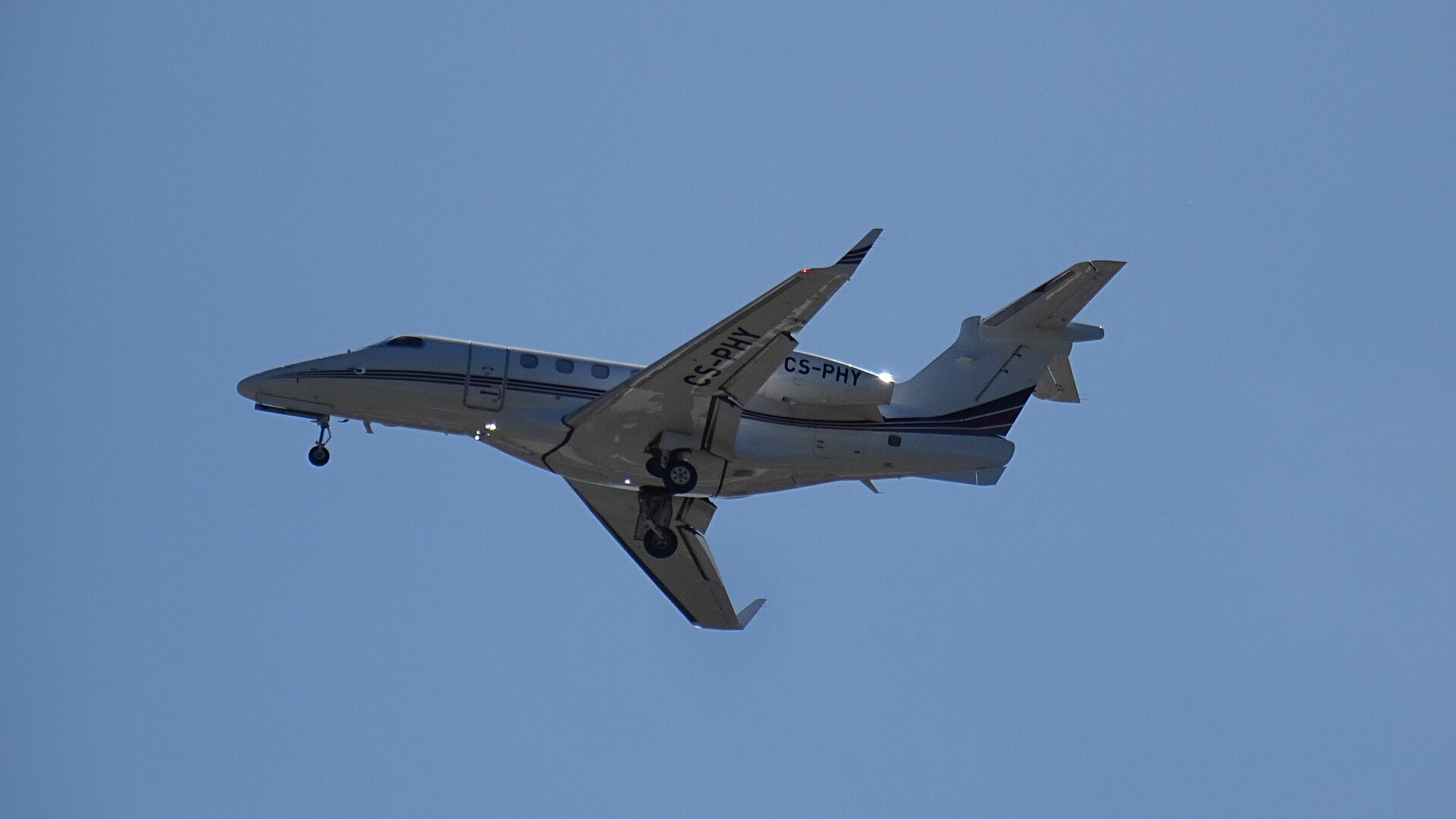
Type "private jet" into an image search and you get a fixed picture: a celebrity descending airstairs, sunglasses on, a Gulfstream behind. That aircraft exists and that passenger exists. But if you stood on the ramp at Wichita, Cincinnati, or Dallas Love Field and counted who stepped off business aircraft for a week, the celebrity would be a rounding error.
Here is who really flies private, according to the industry's own data and the flight-tracking firms that watch every take-off.
Most business aircraft belong to companies, and mostly small ones
The National Business Aviation Association's fact book is blunt about the fleet: only about 3 percent of U.S. business aircraft are flown by Fortune 500 companies. Roughly 85 percent of operators are small and mid-sized businesses, and about 75 percent of companies that operate business aircraft operate exactly one. The typical owner is not a bank or a tech giant but a regional construction firm, a medical group, a car-dealer chain, an agricultural business, or a manufacturer with plants in three towns that no airline connects.
The same source says 86 percent of passengers on business aircraft are what it calls marketing and sales personnel, technical experts, other company representatives, and customers. Only 14 percent are top managers. The flight from Wichita to a customer's plant in Tupelo carries an engineer, a service technician, and a crate of parts, not a CEO.
Add to this that more than 80 percent of the business aircraft fleet consists of helicopters, turboprops, and small jets designed to carry four to eight people on flights of under two hours, and the picture inverts. The King Air is the workhorse of business aviation; the G700 is its billboard.
How the flying divides up
Analysts at ARGUS and WingX track every business-jet departure by the regulatory category it flies under. In the United States, there are three:
- Part 91: private, non-commercial flying. Corporate flight departments and individuals flying their own aircraft. Historically the largest slice, roughly 45 percent of business-jet flight hours (JetAtlas estimate from ARGUS TRAQPak reporting; the share drifts a few points year to year).
- Part 135: on-demand charter, where you pay an operator by the hour. Roughly 35 percent.
- Part 91K: fractional ownership, meaning NetJets, Flexjet, and their smaller rivals. Roughly 20 percent, and the fastest-growing.
WingX counted 2.63 million U.S. business-jet departures in 2025, up 5 percent on 2024 and 29 percent above 2019. The growth is almost all in fractional and charter; Part 91 corporate flying is flat to slightly up. The pandemic-era wave of first-time flyers, people who tried charter in 2020 and 2021 because airlines were unpleasant, turned out to be stickier than anyone expected: fractional activity rose 8.4 percent year-on-year in December 2025 alone.
| Segment | Who is flying | Share of U.S. business-jet hours (approx.) | Typical aircraft |
|---|---|---|---|
| Corporate flight departments (Part 91) | Employees of the owning company | 30 to 35% | King Air, Citation, Challenger, Gulfstream |
| Individual owners (Part 91) | Owner, family, guests | 10 to 15% | Wide range, from TBM turboprops to G650s |
| Charter (Part 135) | Anyone who pays per trip | 30 to 35% | Light and midsize jets dominate |
| Fractional (Part 91K) | Share owners and jet-card holders | about 20% | Phenom 300, Citation Latitude, Challenger 350 |
| Government and other | Officials, medical, utilities | a few percent | Various |
Shares are JetAtlas estimates synthesised from ARGUS TRAQPak and WingX reporting through 2025.
The 2025 delivery numbers
The General Aviation Manufacturers Association reported 854 business-jet deliveries in 2025, up 11.8 percent, in a record year of $35.7 billion in total general-aviation billings. Where did those aircraft go? Fractional operators took a large slice, since NetJets and Flexjet are now among the biggest customers of Textron, Embraer, Bombardier, and Gulfstream. Corporate flight departments took most of the rest. Private individuals buying a whole aircraft outright are a small share by units, if a larger one by dollars, because when an individual does buy, it tends to be a large-cabin aircraft.
What the ultra-wealthy actually do
There are roughly 3,000 billionaires in the world and about 500,000 people with net worth above $30 million, the usual definition of ultra-high-net-worth. A common industry estimate is that only around 10 percent of billionaires own a jet outright, and that most UHNW individuals who fly private do so through fractional shares, jet cards, or charter rather than ownership. The arithmetic explains why: a whole aircraft only makes sense above roughly 200 to 300 hours a year of flying, and most wealthy people fly far less than that.
Celebrity jets are also, disproportionately, business assets. Musicians tour on chartered aircraft that show up in their tour budgets; athletes fly on team aircraft or charter; the jets tracked by social-media accounts often belong to leasing companies or management firms rather than the person on board.
Who charters
The customer base of the charter market is broader than the ownership market and changing fastest:
- Companies without flight departments: the single biggest group, chartering for a plant visit, a road show, or a deal closing.
- Families on holiday: heavily seasonal. Aspen, Palm Beach, and the Hamptons spike in their seasons; Nice, Ibiza, and Mykonos in the European summer.
- Groups splitting the cost: six friends chartering a light jet to a golf weekend at $18,000 is $3,000 a head, which is why charter demand tracks stock-market wealth rather than only billionaire wealth.
- Medical and specialist trips: organ transport, patient transfers, and film-industry crews chasing daylight.
- Pets: not a category, but a driver. Operators say a meaningful share of family charters cite a dog that cannot fly commercially.
The geography
North America accounted for 72 percent of global business-jet traffic in 2025. Europe is a distant second, with Paris-Le Bourget, Nice, Geneva, and London the hubs. The Middle East is small in volume but large in aircraft size; the Gulf states have a disproportionate share of the world's ultra-long-range and VIP-airliner fleet. Asia-Pacific and Latin America together are still under 10 percent of global activity, with Brazil, Mexico, China, and Australia as the main markets.
The honest summary
If you boarded a random business-aircraft flight in the United States, the most likely scenario would be this: a twin-turboprop or light jet owned by a mid-sized company, flying two or three employees from a secondary city to a smaller one for a day of meetings, returning the same evening. No champagne. Possibly a box of sandwiches. The passengers would be there because the alternative was two connecting flights and a hotel night, and the company had done the arithmetic on their salaries.
The Gulfstream on the image search is real too. It is just not typical, and it is worth remembering when the phrase "private jet" is used as shorthand for a certain kind of life.
Mentioned in this story
More insights

What luxury really means on a VIP airliner
A VIP airliner is not just a larger private jet. Its real luxury is measured in certified space, sleep, quiet systems, completion time, crew workflow and the ability to carry a household or delegation across oceans without turning the cabin into theatre.
Farnborough, Biggin Hill or Luton: choosing a London private jet airport
Compare the final ground destination, operating window, aircraft requirements and handling arrangements before choosing a London airport.

Teterboro, Westchester or Morristown: choosing a New York private jet airport
Compare the airport and ground destination together, then check handling, timing, noise requirements and a fallback before accepting a charter proposal.