2026 Business Aviation Market Outlook: Deliveries, Backlogs, Pre-Owned Inventory and Pricing
Record deliveries, multi-year backlogs, tight pre-owned inventory and prices that have stopped rising. Where the market stands at the mid-point of 2026 and what to expect through 2027.
By JetAtlas · Published 2026-08-06 · 10 min read · How we check facts
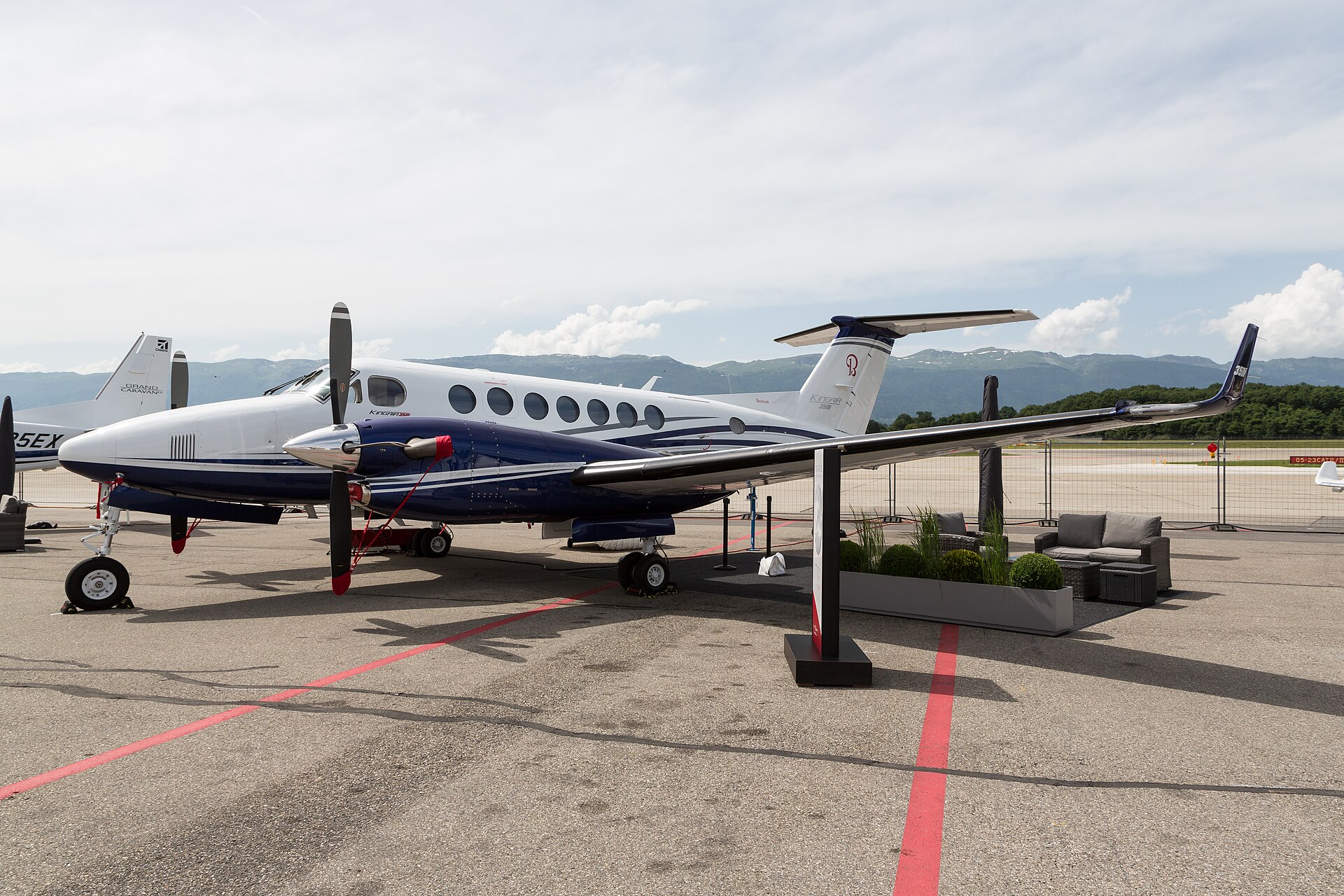
Business aviation entered 2026 in the strongest position in its history and, for the first time since 2021, with a set of signals that do not all point the same way. Manufacturers are delivering more aircraft than at any time since 2008 and their backlogs remain at two to three years. The pre-owned market is tight but no longer frantic. Prices for late-model aircraft have plateaued. Flight activity is at record levels, yet the growth in demand is increasingly concentrated in a few fleet operators. This report sets out the data and offers a view on the twelve to eighteen months ahead.
New deliveries: a production cycle at full stretch
GAMA's 2025 year-end report recorded 854 business jet deliveries, up 11.8 percent from 764 in 2024 and the highest annual total since 2008. Airplane billings rose 16.1 percent to 31.0 billion dollars, and total general aviation billings, including rotorcraft, exceeded 35 billion dollars for the first time. Turboprop deliveries slipped 5.1 percent to 594, a reflection of Pilatus and Daher production constraints more than weak demand.
| Manufacturer | 2024 jet deliveries | 2025 jet deliveries | 2026 guidance | Backlog (approx.) |
|---|---|---|---|---|
| Textron Aviation (Cessna) | 187 | approx. 200 | Flat to slightly up | 7-8 billion USD |
| Bombardier | 146 | approx. 150 | 150-155 | 15-16 billion USD |
| Gulfstream | 136 | approx. 150 | 160-165 | 20 billion USD plus |
| Embraer Executive Jets | 130 | 155 | 165-175 | Record, driven by Flexjet |
| Dassault | 31 | approx. 35 | 40, Falcon 6X ramp | 4-5 billion USD |
| Pilatus (PC-24) | 43 | approx. 45 | Flat | Sold out to 2028 |
| Honda Aircraft | 20 | approx. 18 | Flat, awaiting Echelon | Modest |
| Cirrus (Vision Jet) | 101 | approx. 105 | Flat | Steady |
The 2026 story is a manufacturer-by-manufacturer attempt to grow production without breaking the supply chain. Gulfstream is ramping the G700 and G800 while running out the G650ER. Bombardier is delivering the Global 8000, in service since December 2025, alongside the 7500 and the Challenger 3500. Embraer's 2025 deliveries rose 19 percent and its 2026 plan is built around the Flexjet order for 182 Phenom 300E, Praetor 500 and Praetor 600 aircraft. Dassault is ramping the Falcon 6X and has pushed the 10X to 2029. Textron continues the Longitude and CJ4 Gen2 at steady volume while preparing the Citation Ascend.
Honeywell's October 2025 outlook forecasts 8,500 new business jets worth 283 billion dollars over the next decade, the highest value in the survey's history, with 3 percent average annual growth. That translates to roughly 870 to 900 deliveries in 2026 and around 900 to 950 in 2027, if the supply chain cooperates.
Backlogs: still long, no longer lengthening
The backlog picture is the clearest signal of where the market is in its cycle. Book-to-bill ratios at the large manufacturers, which ran above 1.5 in 2022 and 2023, moved back toward 1.0 through 2025 and have stayed there in the first half of 2026. Backlogs are therefore stable at very high levels rather than growing. For buyers, the practical implication is that delivery positions for the most popular types remain 24 to 36 months out, but the premium paid for near-term positions in the secondary market has narrowed from 10 to 15 percent above list in 2023 to 3 to 7 percent in 2026.
Order activity in 2025 and early 2026 has been dominated by fleet operators: Flexjet's Embraer order, NetJets' rolling Cessna and Bombardier deliveries, VistaJet's Global fleet renewal, and a series of Gulfstream orders from Middle East and Asian buyers for the G700 and G800. Individual corporate and private orders are steady but not accelerating.
Pre-owned: tight, orderly and increasingly selective
Pre-owned inventory has been the most watched number in business aviation since the pandemic, and it has normalised without ever returning to historical levels. At the end of June 2026 approximately 6.5 percent of the active jet fleet was listed for sale, compared with a pandemic low near 4 percent, a 10-year average of roughly 8 percent and pre-2020 norms of 10 to 12 percent. Inventory rose through the second half of 2025, dipped in the first quarter of 2026 and has been flat since.
| Category | Fleet for sale (mid-2026) | Average days on market | Price trend (12 months) |
|---|---|---|---|
| Light jets | 7-8 percent | 150-180 | Down 3-6 percent |
| Midsize | 6-7 percent | 140-170 | Down 2-5 percent |
| Super-midsize | 5-6 percent | 100-130 | Flat |
| Large cabin | 5-6 percent | 120-160 | Flat to down 3 percent |
| Ultra-long-range (under 8 years) | 3-4 percent | 60-90 | Flat to up 2 percent |
| Aircraft over 20 years | 12-15 percent | 250 plus | Down 8-15 percent |
The market has split by vintage. Aircraft under ten years old with complete records and programme coverage sell quickly and at stable prices; the newest ultra-long-range types still trade at or near new price. Aircraft over twenty years old are accumulating on the market as operators retire them, and their values have fallen sharply. Pre-owned transaction volume in the first half of 2026 was modestly ahead of 2025, with the growth concentrated in super-midsize and large cabin aircraft.
Pricing: the plateau
New aircraft list prices rose 3 to 5 percent a year through 2023 and 2024 and by 2 to 4 percent in 2025, with manufacturers citing labour and supply-chain costs. In 2026 the increases have moderated and, for the first time since 2021, discounting has reappeared on light and midsize types with available positions. Pre-owned prices for late-model aircraft peaked in late 2022, fell 10 to 20 percent through 2023 and 2024 depending on category, and have been essentially flat since mid-2025. Our expectation is for continued stability in the large-cabin and ultra-long-range segments and gentle further softening of 3 to 5 percent a year in light and midsize aircraft as fractional operators' fleet renewals push older aircraft into the market.
Flight activity and the demand base
Business jet flight activity in the first half of 2026 set records in North America and Europe and rose in the Middle East and Asia-Pacific. Fractional and charter operators account for a growing share: fractional flying is up roughly 65 percent since 2019, according to Honeywell, and the large fleet operators now take a third or more of new deliveries in the light and midsize categories. This concentration is a source of stability, because the operators buy on long contracts, and a source of risk, because a slowdown at one of them would show up in the order book immediately.
The risks
- Supply chain. Engine, avionics and interior suppliers remain the bottleneck; a further disruption would delay deliveries and support pre-owned prices.
- Tariffs and trade. The tariff regime affecting aircraft and parts between the United States, Canada, the EU and Brazil has changed several times since 2025 and remains the most cited uncertainty by manufacturers.
- Interest rates and financing. Rates have eased from 2023-2024 peaks but remain well above the 2010s; a renewed rise would slow pre-owned transactions first.
- Tax policy. The restoration of 100 percent bonus depreciation in the United States in 2025 has supported demand; any reversal would remove that support.
- Geopolitics. Conflicts affecting the Middle East, Eastern Europe or the Taiwan Strait would disrupt routings, insurance and buyer confidence in the regions that drive large-cabin demand.
The view for 2026-2027
We expect 870 to 900 business jet deliveries in 2026 and continued growth in 2027, with billings rising faster than units as the mix shifts toward large-cabin and ultra-long-range aircraft. Backlogs will hold at two to three years. Pre-owned inventory will drift toward 7 to 8 percent of the fleet by the end of 2027, still below historical norms but enough to give buyers real choice. Prices for late-model aircraft will hold; older aircraft will continue to weaken. For buyers, this is a market in which patience is rewarded on light and midsize types and punished on ultra-long-range delivery positions. For sellers, the window for late-model aircraft remains open but is no longer widening.
Mentioned in this story
More insights

What luxury really means on a VIP airliner
A VIP airliner is not just a larger private jet. Its real luxury is measured in certified space, sleep, quiet systems, completion time, crew workflow and the ability to carry a household or delegation across oceans without turning the cabin into theatre.
Farnborough, Biggin Hill or Luton: choosing a London private jet airport
Compare the final ground destination, operating window, aircraft requirements and handling arrangements before choosing a London airport.

Teterboro, Westchester or Morristown: choosing a New York private jet airport
Compare the airport and ground destination together, then check handling, timing, noise requirements and a fallback before accepting a charter proposal.