Food at 45,000 Feet: How Private-Jet Catering Actually Works
Almost nobody cooks on a private jet. Meals are made on the ground, chilled, delivered about 90 minutes before departure and finished in a galley the size of a wardrobe. Who does the work, why food tastes different up there, and how one sandwich reached $177.
By JetAtlas Editors · Published 2026-09-12 · 6 min read · How we check facts
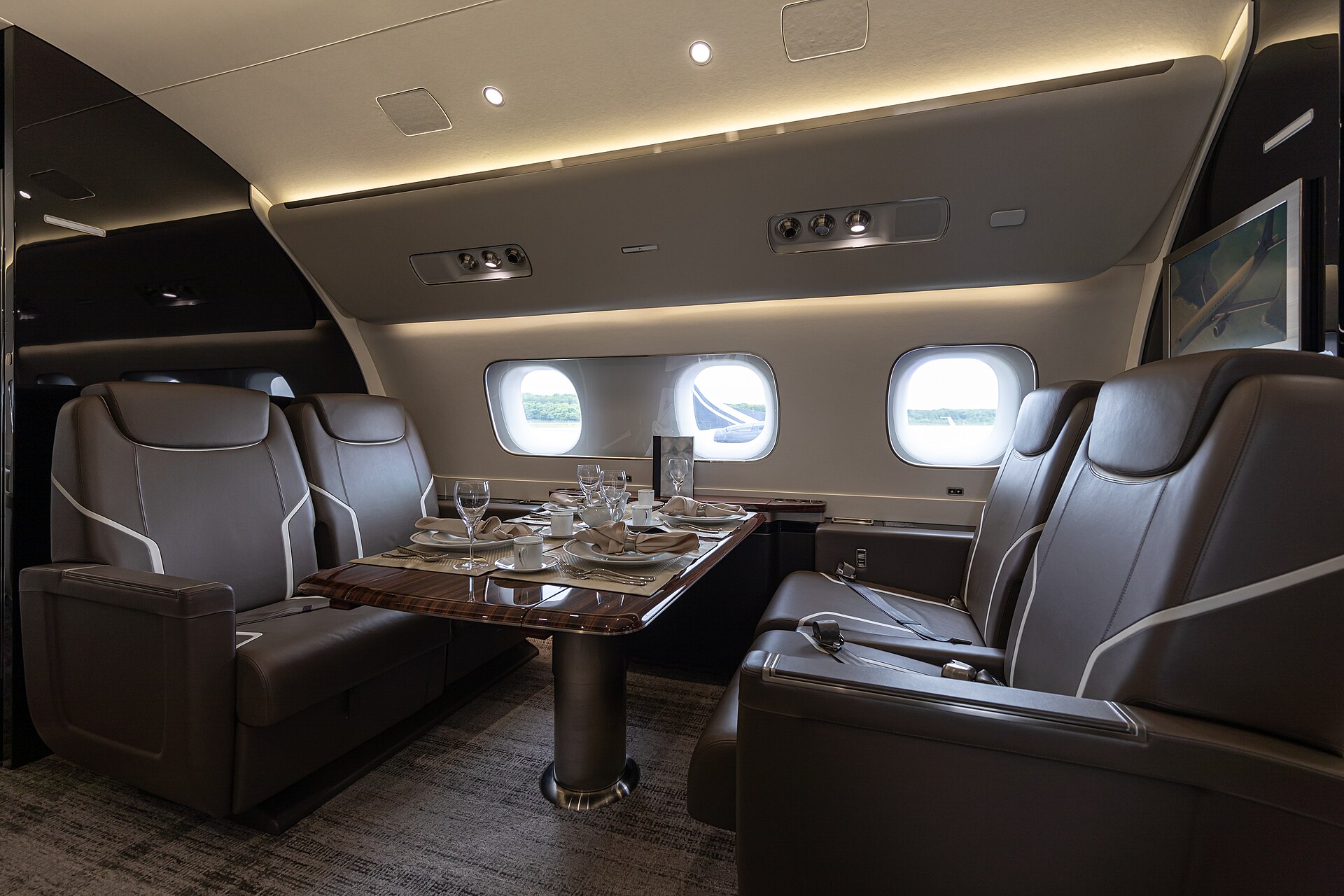
In 2024 a charter broker called Ironbird Partners asked a caterer at Jackson Hole, Wyoming, for one grilled-chicken sandwich box. The quote came back at $177.05. The sandwich itself accounted for $51.98. The rest was an airport fee of $16.95, sales tax of $8.11 and a $100 service fee. The broker found a similar boxed lunch elsewhere for $67.
That invoice, published by the trade site Private Jet Card Comparisons, explains more about private-jet food than any photograph of caviar. The food on a business jet is rarely the expensive part. Getting it to the aircraft is.
Who actually cooks it
On most private flights, nobody cooks anything in the air. Meals are prepared on the ground by specialist aviation caterers or by ordinary restaurants, packed for the flight, and finished on board by a flight attendant, or by the co-pilot on smaller jets that carry no cabin crew.
The biggest caterers are networks rather than single kitchens. Air Culinaire Worldwide, one of the largest in business aviation, serves more than 1,800 locations and runs 20 kitchens in the United States, according to the charter broker PrivateFly. At resort airports with few suppliers, the caterer may be a local deli or a hotel kitchen.
Some firms work as fixers. Brody Speno, founder of the Miami catering company SkyDine, has described sending his own staff to collect a dish from a restaurant that does not deliver. Magellan Jets notes that an order can be as casual as a DoorDash delivery from In-N-Out.
How an order works
The process is closer to planning a dinner party than to buying a meal.
- The request. The operator or broker asks for passenger preferences and allergies when the trip is booked. Standard menus need 24 to 48 hours' notice; complex or chef-prepared meals ideally need 72 hours.
- The kitchen. The caterer cooks, then chills. Food is packed so it can be reheated once, then plated and garnished on board. Sauces often travel separately so nothing turns soggy.
- The delivery. A van brings the order airside, typically about 90 minutes before departure. The fixed-base operator (FBO) that runs the private terminal charges for letting it onto the ramp.
- The galley. The flight attendant stows everything, checks it against the order and finishes it in flight.
Dietary requests are routine. Vegetarian, vegan, gluten-free, kosher and halal meals are standard orders for the large caterers.
Stored, chilled, reheated
What happens next depends on the aircraft. Some jets have proper refrigeration. Many rely on ice drawers. A few have almost no cold storage. For heating, a large-cabin jet may have convection and microwave ovens, a midsize jet may have only a microwave, and some light jets have no heating element at all, so hot food is warmed at the FBO just before departure.
That is why caterers push certain dishes. Charcuterie, salads, grain bowls and sandwich trays survive the trip. Grilled steak, anything fried and delicate shellfish lose quality through a chill-and-reheat cycle.
Food safety is the part passengers never see. In 2014 Daniel Hulme, chief executive of the British caterer On Air Dining, told Corporate Jet Investor about crews collecting hot food from restaurants, carrying it in a taxi and storing it in the aircraft lavatory before reheating it. Professional kitchens blast-chill cooked food to below 8°C and keep it out of the range between 8°C and roughly 70°C, where bacteria multiply, for no more than 90 minutes.
| Stage | Typical timing or rule |
|---|---|
| Standard menu order | 24 to 48 hours before departure |
| Complex or chef-prepared order | 72 hours preferred |
| Delivery to the aircraft | About 90 minutes before departure |
| Blast-chilled storage | Below 8°C |
| Bacterial danger zone | 8°C to about 70°C, 90 minutes at most |
Why food tastes different up there
A pressurised cabin is not at sea level. Airliners are pressurised to the equivalent of 6,000 to 8,000 feet. In a 2008 study at Germany's Fraunhofer Institute, whose test facility places a section of Airbus A310 fuselage inside a low-pressure chamber, researchers compared tastes and smells at a ground pressure of 95 kPa and a simulated cabin pressure of 76 kPa, with dry air, vibration and noise added. Perceived saltiness and sweetness fell by as much as 30 percent. Lufthansa has used the facility repeatedly to tune its menus.
Dry air makes it worse. Without a humidifier, cabin humidity on a large jet can fall below 5 percent, and a dry nose smells less. Noise matters too: cabin noise averages about 85 decibels, and a 2011 study found that loud white noise reduced the perception of sweetness and saltiness. Charles Spence, an Oxford professor who studies perception, has suggested that umami, the savoury taste of tomatoes, holds up better, which may be why so many passengers order tomato juice in the air.
Newer business jets help a little. A Gulfstream G700 at 41,000 feet keeps its cabin at 2,840 feet, and a Bombardier Global 8000 at 2,691 feet, so passengers lose less of their palate than on an airliner. Caterers still season more boldly and lean on acidity, herbs and moist dishes.
What it costs
There is no price list. Cost depends on the menu, the airport and the distance from kitchen to ramp. Magellan Jets names Los Angeles, Miami, Teterboro and Boston as expensive airports, and Aspen and Telluride as steeper still, because so few suppliers serve them.
The Jackson Hole invoice shows the structure:
| Item | Amount |
|---|---|
| Grilled-chicken sandwich box | $51.98 |
| Airport fee | $16.95 |
| Vendor sales tax | $8.11 |
| Service fee | $100.00 |
| Total | $177.05 |
The same report recorded breakfast for three (scrambled eggs, bacon, avocado, berries and a thermos of coffee) quoted at $373. Fixed fees hurt small orders most. On a large spread for eight, a $100 service fee barely registers.
The famous requests
Stories of outlandish in-flight orders circulate widely in the industry, and few come with names attached. The documented ones are more modest. PrivateFly reported in 2019 that clients flying from London had ordered dishes from restaurants such as Daniel Humm's Davies and Brook at Claridge's, including lamb rump with balsamic figs, chorizo and parmesan ice cream, and that plant-based Impossible Burgers had become a regular request from American clients.
The best-known catering story of all, a passenger supposedly billed $3,000 for tea and biscuits, has never been traced to a named client, airport or date, and JetAtlas rates it unverified in Hangar talk. The $177 sandwich came with a line-by-line receipt, which is why it is rated true.
Sources
- Private Jet Card Comparisons: the $177 grilled chicken sandwich
- Aerospace Global News: inside the world of private jet catering
- Corporate Jet Investor: Dining on a private jet, is catering an issue?
- VinePair: the science of wine and taste at 35,000 feet
- Magellan Jets: private jet catering
- PrivateFly: private jet catering trends and unusual requests
More insights
Drinks on Board: Wine, Champagne, Coffee and Water at Cabin Altitude
A pressurised cabin dulls sweetness, strips the fruit from light wines, flattens champagne faster and makes water boil below 100°C. What that means for the bar on a private jet, and the strict alcohol rules that apply to the crew.
Sleeping on a Private Jet: Real Beds, Thinner Air and the Pilots Who Take Turns
Most private jets make beds out of seats. The largest now have fixed bedrooms, cabins pressurised below 3,000 feet and lights that imitate sunrise. What actually helps passengers sleep, and where the pilots rest on a 15-hour flight.
The Galley: How a Private-Jet Kitchen Fits in a Cupboard
A business-jet galley has to fit a refrigerator, ovens and a coffee machine into the space of a wardrobe, survive crash loads and run on aircraft power. What is inside, what it weighs, and what a flight attendant can really cook.