How Much Does a Private Jet Really Cost per Hour, and Where the Money Goes
A charter quote is one number. Behind it are fuel, two salaries, engine reserves, a hangar, insurance, and the slow melt of depreciation. We break a flight hour into its parts for three real aircraft.
By JetAtlas · Published 2026-04-28 · 8 min read · How we check facts
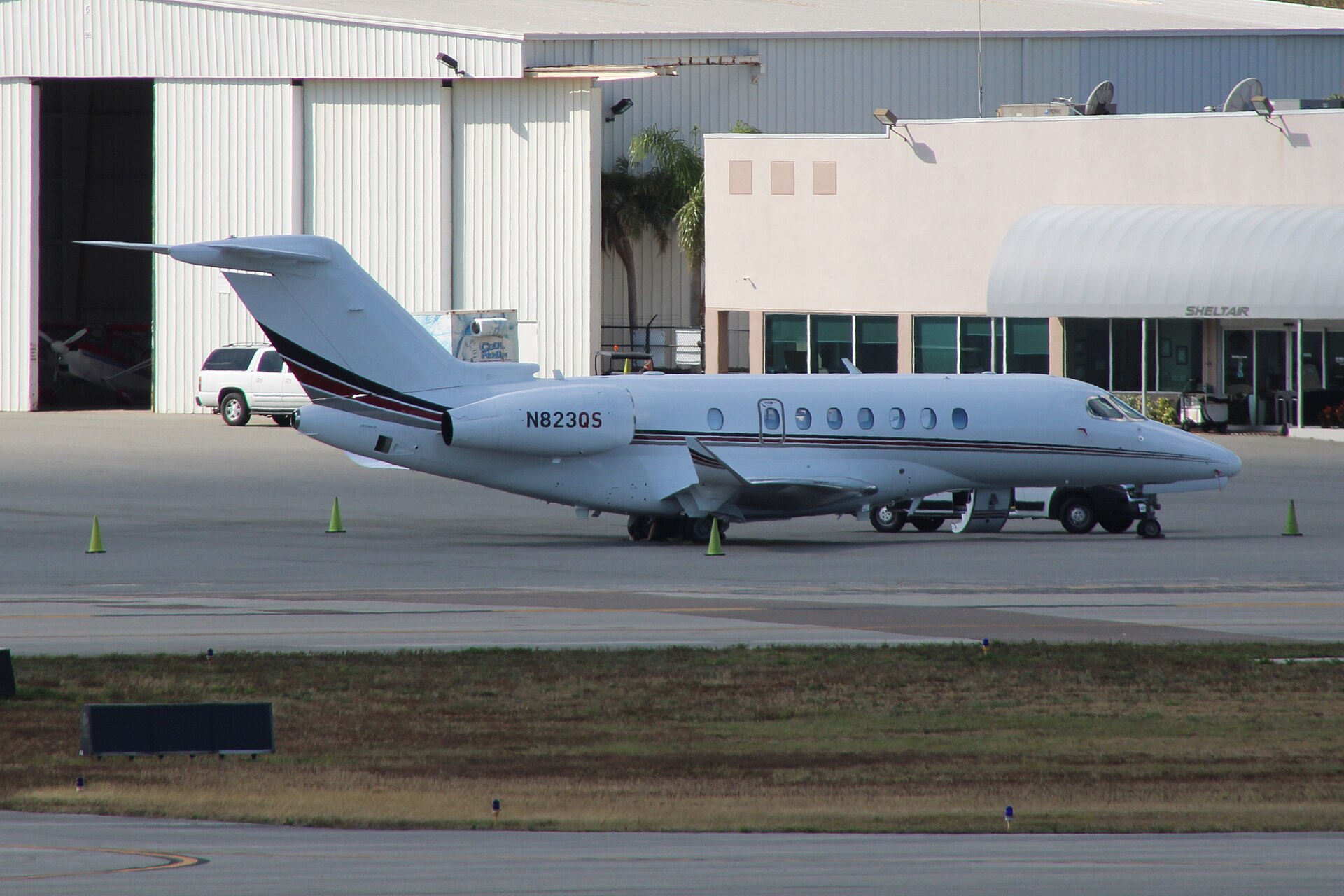
Ask what a private jet costs per hour and you will get a different answer depending on who you ask. A charter broker quotes the price a customer pays. An owner's accountant quotes what it costs to keep the aircraft alive. A pilot quotes fuel. All of them are right, and the gaps between them explain most of the economics of the business.
This piece follows the money through one flight hour on three aircraft that between them cover the market: a light jet (Embraer Phenom 300E), a super-midsize (Bombardier Challenger 350), and an ultra-long-range flagship (Gulfstream G650ER). All figures are JetAtlas estimates built from published operating-cost data, 2026 fuel prices, and operator interviews; individual aircraft vary by age, region, and how hard they are flown.
The number the customer sees
Charter prices in 2026 cluster in bands:
- Light jets: roughly $3,000 to $4,500 per hour
- Midsize and super-midsize: roughly $4,500 to $8,500 per hour
- Large-cabin and ultra-long-range: roughly $9,000 to $18,000 per hour, with the newest Gulfstreams and Globals above that
These are quoted per flight hour, but the invoice also includes repositioning (the empty flight to come and get you), landing and handling fees, crew overnight expenses, catering, and, in the U.S., a 7.5 percent federal excise tax. A quoted $7,000 per hour aircraft on a two-hour trip is rarely a $14,000 invoice; $17,000 to $20,000 is more typical.
Variable costs: what actually burns when the engines run
Fuel. This is the biggest single line. Jet-A at U.S. FBOs averaged $7.88 a gallon in early September 2026 according to GlobalAir's survey of more than 3,000 locations, after peaking above $8.50 in May. Business jets pay retail; airlines pay wholesale, which is one reason the per-passenger economics differ so sharply.
- Phenom 300E: about 160 gallons per hour, so about $1,260
- Challenger 350: about 280 gallons per hour, so about $2,200
- G650ER: about 490 gallons per hour, so about $3,860
Maintenance reserves. Almost every business jet is enrolled in hourly programmes: an engine programme (Rolls-Royce CorporateCare, Pratt & Whitney ESP, Honeywell MSP) and often an airframe and parts programme. You pay a fixed amount per flight hour into the programme, and the programme pays for overhauls and unscheduled repairs. It is the industry's way of turning a $4 million engine overhaul into a predictable monthly bill.
Landing, handling, and navigation fees. Trivial at a small U.S. airport ($50 to $300), but a Gulfstream landing at London Luton or Nice can see $2,000 to $5,000 in handling, parking, and passenger fees for a single stop.
Fixed costs: what you pay even if it never leaves the hangar
Crew. Two pilots are a legal requirement on every jet in this list. A light-jet captain earns roughly $120,000 to $180,000 a year in the U.S.; a Gulfstream captain $250,000 to $400,000 depending on the operator; first officers less. Add benefits, recurrent simulator training (typically $30,000 to $80,000 per pilot per year on a large-cabin type), and a cabin attendant on the G650ER.
Hangar. A heated hangar at Teterboro or Van Nuys costs $10,000 to $25,000 a month for a large jet. Outdoor parking is cheaper and worse for the aircraft.
Insurance. Hull and liability cover runs roughly 0.5 to 1 percent of hull value a year for an experienced operator, more for a new owner or a single-pilot aircraft.
Management. Most owners pay a management company to employ the crew, schedule maintenance, and handle regulatory paperwork: $10,000 to $40,000 a month.
Depreciation. The silent line. A new jet loses roughly 5 to 10 percent of its value a year in the early years, faster in a soft market. This is a real cost even though no invoice arrives for it.
One flight hour, three aircraft
The table assumes each aircraft flies 400 hours a year, which is a busy private owner or a light charter schedule. Fixed costs are divided by those 400 hours. All figures are approximate 2026 U.S. dollars.
| Cost per flight hour | Phenom 300E | Challenger 350 | G650ER |
|---|---|---|---|
| Fuel (at $7.88/gal) | $1,260 | $2,200 | $3,860 |
| Engine and airframe programmes | $650 | $1,300 | $2,100 |
| Landing, handling, navigation | $150 | $300 | $600 |
| Crew salaries, benefits, training | $850 | $1,300 | $2,300 |
| Hangar | $180 | $300 | $550 |
| Insurance | $120 | $250 | $600 |
| Management and admin | $350 | $500 | $750 |
| Subtotal, cash cost | $3,560 | $6,150 | $10,760 |
| Depreciation (5 to 7% of value) | $1,600 | $3,300 | $9,500 |
| All-in owner cost | about $5,200 | about $9,500 | about $20,300 |
| Typical charter price | $3,500 to $4,500 | $6,000 to $8,500 | $12,000 to $18,000 |
Two things jump out. First, the cash cost of running the aircraft is roughly in line with charter prices, which is why charter operators are thin-margin businesses that live on utilisation. Second, for an owner, depreciation on a big jet can be almost as large as everything else combined. The G650ER's engines and pilots are expensive; the cheque you wrote to buy it is more expensive still.
Why hours flown change everything
Fixed costs are the reason two owners of identical aircraft can have wildly different costs per hour. Fly the Challenger 350 for 150 hours a year instead of 400, and crew, hangar, insurance, and management alone go from about $2,350 per hour to over $6,000. Fly it 800 hours a year on a charter certificate, and the same fixed costs drop below $1,200 an hour. This arithmetic is the entire business model of fractional ownership and jet cards: spread the fixed costs across many customers and the hourly price falls.
It is also why owners put their aircraft out for charter. A jet that earns $6,000 an hour from strangers for 300 hours a year covers a large slice of its fixed costs, even though most owners find that the wear, scheduling conflicts, and lower resale value mean the trade-off is less attractive than the brochure suggests.
The percentages, roughly
For a large-cabin jet flown 400 hours a year, an owner's total annual spend of around $8 million (including depreciation) breaks down approximately as:
- Depreciation: 45 to 50 percent
- Fuel: 18 to 20 percent
- Maintenance programmes and unscheduled repairs: 10 to 12 percent
- Crew: 10 to 12 percent
- Hangar, insurance, management, fees: 8 to 10 percent
For a light jet the mix shifts: depreciation matters less in dollars, fuel and crew matter more as a share.
Where the customer's money goes
If you charter the Challenger 350 for $7,500 an hour, a reasonable guess at the operator's split is: $2,200 fuel, $1,300 maintenance programmes, $1,300 crew, $300 fees, $800 to the aircraft owner as a lease or revenue share, $600 to overheads and sales, and the rest, perhaps $500 to $1,000, as margin before the broker's cut. Nobody in that chain is getting rich on a single hour, which is why the industry's obsession is not price but keeping aircraft flying.
Mentioned in this story
More insights

What luxury really means on a VIP airliner
A VIP airliner is not just a larger private jet. Its real luxury is measured in certified space, sleep, quiet systems, completion time, crew workflow and the ability to carry a household or delegation across oceans without turning the cabin into theatre.
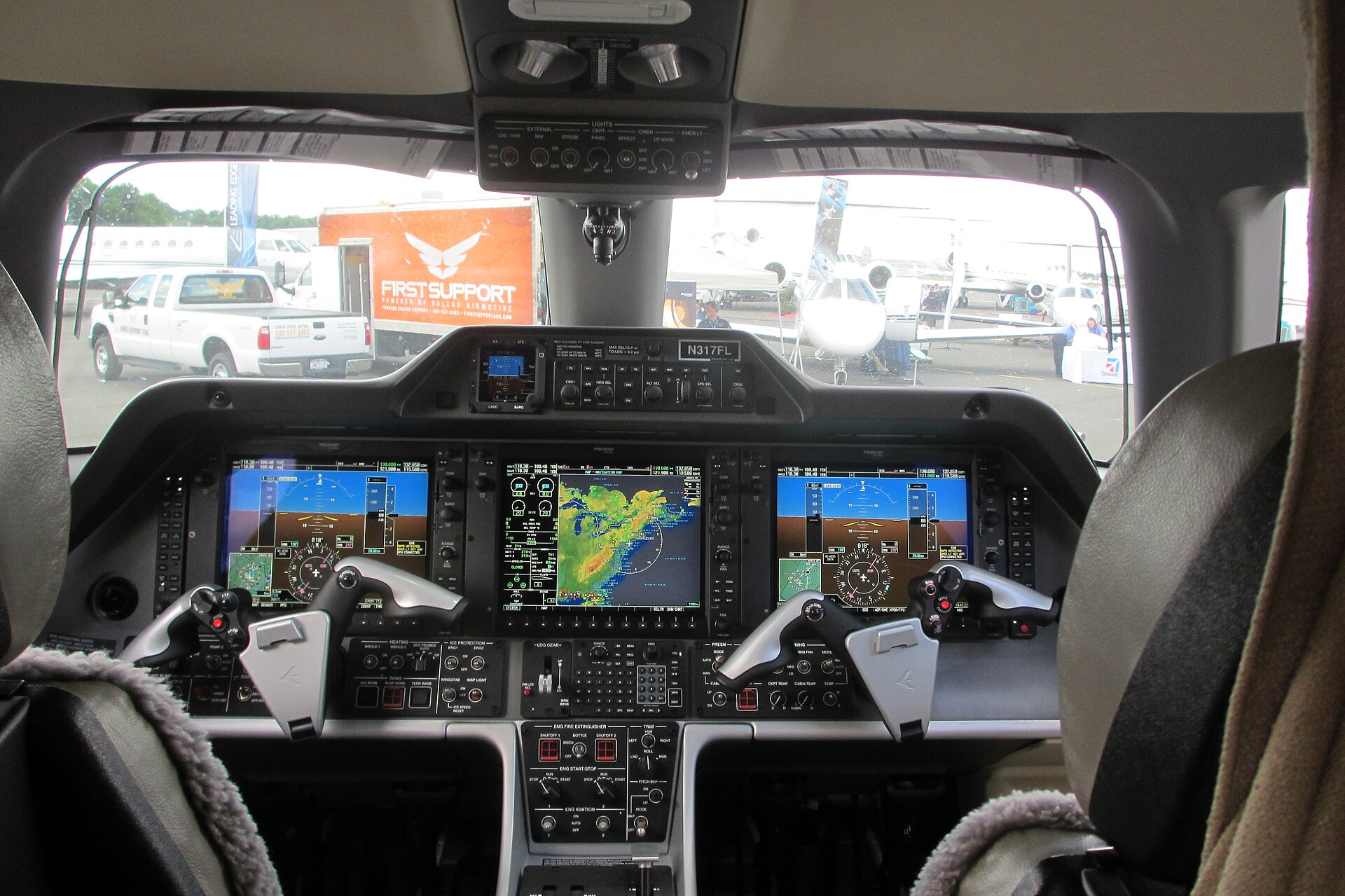
Farnborough, Biggin Hill or Luton: choosing a London private jet airport
Compare the final ground destination, operating window, aircraft requirements and handling arrangements before choosing a London airport.
Teterboro, Westchester or Morristown: choosing a New York private jet airport
Compare the airport and ground destination together, then check handling, timing, noise requirements and a fallback before accepting a charter proposal.