What Private Jets Do to the Planet, and What's Changing
A Gulfstream burns almost five tonnes of CO2 an hour. Private aviation is a tiny slice of global emissions and a very large slice per passenger. Here are the honest numbers on carbon, sustainable fuel, book-and-claim, and the electric aircraft that will and won't replace jets.
By JetAtlas · Published 2026-08-18 · 8 min read · How we check facts
Two facts about private jets are both true and usually argued as if only one could be. The first: private aviation is a very small part of the climate problem, around 0.04 percent of global CO2 emissions. The second: per passenger, it is among the most carbon-intensive things a person can do, five to fourteen times worse than an airline seat and, on the largest aircraft with a few people aboard, far more. Whether the industry is a rounding error or a scandal depends on which lens you pick. Here are the numbers behind both.
How much a jet actually emits
Burning a gallon of jet fuel produces about 9.57 kilograms of CO2. Fuel burn per hour is public for every business jet, so per-hour emissions are simple arithmetic.
| Aircraft | Fuel burn (gal/hr) | CO2 per hour | CO2 per passenger-hour at 4 aboard | Multiple of economy seat |
|---|---|---|---|---|
| Pilatus PC-12 NGX (turboprop) | 65 | 0.6 t | 155 kg | about 3x |
| Embraer Phenom 300E (light jet) | 160 | 1.5 t | 380 kg | about 8x |
| Dassault Falcon 6X (large) | 330 | 3.2 t | 790 kg | about 16x |
| Gulfstream G650ER (ultra-long-range) | 490 | 4.7 t | 1,170 kg | about 24x |
| Airbus A321neo, economy, 180 aboard | 630 | 6.0 t | 33 kg | 1x |
| Boeing 787-9, economy, 290 aboard | 1,450 | 13.9 t | 48 kg | 1x |
Fuel burns are typical published cruise figures rounded by JetAtlas; the economy benchmark is 40 to 50 kg per passenger-hour. Four passengers is about the average load on a business-jet flight.
The passenger count is everything. A Phenom 300E with eight people aboard is about four times an economy seat, not eight. A G650ER with two people aboard is about 50 times. The often-quoted range of 5 to 14 times comes from studies averaging real loads across the fleet.
The total, and what it is a share of
A 2024 study in Communications Earth and Environment tracked every private flight it could identify worldwide and put direct emissions at 15.6 million tonnes of CO2 in 2023, about 3.6 tonnes per flight, up 46 percent between 2019 and 2023. The International Council on Clean Transportation reached a similar figure in a June 2025 report. For context:
- All civil aviation in 2023: roughly 950 million tonnes of CO2. Private aviation is about 1.5 to 2 percent of that.
- Global energy-related CO2 emissions: about 37 billion tonnes. Private aviation is about 0.04 percent.
- Per flight, 3.6 tonnes is roughly what an average European emits in six months.
Beyond CO2
Jets also emit water vapour and soot at altitude, which form contrails, and contrails trap heat. Research since 2020 suggests that the non-CO2 warming from aviation is as large as or larger than the CO2 effect, though it is short-lived (hours to a day) rather than centuries-long. Business jets fly higher than airliners, in colder air where contrails form readily, so their non-CO2 effect per flight may be larger. This is an active research area, and the numbers above do not include it.
What is changing: the aircraft
Engines have improved. The Rolls-Royce Pearl 700 on the G700 burns roughly 10 percent less fuel per unit of thrust than the BR725 on the G650 it replaced, and new light jets are 15 to 20 percent more efficient than their predecessors of the 2000s. But range and cabin size have grown faster than efficiency, so the largest new jets burn about as much per hour as the jets they replaced while carrying more people further. Fleet-wide, efficiency gains of 1 to 2 percent a year are being outrun by flight-hour growth of 5 percent.
What is changing: sustainable aviation fuel
Sustainable aviation fuel, or SAF, is jet fuel made from used cooking oil, animal fats, agricultural waste, or, eventually, captured carbon and green hydrogen. It is chemically almost identical to fossil jet fuel, can be blended up to 50 percent under current standards, and needs no changes to the aircraft. Depending on the feedstock, it reduces lifecycle CO2 by 50 to 80 percent.
The problems are volume and price. IATA expects SAF production in 2026 to reach about 2.4 million tonnes, or 0.8 percent of all jet fuel. In Europe in the second quarter of 2026 SAF averaged about $2,830 a tonne against about $1,400 for fossil jet fuel, roughly double. Business aviation is a small buyer, but a motivated one: operators such as NetJets, VistaJet, and Flexjet have signed multi-year purchase agreements, and several Gulfstream delivery flights have been flown on high blends.
Book-and-claim
Because SAF is produced at a few refineries and used at a few airports, most jets cannot physically refuel with it. Book-and-claim separates the fuel from its environmental credit: an operator pays for SAF to be delivered into the fuel system at, say, Los Angeles, and claims the emissions reduction on a flight out of Teterboro, where the tanks contain ordinary Jet-A. A registry (4AIR's Assure SAF registry is the best-known in business aviation) tracks the certificates so that the same gallon is not claimed twice.
It is a legitimate accounting tool with an obvious critique: the jet still burned fossil fuel. The defence is that it is the only mechanism by which a small, scattered industry can pay for SAF at all, and that the money funds production. Regulators in the EU and the UK, whose SAF mandates start at 2 percent in 2025 and rise to 6 percent in 2030, now accept it.
Offsets, and why the industry stopped talking about them
Through the early 2020s most operators sold carbon offsets: pay a few hundred dollars a flight to fund forest protection or cookstoves. Investigations into offset quality in 2023 and 2024 found many projects delivered a fraction of the claimed reductions, and the industry has quietly shifted its language from offsetting to in-sector reduction, meaning SAF and efficiency. Offsets are still sold; they are no longer the headline.
Electric and hydrogen: what is real
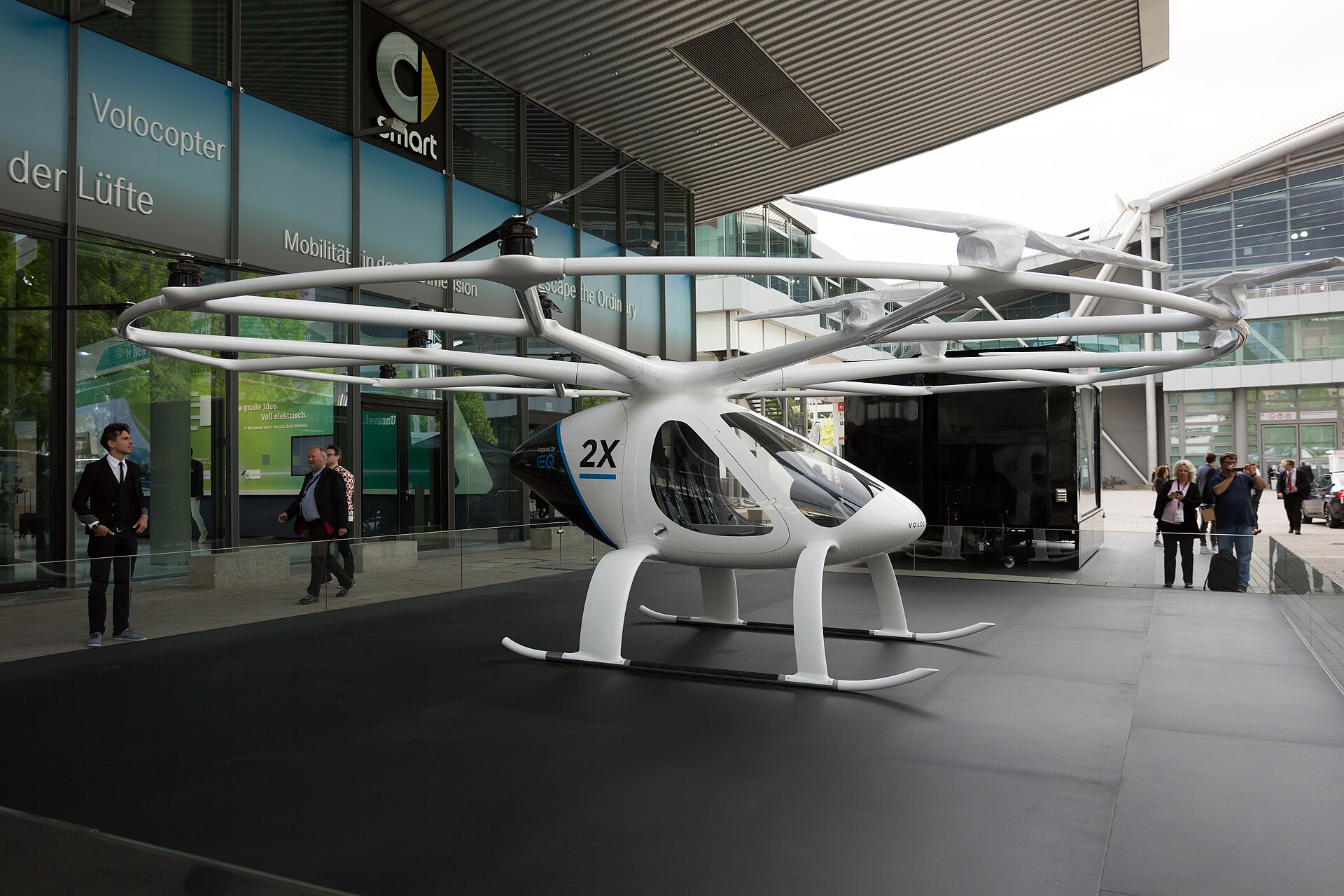
Electric vertical take-off aircraft, or eVTOLs, are close. Joby cleared the fourth of five FAA certification stages in March 2026 with conforming aircraft flying under Type Inspection Authorisation; Archer closed the third of its four phases in May 2026 and is targeting a commercial launch in Abu Dhabi in the third quarter of 2026, with Joby aiming at Dubai. Both are targeting U.S. type certification around the end of 2026 or early 2027.
These are four-passenger aircraft with ranges of 100 miles or so. They will replace helicopters and cars on trips like Manhattan to JFK, not jets on trips like New York to Miami. Battery energy density is roughly 50 times lower than jet fuel's, and no plausible improvement in the next 20 years closes that gap for a 3,000-mile flight. Hydrogen is the more serious long-term candidate for regional aircraft, and a business-jet-sized hydrogen aircraft is not expected before the 2040s.
What an honest owner can do today
- Fly the smallest aircraft that does the job. A turboprop on a 300-mile hop is a fraction of a jet's emissions.
- Fill the seats. Load factor is the single biggest lever on per-passenger emissions.
- Buy SAF, physically where available and by book-and-claim where not, through a registry that prevents double counting.
- Fly at long-range cruise rather than high-speed cruise; the fuel saving is 10 to 15 percent.
- Stop describing the flight as carbon-neutral on the strength of offsets. Nobody believes it any more, and the numbers do not support it.
None of that makes a private jet a green choice. It remains the most carbon-intensive way to travel per person that most people will ever encounter. But the difference between the worst and the best way to operate one is a factor of five or more, and that gap is where the industry's near-term progress lives.
Mentioned in this story
More insights

What luxury really means on a VIP airliner
A VIP airliner is not just a larger private jet. Its real luxury is measured in certified space, sleep, quiet systems, completion time, crew workflow and the ability to carry a household or delegation across oceans without turning the cabin into theatre.
Farnborough, Biggin Hill or Luton: choosing a London private jet airport
Compare the final ground destination, operating window, aircraft requirements and handling arrangements before choosing a London airport.
Teterboro, Westchester or Morristown: choosing a New York private jet airport
Compare the airport and ground destination together, then check handling, timing, noise requirements and a fallback before accepting a charter proposal.