The Asia-Pacific and Middle East Business Aviation Opportunity: Fleets, Hubs, Buyers and Constraints
The two regions that will decide where the next decade's large-cabin demand comes from. Fleet data, the hubs that are winning, who is buying, and the infrastructure and regulatory constraints that still hold growth back.
By JetAtlas · Published 2026-07-30 · 10 min read · How we check facts
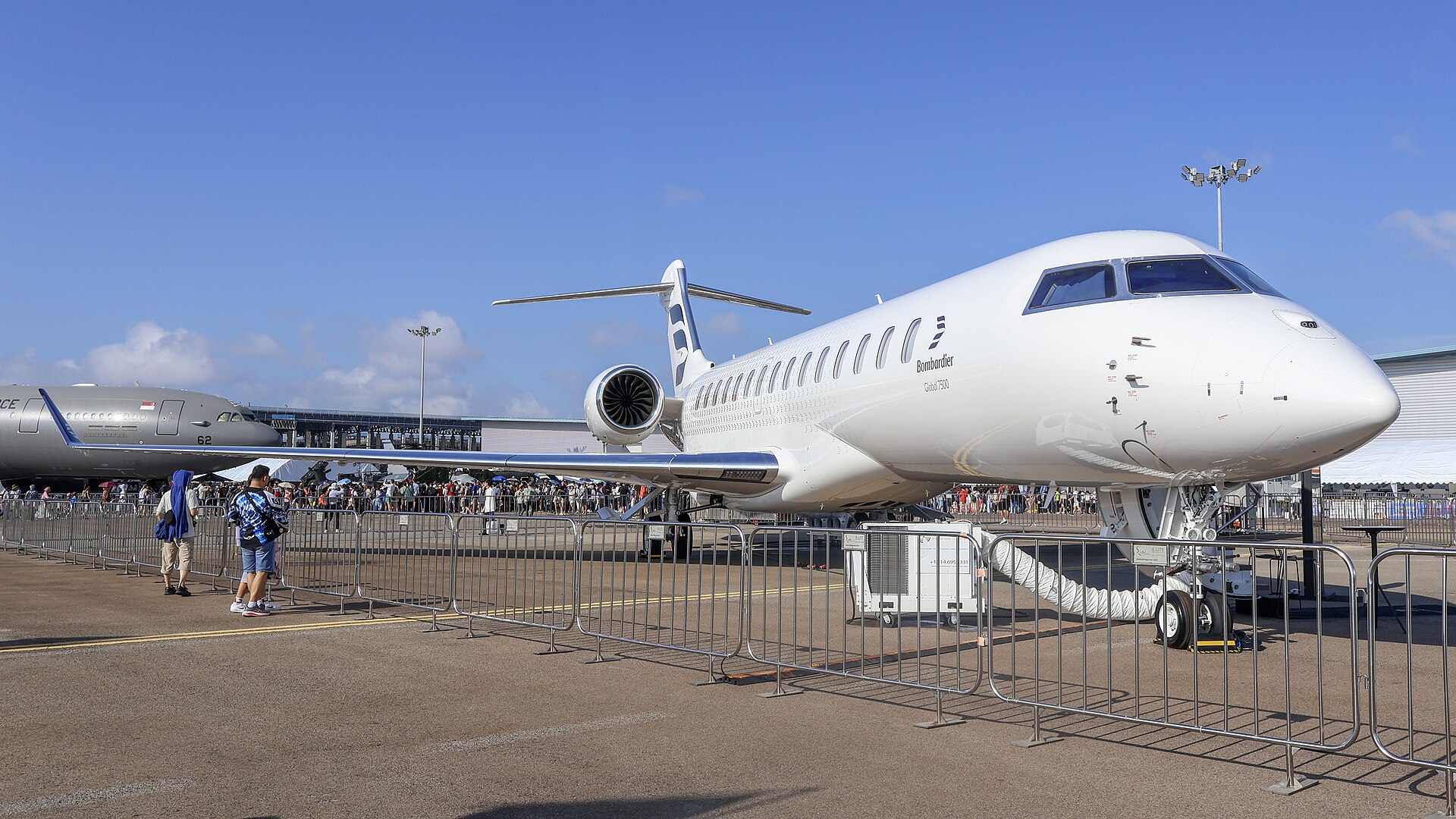
North America still takes roughly 70 percent of new business jet deliveries, and Honeywell's October 2025 outlook expects that share to hold for the next three years. The interesting question is not where the bulk of the market is, but where the large-cabin margin is going. On that measure, two regions stand out. The Middle East is the fastest-growing large-cabin market in the world by fleet value. The Asia-Pacific region, after four years of decline in Greater China, has stabilised and is quietly rebuilding on a different foundation. This report sets out the numbers, the hubs, the buyers and the constraints for both.
Asia-Pacific: a fleet that has changed shape
Asian Sky Group's year-end 2025 fleet report counted 1,168 business jets based in the Asia-Pacific region, up 1.5 percent from 1,151 a year earlier: modest growth, but the strongest since the pandemic. Beneath the headline the composition has shifted.
| Sub-region | Fleet (YE 2025) | Share | Trend |
|---|---|---|---|
| Greater China (mainland, Hong Kong, Macau, Taiwan) | 332 | 28 percent | Stable after four years of decline; Hong Kong up, mainland down |
| Australia and New Zealand | approx. 240 | 21 percent | Steady growth, light and midsize dominant |
| Southeast Asia (Singapore, Malaysia, Thailand, Indonesia, Philippines) | approx. 220 | 19 percent | Growing, Singapore as the hub |
| India | approx. 150 | 13 percent | Fastest-growing large market, constrained by import policy |
| Japan and South Korea | approx. 110 | 9 percent | Slow but steady; Japan opening up |
| Rest of region | approx. 115 | 10 percent | Mixed |
Three trends matter for anyone selling or financing aircraft in the region.
The large-cabin tilt. The region took 40 new business jets in 2025, and the most delivered single type was the Gulfstream G700 with ten, followed by the Global 7500 with seven. Asia-Pacific buyers overwhelmingly want ultra-long-range aircraft that reach Europe and North America nonstop, and they buy fewer light and midsize jets per capita than any other region. Nearly half the fleet by value sits in the top two categories.
Hong Kong's recovery. After the exodus of 2020-2022, Hong Kong's fleet grew from 56 to 61 aircraft in 2025, helped by the return of family offices, a more active pre-owned market and the reopening of Chinese business travel. Mainland China's fleet declined by six, continuing a slow attrition as older aircraft leave and import policy discourages replacement.
New money in Southeast Asia and India. Singapore's Seletar has become the region's most important business aviation hub after Hong Kong, with Bombardier's and Gulfstream's service centres and a growing charter base. India added aircraft faster than any market in the region on a percentage basis in 2024 and 2025, driven by a new generation of industrialists and a regulatory push to build domestic charter capacity ahead of the 2026-2030 airport expansions. The constraint in India is a customs regime that adds roughly 20 to 30 percent to the landed cost of an imported jet and a general aviation infrastructure that lags the airline sector badly.
The Middle East: large cabins, sovereign money, new hubs
The Middle East business jet fleet is smaller than Asia-Pacific's, at roughly 550 to 600 aircraft, but its value per aircraft is the highest in the world: large and ultra-long-range aircraft and bizliners make up the overwhelming majority of the fleet by value, a share no other region approaches. The Gulf states are home to the world's largest concentration of Boeing and Airbus bizliners in private and government hands.
Growth since 2022 has come from four sources:
- UHNW migration. Dubai and Abu Dhabi have been the biggest net recipients of ultra-high-net-worth individuals of any city in the world for three consecutive years, and many of them arrive with an aircraft or buy one within eighteen months.
- Saudi Vision 2030. Saudi Arabia's aviation strategy targets a tripling of the business aviation fleet by 2030, with Riyadh's new King Salman International Airport and dedicated business aviation terminals at Riyadh, Jeddah and NEOM. GACA's decision from 2024 to allow foreign-registered charter operators to fly domestic sectors on a limited basis, an unusual relaxation of cabotage, was designed to fill the capacity gap while domestic operators scale up.
- Sovereign and corporate fleets. Government, royal and sovereign-fund fleets remain the largest single block, and their replacement cycles drive bizliner and ultra-long-range orders.
- Charter and fractional entrants. VistaJet, Qatar Executive, Jetex, Royal Jet and a wave of newer operators have expanded the charter fleet based in the Gulf, and fractional models are being tested for the first time.
| Hub | Role | 2026 status |
|---|---|---|
| Dubai Al Maktoum (DWC) | Primary business aviation airport for the UAE, VIP terminal, multiple FBOs and MROs | Capacity expanding; hangar space tight |
| Dubai International (DXB) | Legacy business aviation slots | Constrained by airline traffic |
| Abu Dhabi Al Bateen | Dedicated business aviation airport | Growing, strong government use |
| Riyadh King Khalid and King Salman | Business aviation terminal; new mega-airport under construction | Building; capacity tight until 2028 |
| Jeddah King Abdulaziz | Business aviation terminal | Established |
| Doha Hamad | Qatar Executive base | Well developed |
Who is buying
In both regions the buyer profile has shifted away from listed corporations toward private wealth. In Asia-Pacific the typical 2026 large-cabin buyer is a family office in Hong Kong, Singapore or Taipei, an Australian or Indonesian resources or property principal, or an Indian industrialist replacing a midsize jet with a Global or Gulfstream. In the Middle East it is a Gulf national or a recently arrived expatriate principal, a family conglomerate, or a government entity. Chinese mainland corporate buyers, who drove the region's growth from 2010 to 2016, have largely withdrawn; the aircraft that remain are increasingly registered offshore and managed from Hong Kong.
Two consequences follow. First, demand is concentrated in ultra-long-range aircraft, which suits Gulfstream and Bombardier and explains why both have invested in Singapore, Dubai and Hong Kong service capacity. Second, pre-owned aircraft from both regions increasingly flow to North America and Europe when sold, because regional buyers prefer new or near-new delivery positions.
The constraints
Growth in both regions is real but constrained, and the constraints are structural.
- Infrastructure. Hangar space at Hong Kong, Seletar, Dubai and Riyadh is scarce and expensive; new arrivals can wait a year or more. Slot restrictions at Tokyo Haneda, Beijing Capital and Shanghai Hongqiao make business aviation access to the biggest cities difficult, and the alternatives are far from the city.
- Regulation. Cabotage rules in most Asian countries prevent foreign-registered aircraft from carrying paying passengers domestically, and the region's domestic charter fleets are small. Permit lead times for overflights and landings in China, India and Indonesia remain days rather than hours.
- Import taxes and registries. China's import duty and VAT, India's customs regime and Indonesia's ownership rules push most privately used aircraft into offshore or Hong Kong registration, which limits the development of local operating and maintenance ecosystems.
- Crew. Both regions import pilots. Salaries in the Gulf and Hong Kong are now at or above US levels for ultra-long-range types, and the shortage of type-rated captains is the most common reason an aircraft sits.
- Sanctions and geopolitics. Sanctions compliance, particularly involving Russian-linked owners and aircraft, has made lenders and registries more cautious across the Gulf; regional tensions periodically disrupt routings and insurance.
What it means
For manufacturers, the two regions are a large-cabin story: perhaps 8 percent of global deliveries by unit but 15 percent or more by value, and the most price-insensitive buyers in the world for delivery positions on the newest flagships. For operators and investors, the opportunity is in the gaps the constraints create: hangar and FBO capacity in Riyadh and Singapore, maintenance capability for Pearl and Passport engines in the region, domestic charter certificates in India and Saudi Arabia, and management services for the growing offshore-registered fleet. For buyers, the practical advice is to secure hangar space and crew before the aircraft, to plan for offshore registration unless the aircraft will charter domestically, and to expect the strongest resale for ultra-long-range types with global appeal rather than aircraft that only the region wants.
Mentioned in this story
More insights

What luxury really means on a VIP airliner
A VIP airliner is not just a larger private jet. Its real luxury is measured in certified space, sleep, quiet systems, completion time, crew workflow and the ability to carry a household or delegation across oceans without turning the cabin into theatre.
Farnborough, Biggin Hill or Luton: choosing a London private jet airport
Compare the final ground destination, operating window, aircraft requirements and handling arrangements before choosing a London airport.

Teterboro, Westchester or Morristown: choosing a New York private jet airport
Compare the airport and ground destination together, then check handling, timing, noise requirements and a fallback before accepting a charter proposal.