The Flying Palaces: What's Inside a BBJ 787 or ACJ350
Take a 250-seat airliner, remove the seats, and hand it to a completion centre with a $150 million budget. The result has bedrooms with en-suites, a boardroom, a gym, and a range that reaches almost anywhere on Earth non-stop.
By JetAtlas · Published 2026-05-19 · 8 min read · How we check facts
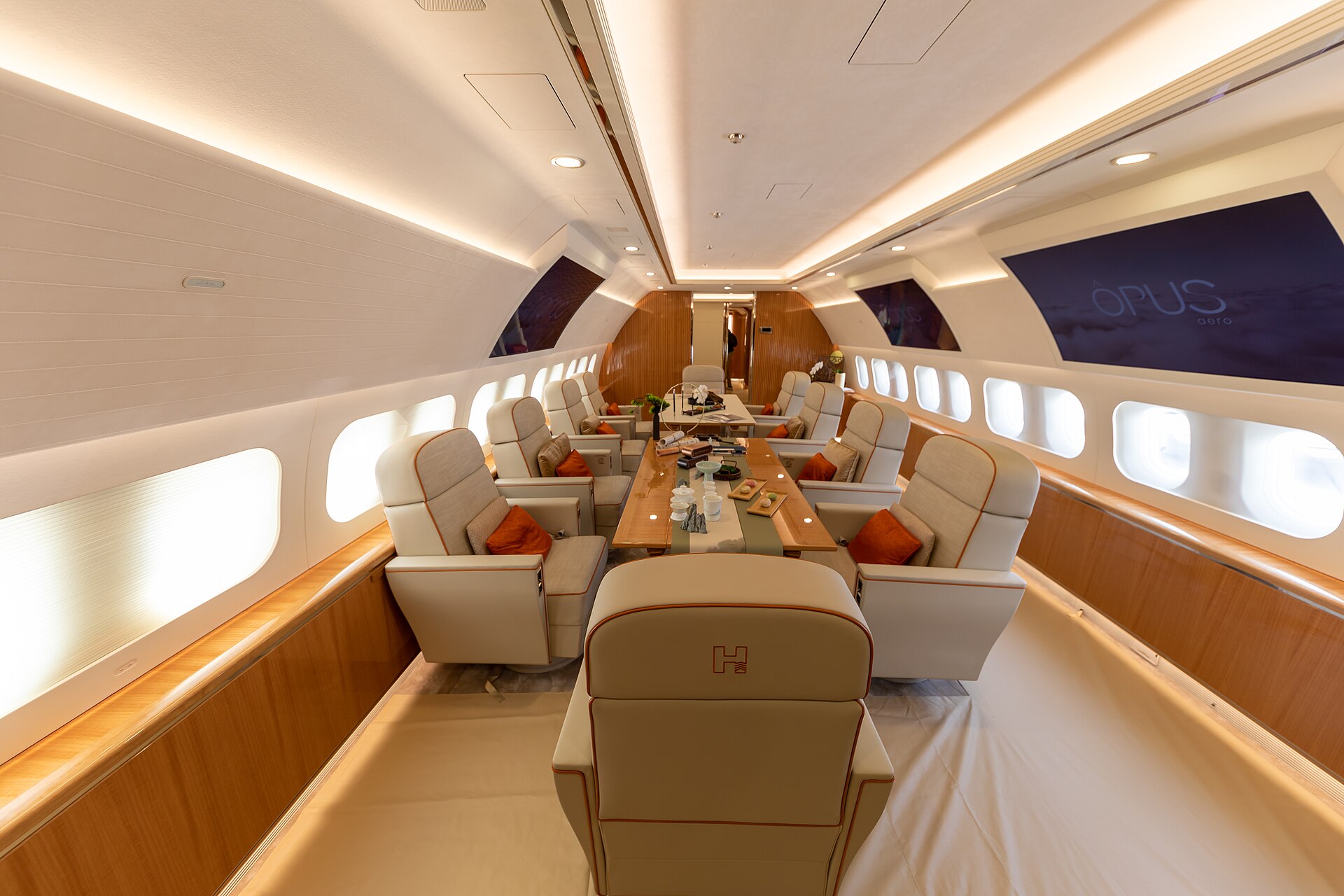
A Gulfstream G700 is a very large business jet. A Boeing Business Jet 787 is something else: an airliner built to carry 250 people, delivered with an empty cabin, and turned into a private residence with a floor area of about 2,400 square feet, which is larger than many family homes. Airbus's ACJ350 goes further, at close to 3,000 square feet. These are the aircraft of heads of state, royal families, and a small number of individuals whose wealth is measured in tens of billions.
Almost nobody sees inside them. Here is what is there.
The starting point: a green aircraft
Both Boeing (through Boeing Business Jets) and Airbus (through Airbus Corporate Jets) sell what the industry calls a green aircraft: a fully flying airliner with no interior at all, just bare metal, insulation blankets, and the wiring provisions for whatever comes next. The airframes are close to the airline versions, with two important changes. First, auxiliary fuel tanks in the cargo hold extend range; a BBJ 787-8 reaches about 9,960 nautical miles, an ACJ350 about 11,100, enough to fly Riyadh to Los Angeles or London to Sydney non-stop. Second, the cabin pressurisation and systems are configured for a few dozen people rather than a few hundred, which frees weight.
| Aircraft | Cabin floor area (approx.) | Range with VIP interior | Green aircraft price (approx.) | Typical VIP completion |
|---|---|---|---|---|
| ACJ TwoTwenty (A220-100) | 785 sq ft | 5,650 nm | $73 million | $15 to 25 million |
| BBJ 737-8 (MAX 8) | 1,000 sq ft | up to 6,555 nm with aux tanks | $82.5 million (Q2 2025 list) | $25 to 45 million |
| ACJ320neo | 1,050 sq ft | 6,000 nm | $110 million | $25 to 40 million |
| BBJ 787-8 | 2,400 sq ft | 9,960 nm | $200 million-plus | $100 to 200 million |
| ACJ350 | close to 3,000 sq ft | 11,100 nm | $300 million-plus | $150 to 250 million |
Prices are JetAtlas estimates from manufacturer statements and completion-centre interviews; widebody VIP deals are private and vary enormously.
The completion centre
The green aircraft is flown to a completion centre, of which perhaps a dozen in the world can handle a widebody: Jet Aviation in Basel, AMAC Aerospace also in Basel, Lufthansa Technik in Hamburg, Greenpoint Technologies near Seattle, and Comlux in Indianapolis are the best known. The aircraft then sits in a hangar for 18 to 36 months while a team of several hundred designers, engineers, cabinetmakers, and certification specialists builds a house inside it.
The design process starts a year or two before the aircraft arrives. A principal designer (Alberto Pinto's studio in Paris, Winch Design in London, and Unique Aircraft in Vienna have all done widebodies) produces the concept, and the completion centre's engineers turn it into something that will survive a 9g crash load, pass flammability tests, and weigh less than the aircraft can carry. That last constraint is brutal: a marble floor is impossible, so floors are stone veneer a couple of millimetres thick on honeycomb panels; a chandelier must be restrained against turbulence; a shower means water tanks, pumps, and drains that all have to be certified.
Walking through a BBJ 787
Layouts are bespoke, but a typical head-of-state or ultra-high-net-worth widebody follows a pattern from front to back.
- Entry and crew. A grand entrance behind the forward door, often with a curved staircase feel achieved by lighting and a domed ceiling, plus galleys and crew rest for a cabin crew of six to ten.
- Boardroom. A conference table for 8 to 12 with a video wall. On government aircraft this is the working office; on private ones it doubles as a dining room.
- Lounges. One or two lounges with sofas, armchairs, and a bar. Widebody cabins are wide enough (about 18 feet on the 787) that seating can be arranged in groups rather than in a line.
- Guest area. A section of first-class-style lie-flat seats, typically 12 to 30, for staff, security, and guests.
- Master suite. At the rear, a bedroom with a king-size bed, a dressing room, and an en-suite bathroom with a shower, sometimes a bathtub. Some aircraft have a second VIP suite for a spouse or senior official.
- Gym and medical bay. Not standard, but not rare: a treadmill and weights, or a medical station with a stretcher and monitoring equipment, particularly on government aircraft.
- Below deck. The cargo hold takes the auxiliary fuel tanks, water tanks, the baggage, and sometimes a lower-deck crew rest.
The technology problem
An airline cabin has hundreds of identical seats and a handful of certified systems. A VIP cabin has one of everything, and each must be certified as an installation in its own right. The in-flight entertainment is a custom network of screens, servers, and satellite antennas capable of streaming, with Ka-band connectivity the norm. Sound insulation is extensive, since a bedroom next to an engine is only restful if it is quiet; interiors on the 787 routinely achieve levels quieter than the airline version by a wide margin.
Humidity is another concern. Airliners are dry because dry air prevents corrosion. VIP completions add humidification systems for the bedroom, at the cost of drainage and weight.
What it costs to own one
A widebody VIP aircraft costs $10 million to $25 million a year to operate, before depreciation. The crew is 10 to 20 people, the hangar is the size of a warehouse, and the maintenance follows the airline schedule: heavy checks every six years or so that take the aircraft out of service for weeks and cost several million dollars. Fuel burn is 1,300 to 1,700 gallons an hour on a 787; at $7.88 a gallon, a single 14-hour flight is more than $150,000 in fuel alone.
Resale is the hardest part. There are perhaps a few dozen widebody VIP aircraft in the world, and each interior was designed for one owner. A second buyer usually rips it out and starts again, which is why widebody VIP aircraft depreciate faster than any other business aircraft and why the market for them is dominated by governments, which do not resell.
Who actually has one
The visible examples are mostly state aircraft: the Gulf monarchies operate fleets of BBJ 747-8s, 787s, A340s, and ACJ350s; Germany, Qatar, and Brunei fly widebody VIP Airbuses and Boeings; the U.S. presidential fleet is moving from the 747-200 to the 747-8, a programme famously behind schedule. Private owners are far rarer and rarely confirmed, though a handful of 787 and 747 VIP aircraft are registered to companies linked to individuals in Asia and the Gulf.
For everyone else, there is the narrowbody: the BBJ 737 and ACJ320 families, of which several hundred have been delivered since the late 1990s, offering a bedroom, a shower, a lounge, and 6,000 nautical miles for the price of a large Gulfstream plus an interior. It is the flying palace at a scale that at least a few hundred people can afford.
Mentioned in this story
More insights

What luxury really means on a VIP airliner
A VIP airliner is not just a larger private jet. Its real luxury is measured in certified space, sleep, quiet systems, completion time, crew workflow and the ability to carry a household or delegation across oceans without turning the cabin into theatre.
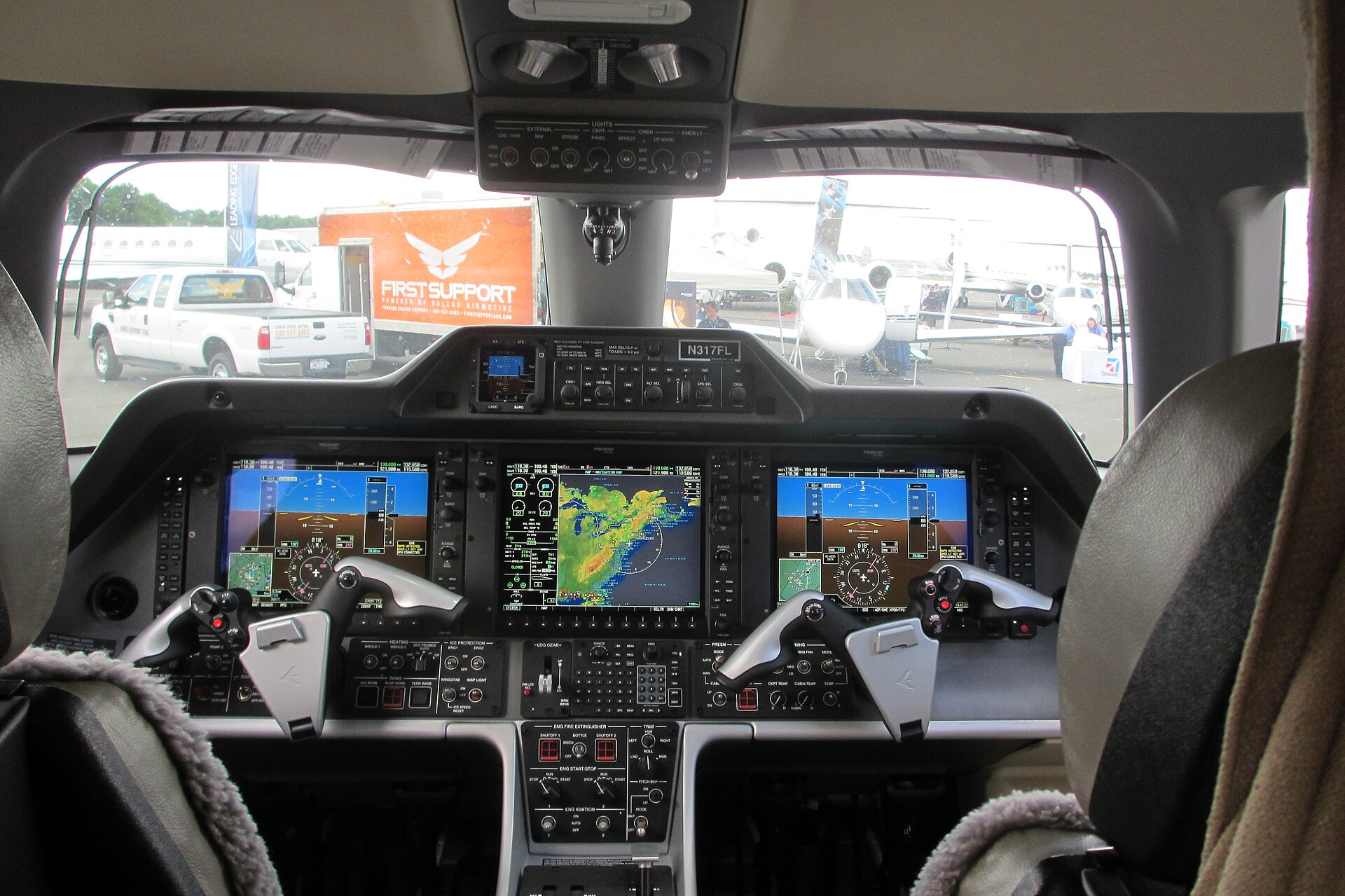
Farnborough, Biggin Hill or Luton: choosing a London private jet airport
Compare the final ground destination, operating window, aircraft requirements and handling arrangements before choosing a London airport.
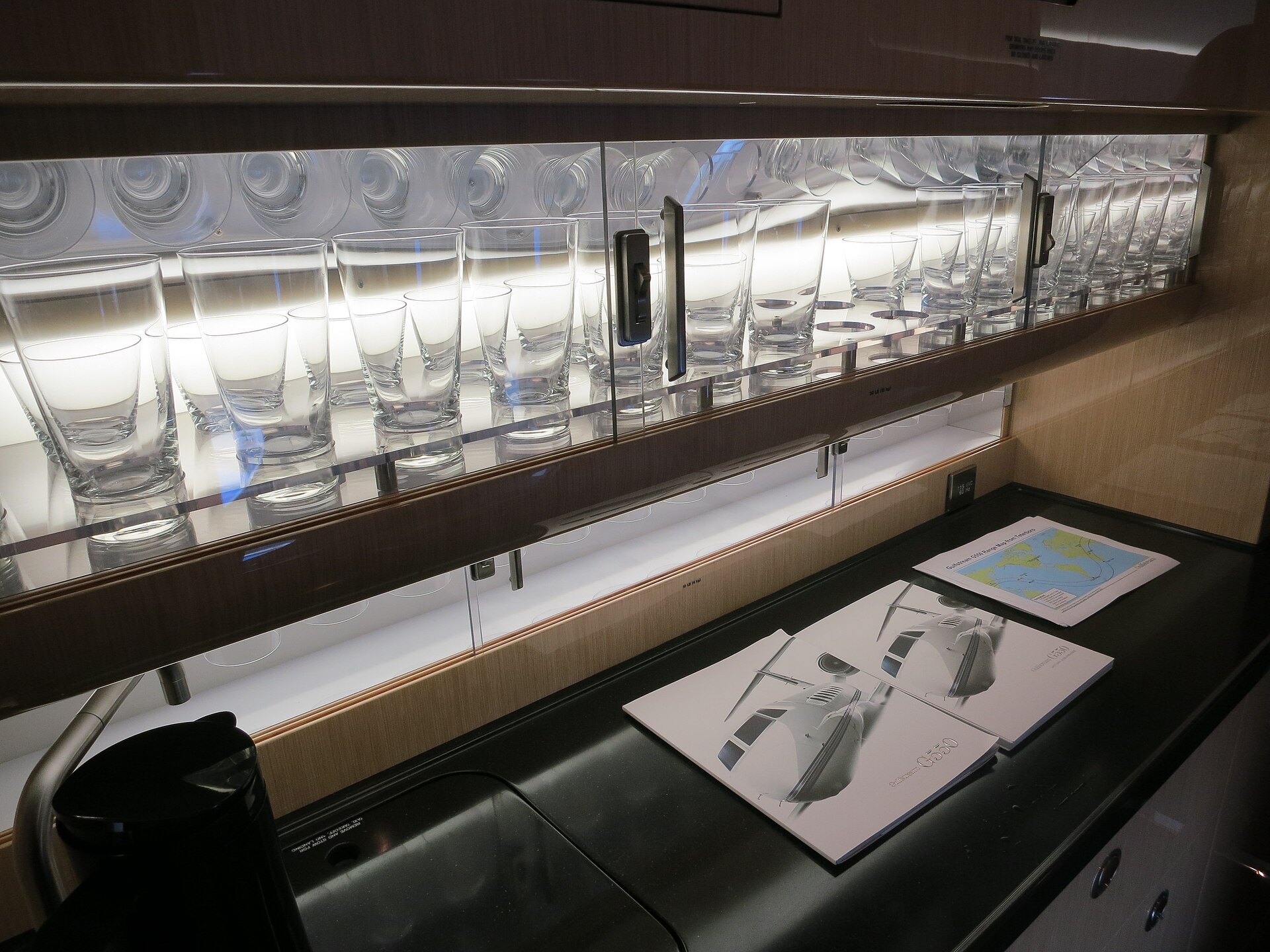
Teterboro, Westchester or Morristown: choosing a New York private jet airport
Compare the airport and ground destination together, then check handling, timing, noise requirements and a fallback before accepting a charter proposal.