Super-Midsize Battle: Challenger 3500 vs Praetor 600 vs Citation Longitude vs G280
The most competitive segment in business aviation, compared on range, cabin, systems, operating cost and the fleets that will determine resale values.
By JetAtlas · Published 2026-07-23 · 8 min read · How we check facts
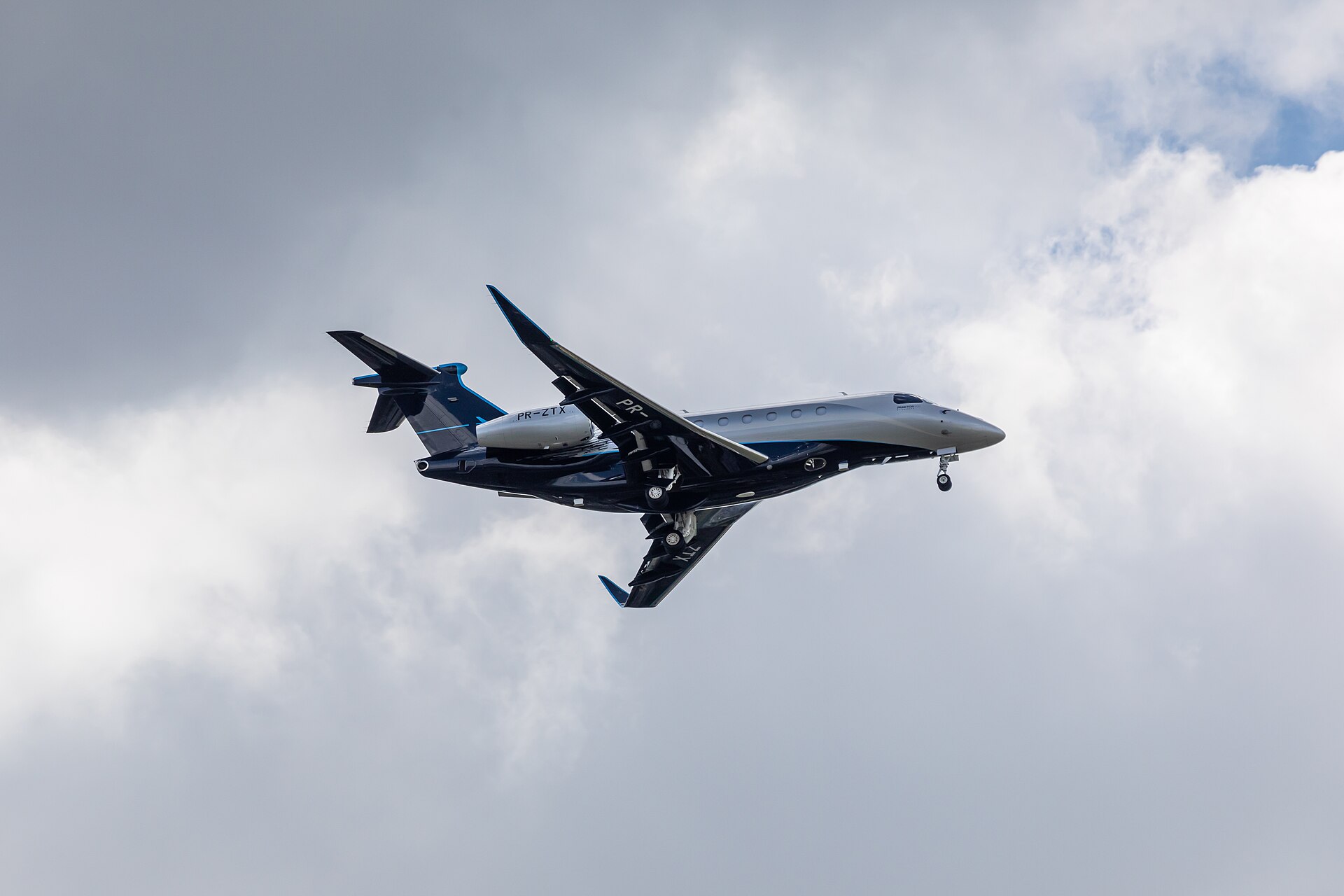
The super-midsize class is where corporate flight departments, fractional operators and first-time large-cabin buyers converge, and the four aircraft that dominate it are unusually well matched. Each will fly eight people across the Atlantic from the US East Coast or from Beijing to Singapore; each has a flat-floor, stand-up cabin; each costs between 21 and 30 million dollars. The differences are in the details, and the details decide which one suits you.
The numbers
| Bombardier Challenger 3500 | Embraer Praetor 600 | Cessna Citation Longitude | Gulfstream G280 | |
|---|---|---|---|---|
| Certification | 2022 (3500 update of the Challenger 350) | 2019 | 2019 | 2012 |
| Range, 4 passengers (nm) | 3,400 | 4,018 | 3,500 | 3,600 |
| High-speed cruise | Mach 0.82 | Mach 0.80 | Mach 0.80 | Mach 0.84 |
| Long-range cruise | Mach 0.80 | Mach 0.78 | Mach 0.78 | Mach 0.80 |
| Cabin length | 28 ft 7 in | 27 ft 6 in | 25 ft 2 in | 25 ft 10 in |
| Cabin width | 7 ft 2 in | 6 ft 10 in | 6 ft 5 in | 7 ft 2 in |
| Cabin height | 6 ft 1 in | 6 ft 0 in | 6 ft 0 in | 6 ft 3 in |
| Cabin altitude at max altitude | 4,850 ft | 5,800 ft | 5,950 ft | 7,000 ft |
| Passengers (typical / max) | 9 / 10 | 8 / 12 | 8 / 12 | 8 / 10 |
| Baggage | 106 cu ft | 155 cu ft | 112 cu ft | 154 cu ft |
| Takeoff distance (MTOW) | 4,835 ft | 4,717 ft | 4,810 ft | 4,750 ft |
| Engines | Honeywell HTF7350 | Honeywell HTF7500E | Honeywell HTF7700L | Honeywell HTF7250G |
| Avionics | Collins Pro Line 21 Advanced | Collins Pro Line Fusion | Garmin G5000 | Collins Pro Line Fusion (PlaneView280) |
| Fly-by-wire | No | Yes (partial) | No | No |
| Typical equipped price (USD m) | 27.5 | 21.5 | 30.0 | 25.5 |
| Direct operating cost per hour (USD) | 3,600-4,000 | 3,300-3,700 | 3,200-3,600 | 3,500-3,900 |
| Fleet in service (2026) | over 1,000 (350 and 3500) | approx. 200 | approx. 250 | approx. 300 |
All four share the Honeywell HTF7000 engine family, which is the class's quiet hero: proven, efficient and supported by Honeywell's MSP programme worldwide. That leaves cabin, systems, range and fleet size to differentiate them.
Bombardier Challenger 3500
The Challenger 350 has been the best-selling super-midsize jet for a decade, and the 3500 update kept the airframe and engines while modernising everything the passenger touches: Nuage seats borrowed from the Global, a voice-controlled cabin, wireless charging, 24-inch 4K displays, and, critically, a lower cabin altitude of 4,850 feet, the lowest in the class. Bombardier also added autothrottle and eco-mode flight planning on the flight deck. The Challenger has the widest cabin along with the G280 and the largest fleet, which means the deepest pre-owned market, the most crew availability and the strongest support network. It gives away range to the Praetor and cruises at a lower cabin altitude than anything else in the segment. Its price is the second highest, and it has the smallest baggage compartment. NetJets took delivery of a large batch of 3500s in 2024 and 2025, cementing the type's fractional footprint.
Embraer Praetor 600
The Praetor 600 is the range champion by a wide margin: 4,018 nautical miles means London to New York with margin, Dubai to London with a full cabin, and Sao Paulo to Miami nonstop. It achieves this with a new wing with winglets, additional fuel and the class's only fly-by-wire flight control system with full envelope protection, inherited from the Legacy 500. The cabin is slightly narrower than the Challenger's but has the largest baggage compartment, a stone-floored galley option and Embraer's excellent Bossa Nova interior. Its price is the lowest of the four by a distance, which along with Flexjet's 182-aircraft Embraer order in 2025 has made it the segment's fastest-growing type. Weaknesses are the smaller installed base outside the Americas, a support network that is still thinner in Asia, and a cabin altitude higher than the Challenger's.
Cessna Citation Longitude
The Longitude is Textron Aviation's flagship and its first true super-midsize. Its selling points are the quietest cabin in the class, a large flat-floor interior with a walk-in baggage compartment accessible in flight, the intuitive Garmin G5000 flight deck, and Textron's service network, the largest in business aviation. Operating costs are marginally the lowest of the four. The Longitude's range of 3,500 nm is competitive rather than class-leading, its cabin is the narrowest, and its list price is the highest, although Textron negotiates more actively than Bombardier or Gulfstream. NetJets' order for up to 1,500 Citation aircraft over the coming decade includes Longitudes in significant numbers, which supports its future residual values.
Gulfstream G280
The oldest design of the four, the G280 remains a very capable aircraft: the fastest at Mach 0.84, the tallest cabin, excellent hot-and-high performance, and Gulfstream's support ecosystem. It flies London City with a steep-approach approval, which few in this class can. Its weaknesses are age-related: the highest cabin altitude of the four at 7,000 feet, a heavier structure, and the sense that Gulfstream's attention is elsewhere. Gulfstream has hinted at a successor but has not announced one, which weighs on the G280's resale. For a buyer who wants a Gulfstream badge and a Gulfstream support experience at super-midsize pricing, it remains the only route, and its pre-owned values are steady.
Real-world missions
| Mission | Distance (nm) | Challenger 3500 | Praetor 600 | Longitude | G280 |
|---|---|---|---|---|---|
| New York to London (winter, 6 pax) | 3,000 | Marginal | Yes | Marginal | Yes |
| Beijing to Singapore (6 pax) | 2,400 | Yes | Yes | Yes | Yes |
| Dubai to London (8 pax) | 2,950 | Marginal | Yes | Marginal | Marginal |
| Los Angeles to Honolulu (6 pax) | 2,220 | Yes | Yes | Yes | Yes |
| Sao Paulo to Miami (6 pax) | 3,550 | No | Yes | No | Marginal |
| Hong Kong to Sydney (6 pax) | 4,000 | No | Marginal | No | No |
Operating economics and resale
On a five-year hold at 400 hours a year, the Praetor's lower entry price and the Challenger's stronger residual value roughly cancel out, leaving total ownership cost within a few percent across the four. The Longitude's low operating cost and the G280's slightly higher fuel burn and older-design maintenance also converge. The largest driver of five-year cost is what you paid on day one and what the market pays you on the way out, and on that basis the Challenger 3500, with its enormous fleet and fractional demand, remains the safest choice.
The verdict
- Challenger 3500 if you want the market's default super-midsize: the widest cabin, the lowest cabin altitude, the deepest support and the most predictable resale.
- Praetor 600 if range matters, if you value fly-by-wire, and if the lowest price in the class with the newest technology appeals.
- Citation Longitude if a quiet cabin, low operating costs and Textron's service network are your priorities.
- G280 if you want the fastest aircraft in the class, London City capability, and the Gulfstream ecosystem.
There is no weak aircraft here, only four sharp trade-offs.
Mentioned in this story
More insights

What luxury really means on a VIP airliner
A VIP airliner is not just a larger private jet. Its real luxury is measured in certified space, sleep, quiet systems, completion time, crew workflow and the ability to carry a household or delegation across oceans without turning the cabin into theatre.
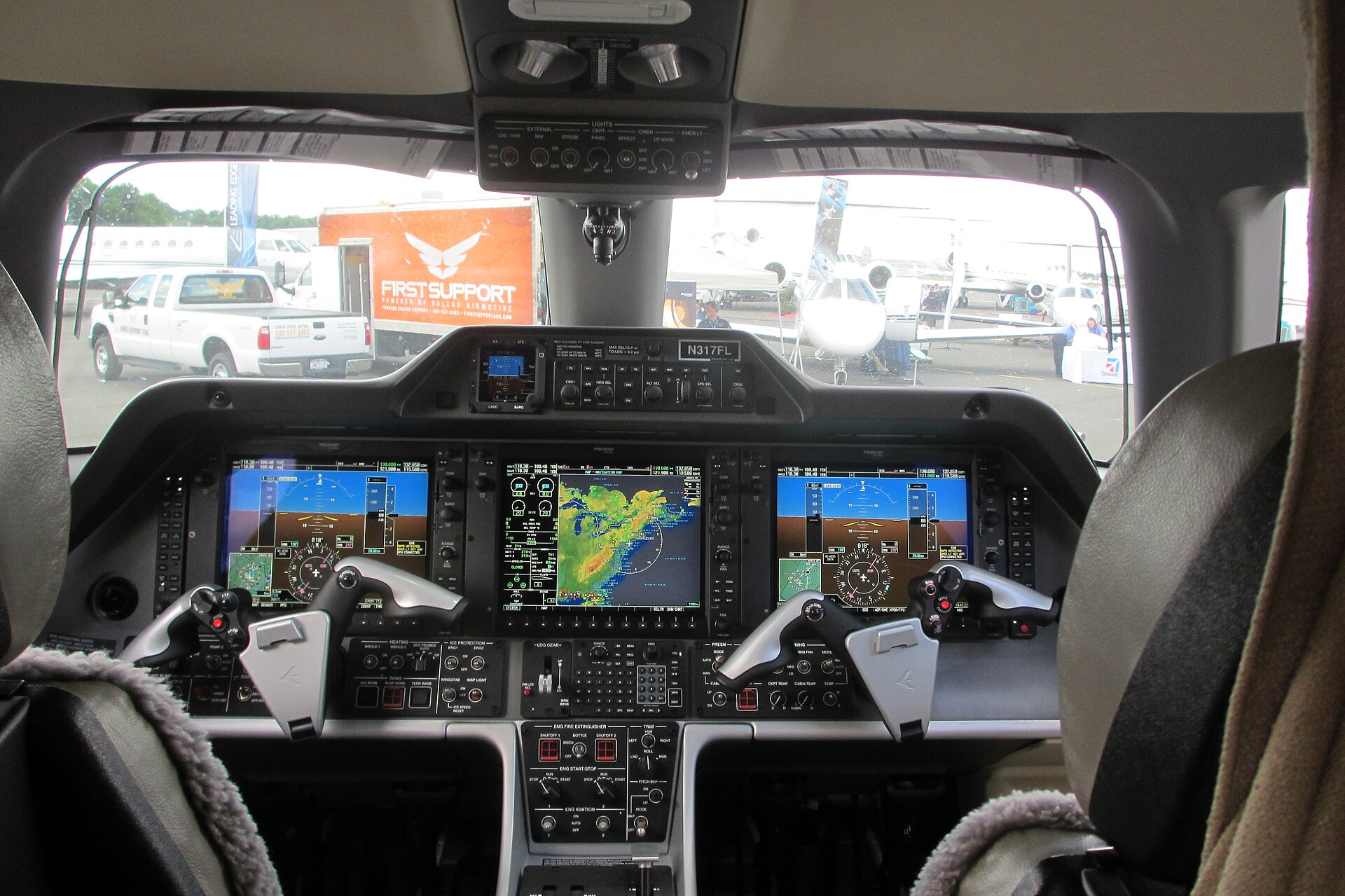
Farnborough, Biggin Hill or Luton: choosing a London private jet airport
Compare the final ground destination, operating window, aircraft requirements and handling arrangements before choosing a London airport.
Teterboro, Westchester or Morristown: choosing a New York private jet airport
Compare the airport and ground destination together, then check handling, timing, noise requirements and a fallback before accepting a charter proposal.