What Happens When a Private Jet Breaks Down Abroad
An overseas AOG is less dramatic than it sounds and more complicated than passengers expect. The hard part is rarely one mechanic with a wrench; it is parts paperwork, local approvals, ferry permits, customs and finding another aircraft if the trip cannot wait.
By JetAtlas · Published 2026-09-18 · 9 min read · How we check facts

A red towbar pin can stop a $33.5 million Bombardier Challenger 650 as surely as a failed generator can. The passengers may already be through the lounge at Geneva, Nice, Marrakech or Malé. Catering is loaded. The handler is waiting with the van. Then the crew write a defect in the aircraft logbook and the airplane stops being a travel machine. It becomes an AOG case: aircraft on ground.
That phrase sounds theatrical, but in business aviation it has a plain meaning. The aircraft has a technical problem that prevents it from being dispatched until an approved person, using approved data and acceptable parts, signs it back into service. Abroad, the repair itself may be the simple part. The hard part is often proving that every hand, document and component is acceptable to the aircraft’s registry, the local authority, the insurer and the owner’s maintenance program.
The first hour is diagnosis, not panic
The flight crew do not bargain with the defect. They identify it, record it and call the operator’s maintenance controller, director of maintenance or the manufacturer’s AOG desk. On a managed jet, that call may go through a 24-hour operations center. On an owner-flown turboprop, it may go first to the home maintenance shop and then to the nearest approved service center.
The first questions are practical:
- Is the item required for flight under the aircraft’s minimum equipment list or operating rules?
- Can the problem be cleared by troubleshooting, a reset or a documented inspection?
- Is a replacement part available on the airport, nearby or at a regional spares hub?
- Is there a licensed engineer or approved repair station with the right authority for that aircraft type and registration?
- If passengers must move, is a substitute aircraft available before the original jet can be repaired?
A nuisance fault can disappear in an hour. A failed windshield, engine accessory, brake component, flight-control computer or pressurization part can turn a planned departure into a multi-day exercise.
Abroad means three sets of rules
A U.S.-registered business jet parked in France, a Bermudan-registered jet in Saudi Arabia or a German-registered aircraft in the Bahamas does not suddenly become local just because it is on local concrete. The aircraft still belongs to its state of registry. The maintenance release must satisfy that state’s rules, and the work normally has to be done by a person or organization approved or accepted for that aircraft.
Local rules matter too. Engineers need airside access. Tools and parts may need temporary importation. A foreign technician may need permission to work on the ramp. At some airports, a visiting mobile team cannot simply drive through the gate and open panels.
The paperwork becomes visible when the aircraft cannot be fully repaired where it sits. The FAA says a special flight permit may be issued for an aircraft that does not currently meet normal airworthiness requirements but is capable of safe flight, including for a flight to a repair point. It also states that such a permit does not authorize flight over another country without that country’s permission. In practical terms, a ferry flight from a foreign airport may require the aircraft’s registry authority, the departure country and any overflown countries to agree on the route and limitations.
EASA guidance for foreign Part-145 line maintenance describes unscheduled support at a non-approved location as a privilege for unexpected events such as an AOG requiring defect rectification, followed by a certificate of release to service. That is the quiet legal spine of the whole event: no proper release, no legal departure.
The support network starts moving
Large business jet manufacturers have spent heavily on this problem because owners judge them by bad days, not brochure range. Gulfstream lists 24 FAST bases, more than 135 technicians and a 24-hour technical operations setup involving engineers, technical specialists and inventory staff. Dassault’s Falcon support system includes a round-the-clock command center, GoTeams and two Falcon 900 aircraft used to carry technicians and parts from Teterboro and Paris-Le Bourget. Bombardier said in March 2025 that its network included 10 service centers, 10 line maintenance stations and 50 Mobile Response and Unscheduled Maintenance Team units, with parts distribution hubs in Chicago, Frankfurt, Singapore and Hong Kong.
Independent service companies and airport MROs fill the gaps. A popular European summer airport may see several Citation, Challenger, Gulfstream, Falcon and Phenom calls in a week. A remote island airport may have a good handler, fuel and stairs, but no one qualified to sign off a composite repair or change a specific avionics box.
| Support network or survey item | Real figure | Why it matters in an overseas AOG |
|---|---|---|
| Gulfstream FAST bases | 24 | More launch points for technicians and parts |
| Gulfstream FAST technicians | 135+ | Factory field staff for urgent troubleshooting |
| Bombardier service centers | 10 | Heavy support locations across six countries |
| Bombardier mobile and unscheduled maintenance units | 50 | Road teams for Learjet, Challenger and Global aircraft |
| Dassault GoTeam technicians | 250 | Falcon specialists trained for grounded aircraft |
| Textron mobile service units | 60+ | Field support for Citation, Beechcraft and Hawker aircraft |
| Professional Pilot 2026 accepted survey forms | 921 | Operator feedback behind its product-support rankings |
| Professional Pilot 2026 jet line evaluations | 913 | Sample used for jet manufacturer scores |
The table explains why type choice matters after purchase. A light jet with a large installed fleet and a common avionics suite may be easier to support than a rare long-range aircraft at an outstation, even if the long-range aircraft is newer and more expensive.
Parts can be harder than people
A mechanic can arrive before the part does. That is common. The failed item may be a rotable component held in a pool, a life-limited part, a tire, a brake assembly, a sensor or an avionics unit. If the item is on the shelf at the destination airport, the job may be finished quickly. If it sits in Frankfurt, Singapore, Dubai or Wichita, the next problem is transport.
Aircraft parts travel with documents. A release certificate, such as an FAA Form 8130-3 or an EASA Form 1, tells the receiving maintenance organization what the part is and why it may be installed. Without the paperwork, a box on the ramp is just an expensive object.
Customs can add hours or days. A part may be temporarily imported for repair of a foreign aircraft, but that process still needs a broker, correct commodity codes, invoices and sometimes a bond. Batteries, oxygen equipment, pressurized containers and hazardous materials bring more constraints. A part pulled from another aircraft can be legal, but only if its traceability and condition are acceptable.
This is why the most useful spare may not be the largest one. A wheel and tire assembly, a starter-generator, brake parts, filters, O-rings, common bulbs, fuses and frequently changed sensors can prevent an overnight stop from becoming a week. But carrying spares has limits: weight, space, shelf life and documentation all matter.
Passengers usually leave before the aircraft does
For the people in the cabin, an overseas breakdown becomes a logistics problem. The operator may arrange a replacement charter, move the passengers to an airline, rebook hotels or ask them to wait. The answer depends on contract language.
A whole-aircraft charter client usually expects the operator or broker to find another aircraft, though the contract determines who pays the difference. A fractional owner may have clearer access to backup lift. A private owner bears the full disruption unless covered by a management agreement, service plan or insurance provision. Dassault even advertises passenger alternative lift as part of FalconResponse, a sign that the passenger problem is now treated as part of the AOG event, not an afterthought.
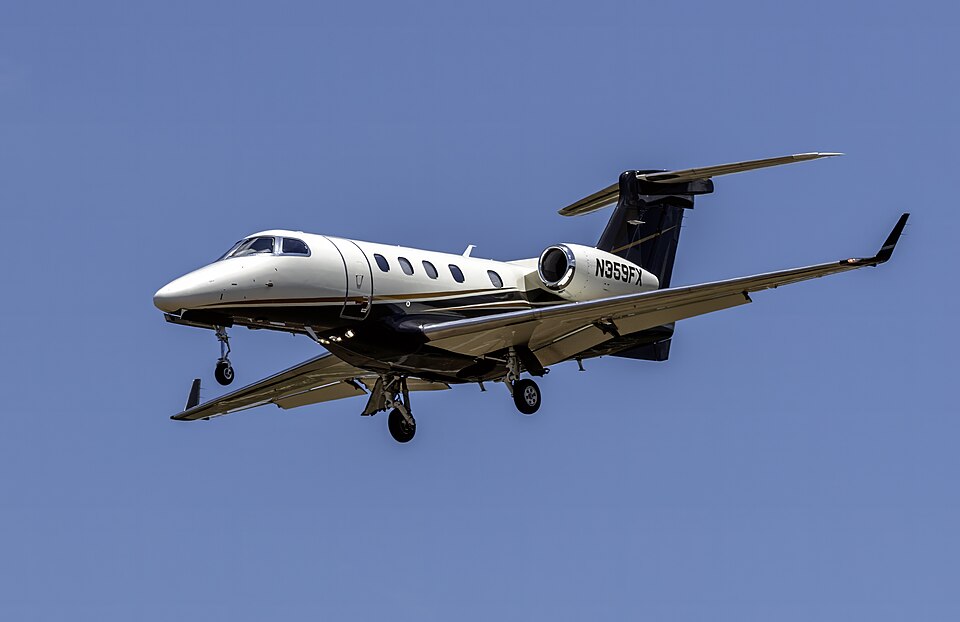
The replacement aircraft is rarely identical. A Phenom 300E that normally carries six passengers and has a 2,010 nm range is not a Challenger 650, with a typical 10-seat cabin and 4,000 nm range. A Gulfstream G650ER can cross 7,500 nm; a King Air 360 is a rugged turboprop with a 1,806 nm range and far lower operating cost. If the stranded itinerary includes oceanic legs, pets, skis, security staff or a short runway, dispatchers may need several phone calls before they find a workable substitute.
| Aircraft | Typical passengers | Range | Max cruise | JetAtlas hourly variable cost |
|---|---|---|---|---|
| Embraer Phenom 300E | 6 | 2,010 nm | 464 kt | $1,800 |
| Citation Latitude | 8 | 2,700 nm | 446 kt | $2,600 |
| Bombardier Challenger 650 | 10 | 4,000 nm | 470 kt | $4,000 |
| Gulfstream G650ER | 14 | 7,500 nm | 516 kt | $5,800 |
| Beechcraft King Air 360 | 7 | 1,806 nm | 312 kt | $1,150 |
Those figures are not substitute-charter quotes. They show the operational spread. When a long-range jet fails abroad, replacing the seats is easier than replacing the range, baggage volume, runway performance and crew duty plan.
The aircraft may come home on a ferry permit
If the airplane can be made safe but not fully repaired, the owner may prefer to move it to a major service center. A ferry permit is not a shortcut around maintenance. It is a restricted approval for a specific aircraft condition, often with limits on altitude, speed, weather, gear position, pressurization, passengers and route. It may require a test, inspection or temporary repair before departure.
No passengers is a common limitation when the aircraft is being moved for repair. The crew may fly with extra fuel, avoid night or icing, stay below a certain altitude or use a route that keeps them near suitable alternates. For a pressurization fault, that might mean a low-level flight with oxygen planning. For landing gear or flap issues, it might mean a direct hop to the nearest suitable maintenance base rather than the owner’s preferred airport.
The owner sees another bill: crew time, parking, handling, hotel rooms, maintenance labor, parts, shipping, customs brokerage and sometimes a substitute aircraft. Warranty or an hourly maintenance program may soften part of the impact, but not every cost is covered. Consequential expenses, such as missed meetings or replacement lift, sit in a different bucket.
Preparation changes the ending
The best international operators do not wait for the fault message. Before a trip, they check the maintenance capability at destination and alternates, confirm whether the aircraft type is supported nearby, carry copies of key documents and know which spares are worth loading. For harder destinations, they ask the handler about ramp access for visiting engineers and customs procedures for aircraft parts.
Good planning does not make a hydraulic leak disappear. It changes the shape of the delay. The passengers leave on another aircraft at noon instead of midnight. The engineer has the right airport pass. The part arrives with its certificate. The ferry permit lists the right countries. The logbook entry is complete.
At the end, the drama is a signature. A licensed person writes the release, closes the panel and hands the aircraft back to the crew. The jet that was a grounded asset in the morning is again an aircraft, sitting on the ramp with chocks at the tires and a flight plan in the system.
Sources
- FAA: Special Airworthiness Certificates
- EASA: Foreign Part-145 approvals, aircraft line maintenance
- Bombardier: Perth Line Maintenance Station announcement, March 21, 2025
- Professional Pilot: 2026 Corporate Aircraft Manufacturers Product Support Survey
- Gulfstream: Customer Support
- Dassault Falcon: Fleet Support
Mentioned in this story
More insights
What a jet card really costs versus charter
Jet cards buy price certainty, not automatic savings. The real comparison with on-demand charter turns on minimums, peak days, repositioning, taxes, aircraft category and the cost of tying up cash.

How Private Jets Handle Turbulence and Storms
Private jets do not defeat bad weather so much as plan around it: crews use forecasts, radar, air traffic help and conservative cabin procedures to keep storms off the nose and passengers in their seats. The aircraft’s altitude, wing, avionics and operating rules all matter, but the simplest protection remains a fastened belt.

Inside the training of a business-jet flight attendant
Business-jet flight attendants train for far more than polished service: fire, smoke, medical events, ditching, evacuation, food safety and the oddities of each cabin. The job is often optional by regulation on smaller jets, but the training is built around the moment when the pilots are busy and the cabin has to act.