
Dassault Aviation Falcon 10X
The Falcon 10X is Dassault's first twin-engine ultra-long-range flagship, with a carbon-fiber wing, a fighter-derived digital flight control system and the widest and tallest cabin in business aviation. The prototype made its first flight in June 2026 and the company is targeting certification and initial deliveries in late 2027, with a 7,500 nm range at Mach 0.85.
In short: The Dassault Aviation Falcon 10X is a Ultra-Long-Range with a range of 7,500 nm, a cruise speed of 516 knots and room for 12 passengers. It lists at about $75M new and costs roughly $6,500 an hour to operate (estimate).
7,500 nm
Range
516 kts
Max cruise
12–19
Passengers
$75M
New price
Highlights
- Widest and tallest cabin in business aviation
- Fighter-derived digital flight controls
- 7,500 nm range on Pearl 10X engines
Performance
- Range
- 7,500 nm
- Max cruise
- 516 kts
- Max Mach
- 0.925
- Max altitude
- 51,000 ft
- Takeoff distance
- 5,900 ft
- Landing distance
- 2,500 ft
- MTOW
- 115,000 lb
- Engines
- 2 × Rolls-Royce Pearl 10X
- Thrust per engine
- 18,000 lbf
- Fuel burn
- 480 gal/hr
- Avionics
- Dassault NeXus flight deck
Cabin
- Passengers
- 12 / 19
- Cabin length
- 53.8 ft
- Cabin width
- 9.1 ft
- Cabin height
- 6.7 ft
- Cabin volume
- 2,780 cu ft
- Baggage
- 198 cu ft
- Min. crew
- 2
Economics
- New price
- $75M
- Variable cost / hr
- $6,500
- Fixed cost / yr
- $1,900,000
- First delivery
- 2027
- Units built
- Not published
- Pre-owned range
- Not published
Estimates. Operating costs and pre-owned prices are modelled from industry benchmarks and updated quarterly. Data reviewed 2026-09-13. Sources & methodology.
Dimensions & weights
- Length
- 109.6 ft
- Wingspan
- 110.3 ft
- Height
- 27.6 ft
- Max fuel
- 51,700 lb
Programme milestones
- 2021-05-06Announced · Programme launched en.wikipedia.org
- 2026-06-19First flight · First flight (Bordeaux-Mérignac) dassaultfalcon.com
Pre-owned range & Residual value curve
Pre-owned range
—
Estimates. Operating costs and pre-owned prices are modelled from industry benchmarks and updated quarterly.
Residual value curve
Estimated value retention over 10 years from new, by category depreciation model.
Year 10: 55% ≈ $41.3M
Compare with similar private jets


Compare: Falcon 10X vs G650ER vs Global 7500 vs G700 →
Related insights

Why business jets fly faster than airliners
The fastest business jets are not faster by accident. They trade fuel, cabin capacity and design complexity for minutes saved, higher cruise altitudes and a smaller passenger count whose time is often the main payload.

How private aviation is trying to cut carbon
Private aviation’s carbon plan rests on sustainable aviation fuel, better routing, tighter aircraft matching and cleaner designs. The hardest part is not proving the technology works, but getting enough low-carbon fuel to the ramps where business jets actually fly.
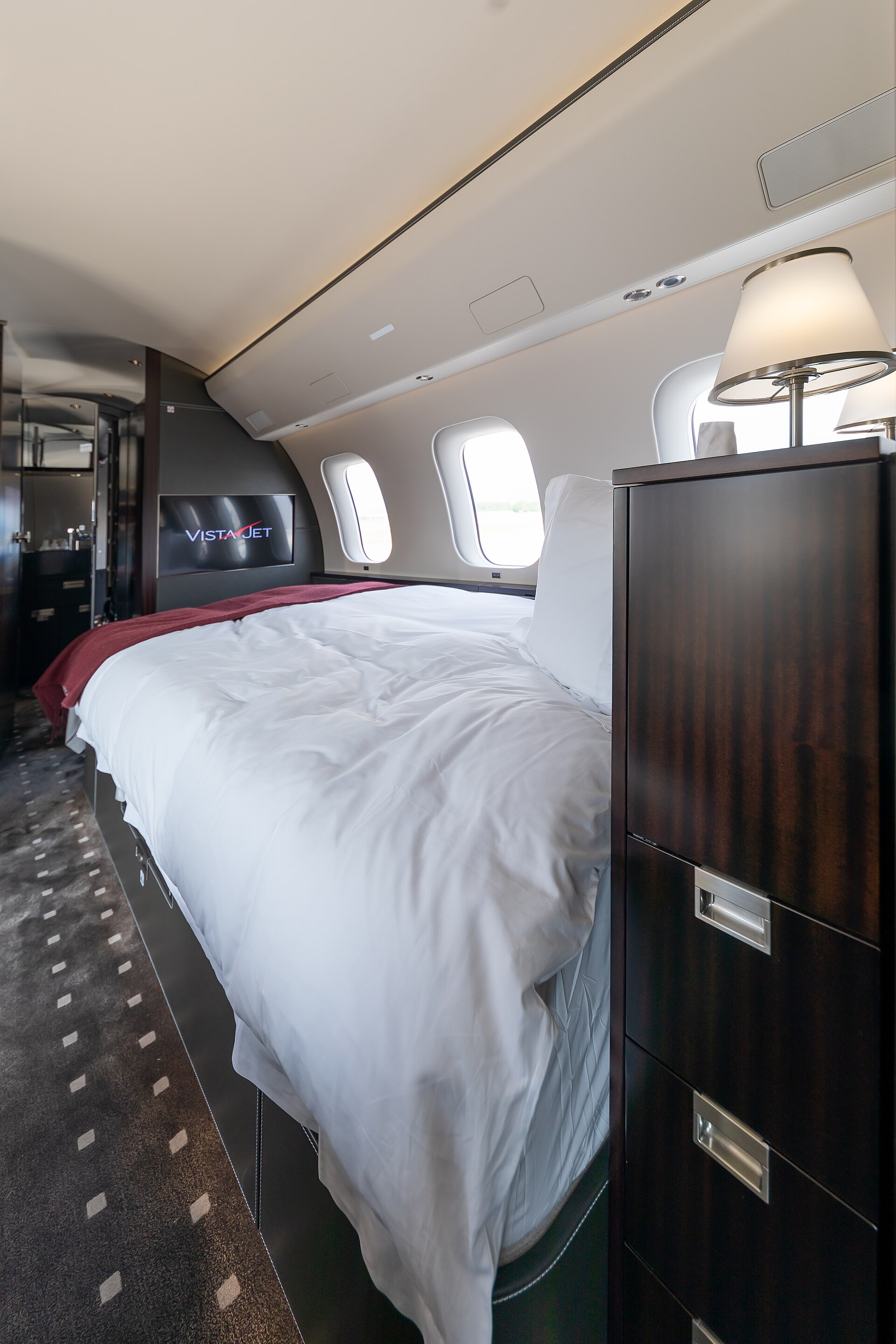
Sleeping on a Private Jet: Real Beds, Thinner Air and the Pilots Who Take Turns
Most private jets make beds out of seats. The largest now have fixed bedrooms, cabins pressurised below 3,000 feet and lights that imitate sunrise. What actually helps passengers sleep, and where the pilots rest on a 15-hour flight.