How a Private Jet Flight Is Planned, Hour by Hour
A private jet departure looks relaxed at the cabin door because most of the work has already happened: routing, fuel, customs, crew timing, catering, weather and ground handling. This hour-by-hour explainer follows a typical 10:00 a.m. departure from first request to takeoff.
By JetAtlas · Published 2026-09-15 · 8 min read · How we check facts

At 6:42 a.m., three hours and 18 minutes before a 10:00 departure, the airplane may still be dark on the ramp. The work is not. A scheduler has the passenger list, a handler has the fuel release, the pilots are watching a line of weather, and somebody has already checked whether the destination ramp will accept the aircraft.
That is the odd truth of private flying. The passenger may arrive 15 minutes before departure and walk straight to the airstair. The flight, though, has been assembled in layers: legal, mechanical, meteorological, commercial and domestic. It is less like calling a car than staging a small, moving airport.
The clock below uses a simple case: a U.S. domestic IFR flight, departing at 10:00 a.m. on a midsize jet. International trips, ski-country airports, island runways and major events can push many of these items back by days.
T-minus 24 hours: can this trip be flown?
The first decision is not which sandwich goes in the cabin. It is whether the mission works.
A coordinator checks the requested airports, departure time, passenger count, luggage, pets, catering, onward ground transport and any special needs. If the airplane is owner-operated, the scheduler may sit inside the flight department. If it is chartered, the operator must confirm the aircraft and crew, not just the sales desk.
The aircraft matters because range on a brochure is not the same as a dispatch plan. Wind, runway length, temperature, passenger weight, bags, fuel reserves and alternate airports all eat into the neat number.
| Aircraft | Typical passengers | Range | Max cruise | Planning implication |
|---|---|---|---|---|
| Beechcraft King Air 360 | 7 | 1,806 nm | 312 kt | Strong regional tool, but slower and more weather-exposed than a jet |
| Embraer Phenom 300E | 6 | 2,010 nm | 464 kt | Fast light jet; cabin and baggage limits matter on full trips |
| Citation Latitude | 8 | 2,700 nm | 446 kt | Common midsize choice for longer domestic legs |
| Bombardier Global 7500 | 13 | 7,700 nm | 516 kt | Built for oceanic legs, with far more planning around crew, permits and catering |
| Gulfstream G700 | 13 | 7,750 nm | 516 kt | Ultra-long-range range changes the problem from fuel stops to approvals and arrival timing |
These figures are starting points, not releases to fly. A hot afternoon at Aspen, a wet runway at Nantucket or a headwind over the North Atlantic can rewrite the plan.
T-minus 12 hours: the route becomes a document
By the night before, the flight is turning into an operational flight plan. The planner builds a route that air traffic control can accept, then checks weather, NOTAMs, airport hours, runway data, airspace restrictions, alternates and fuel.
In the United States, FAA rules put the burden plainly on the pilot in command before flight: weather reports and forecasts, fuel requirements, alternatives if the trip cannot be completed, known traffic delays, runway lengths and aircraft performance data all have to be considered. All IFR flights also require a flight plan submitted to the FAA.
The word NOTAM is still one of aviation’s less friendly terms. As of February 10, 2025, the FAA changed the expanded name back to Notice to Airmen. Whatever the label, a NOTAM can close a runway, disable an approach, restrict ramp access or publish a temporary flight restriction over a stadium or disaster area.
T-minus 6 hours: the ground network checks in
A private jet does not simply pull up to a gate. It uses an FBO or handler, and that handler becomes the local stage manager.
The handling checklist usually includes:
- parking or prior permission required, often shortened to PPR
- fuel quantity, supplier and release number
- lavatory and potable-water service, if needed
- passenger cars and crew transport
- catering delivery time and storage
- hangar space during snow, hail or heat
- customs arrangements for international legs
- ramp limits, curfews and noise rules
At busy leisure airports, parking can be the trip’s hard limit. The aircraft may be able to fly there easily, but not remain there. That is why some holiday trips include a drop-off, a reposition to a quieter field, and a return leg when passengers are ready to leave.
Trip-support companies sell this work because it is fragmented. One airport wants a slot. Another wants PPR. A country wants an overflight permit. A handler needs a credit confirmation before releasing fuel. For a passenger, those details are invisible unless one fails.
T-minus 3 hours: fuel is argued over in pounds
Fuel planning is where comfort, cost and law meet. Too little fuel is unsafe and illegal. Too much fuel can make the aircraft too heavy for runway performance, climb performance or landing weight.
For U.S. IFR flight in a civil airplane, the basic rule under 14 CFR 91.167 is enough fuel to fly to the first intended landing airport, then to the alternate airport when one is required, then for 45 minutes at normal cruising speed. Many operators add company reserves, expected taxi fuel, contingency fuel and extra fuel for convective weather or traffic programs.
On a short hop, the alternate may be more important than the destination. A 42-minute flight into low weather can carry a surprising fuel load if the best alternate sits far away. On a long trip, the debate may be whether carrying more fuel now avoids an expensive tech stop later.
The crew also checks weight and balance. Passenger weights, baggage, catering, potable water, skis, golf clubs and cabin stores all have a place in the calculation. A private cabin feels casual, but the loading math is not.
T-minus 2 hours: weather gets local
Weather planning begins broad and ends specific. The early version asks whether the route is reasonable. The later version asks whether the departure runway, arrival runway and alternate still make sense.
Thunderstorms matter because business jets often fly high enough to avoid ordinary lower weather but not high enough to ignore convective tops. Winter adds braking action, de-icing time and contaminated-runway performance. Summer adds density altitude, especially at mountain airports.
If the FAA issues an expected departure clearance time, the plan changes again. An EDCT can hold the airplane on the ground so it arrives at a constrained airport when the system can accept it. That may protect fuel in the air, but it can break catering timing, crew duty margins and passenger connections on the ground.
T-minus 90 minutes: the cabin plan meets the clock
Catering is not room service. It is perishable cargo with a passenger attached to it.
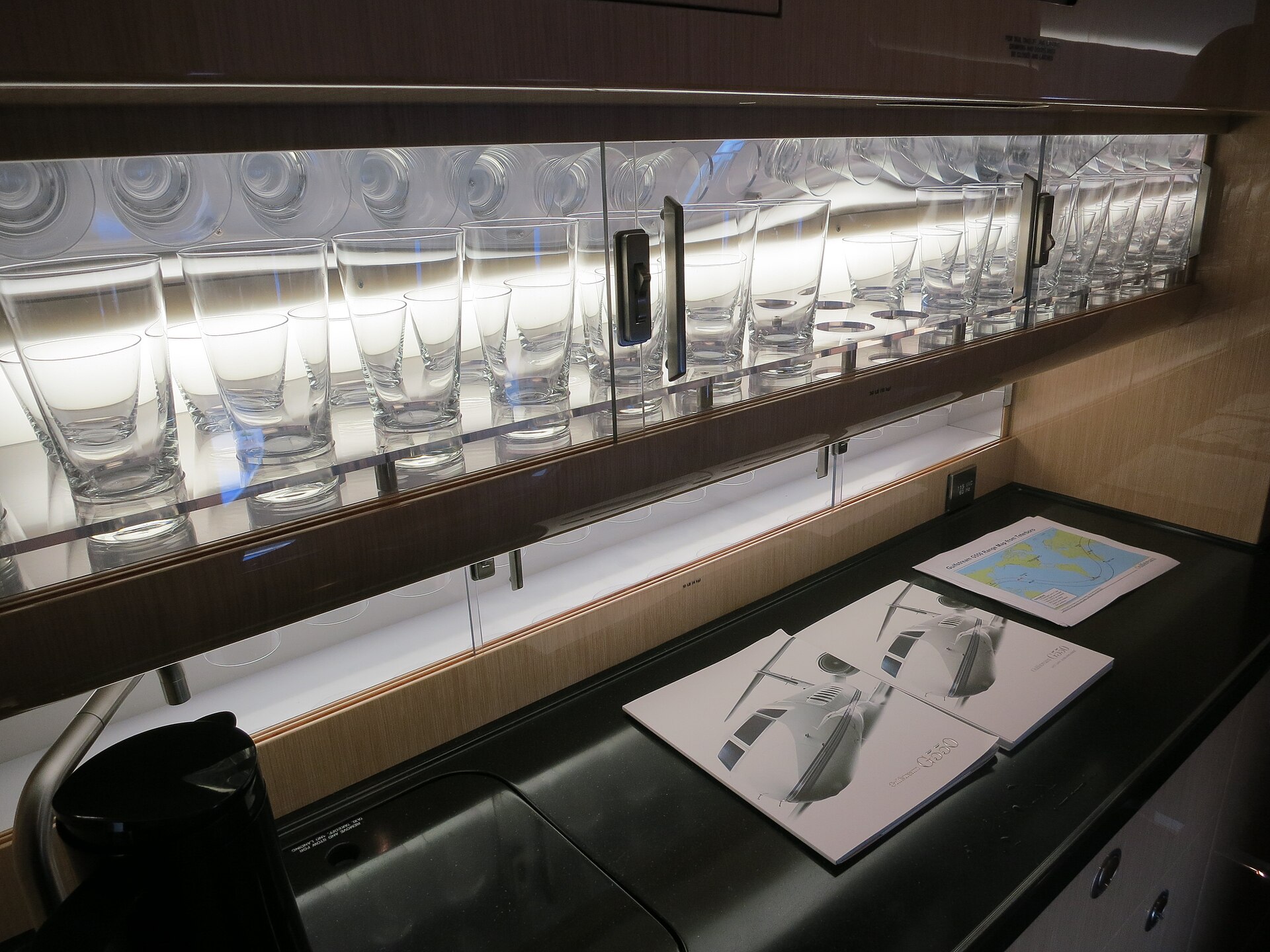
A light jet may have a coffee setup, cold storage and little else. A super-midsize or large-cabin aircraft may have ovens, better refrigeration and a cabin attendant who can plate a meal properly. The same menu that works on a Global crossing the Atlantic can be a poor fit for a Phenom on a one-hour leg.
The practical questions are plain: Can the food be chilled? Can it be reheated safely? Will it smell up the cabin? Will the destination country allow leftovers to remain on board or enter the country? A good cabin brief also notes allergies, children’s meals, coffee preferences and whether passengers want to work, sleep or eat soon after takeoff.
T-minus 60 minutes: passports, manifests and final filing
For a domestic flight, this hour is often quiet. For an international flight touching the United States, it is formal.
Private aircraft entering or leaving the U.S. must transmit APIS information to Customs and Border Protection. The FAA’s international flight information material says the information must be received by CBP no less than 60 minutes before takeoff for flights departing from or arriving in the United States. If the date changes, a new manifest is needed.
Passenger names have to match documents. Pets may need paperwork. Firearms, large amounts of currency, agricultural items and certain electronics can create extra steps. For some flights arriving from the south, a U.S. Border Overflight Exemption may determine whether the aircraft can proceed inland or must stop closer to the border.
T-minus 30 minutes: the airplane becomes real
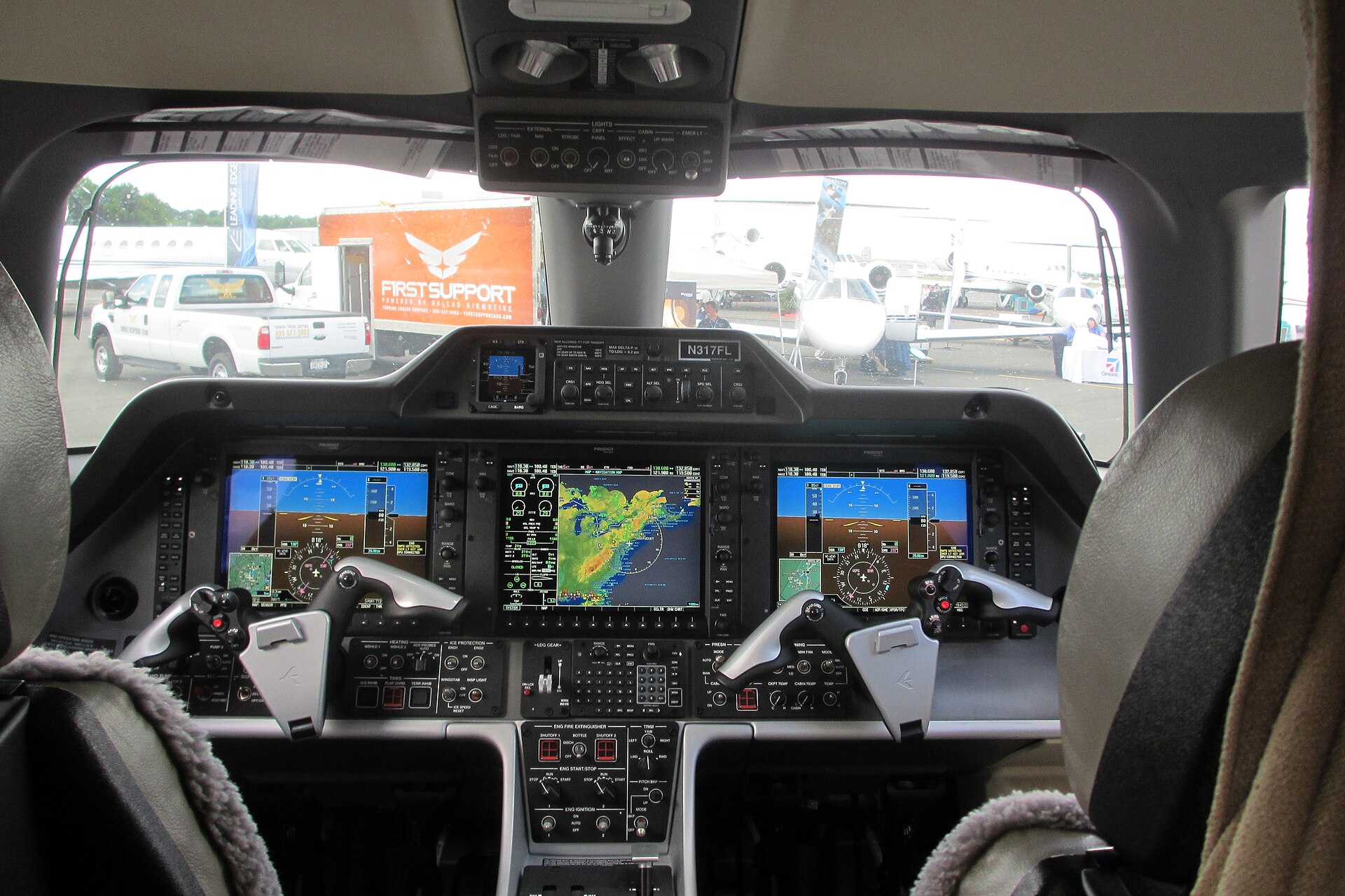
The crew is now at the aircraft. One pilot is outside checking tires, brakes, panels, probes, fluid levels and the general condition of the airframe. The other is inside loading the route, checking databases, reviewing the clearance, setting performance numbers and comparing the flight plan against avionics entries.
The cabin is stocked. Bags are counted. The lavatory is checked. Fuel uplift is confirmed against the release and the gauges. If the passengers are late, the coordinator starts watching the knock-on effects: slot validity, customs time, destination curfew, crew duty and weather.
The captain still owns the final decision. A paid charter, a company trip and an owner flight all stop at the same cockpit door.
T-minus 10 minutes to takeoff: the visible part
Passengers step from the car into the FBO, or straight to the ramp where allowed. Identification is checked as required. Bags go into the hold. The safety briefing may be short, but it is not optional: belts, exits, oxygen, smoking rules, sterile cockpit expectations and loose items in the cabin.
Then the private part ends and the air traffic system takes over. The crew calls for clearance, starts engines, taxis, waits if traffic requires, and lines up like any other IFR aircraft. The flight plan that began as a request is now a strip in the system, a route in the avionics and a fuel number on the engine display.
At rotation, the work does not stop. Flight following watches the track. The handler at the destination watches the ETA. The driver checks the tail number. In the cabin, a cup of coffee sits in its ring on the side ledge while the airplane climbs through the first layer of cloud.
Sources
Mentioned in this story
More insights

What luxury really means on a VIP airliner
A VIP airliner is not just a larger private jet. Its real luxury is measured in certified space, sleep, quiet systems, completion time, crew workflow and the ability to carry a household or delegation across oceans without turning the cabin into theatre.
Farnborough, Biggin Hill or Luton: choosing a London private jet airport
Compare the final ground destination, operating window, aircraft requirements and handling arrangements before choosing a London airport.
Teterboro, Westchester or Morristown: choosing a New York private jet airport
Compare the airport and ground destination together, then check handling, timing, noise requirements and a fallback before accepting a charter proposal.