Range vs. Reality: Why Brochure Range Is Not Real-World Range
Headwinds, payload, reserves and alternates all eat into the number on the spec sheet. Here is how to convert a manufacturer's range figure into the missions you can actually fly.
By JetAtlas · Published 2026-06-18 · 7 min read · How we check facts
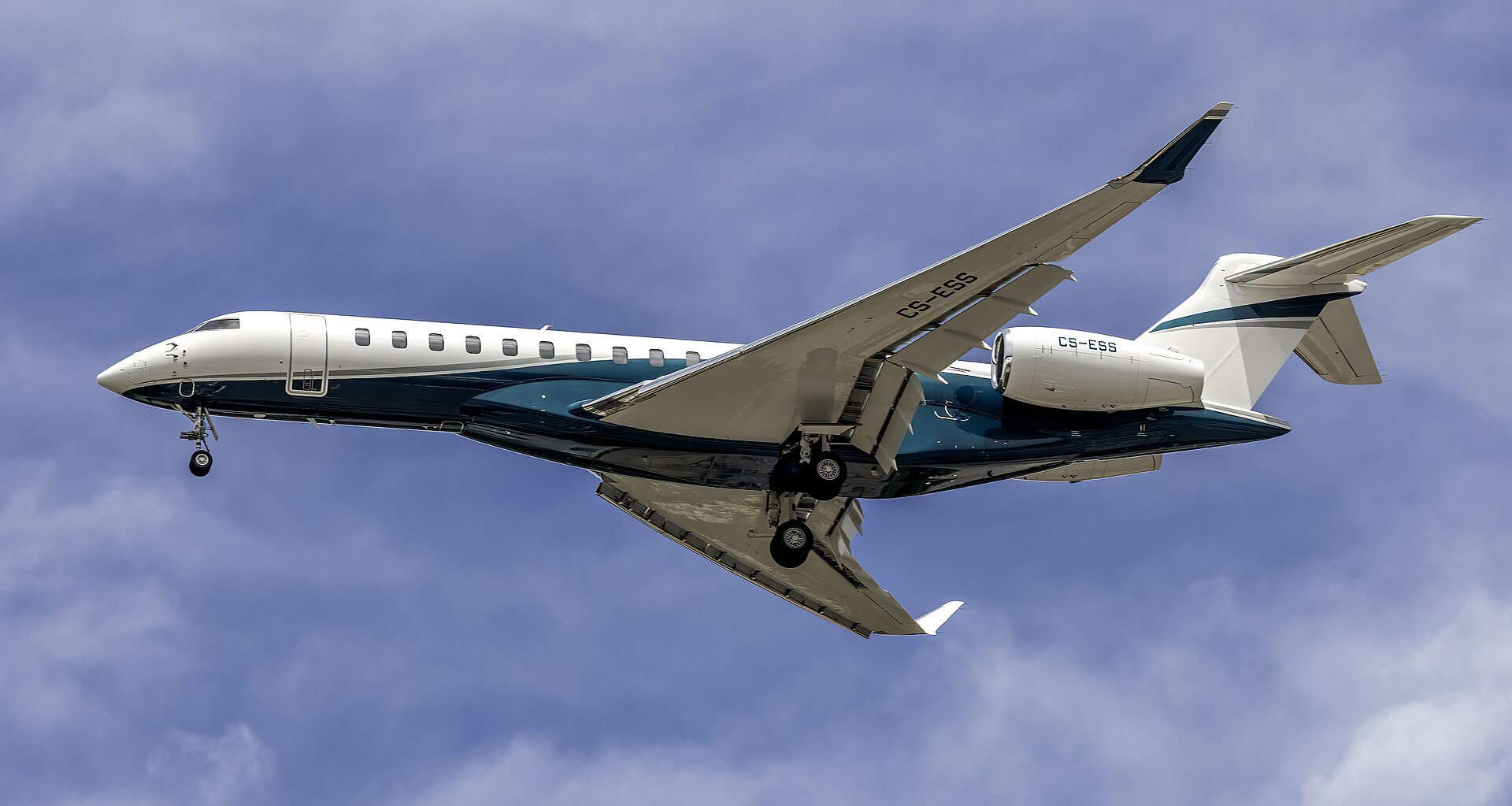
Every manufacturer publishes a maximum range, and every experienced operator treats it as a starting point for a conversation rather than a promise. A Global 7500's 7,700 nautical miles and a Praetor 600's 4,018 nautical miles are real figures, achieved under conditions that are carefully specified in the small print. The trouble is that almost no actual flight is flown under those conditions. This guide explains what the brochure number assumes, what erodes it, and how to build a realistic range envelope for the aircraft you are considering.
What the brochure number assumes
The standard basis for business jet range claims is NBAA IFR reserves: enough fuel to fly to the destination, execute a missed approach, divert to an alternate airport 200 nautical miles away, and hold for 30 minutes. That is a sensible reserve, but the rest of the assumptions are optimistic:
- Zero wind. Real routes have wind, and on the long east-west routes where range matters most, the wind is usually against you in one direction.
- A light payload. Most range figures are quoted with four or eight passengers at 200 pounds each, including baggage. A full cabin of twelve with luggage, a cabin attendant and catering can add 1,500 to 2,500 pounds.
- Long-range cruise speed. The maximum range figure is typically at Mach 0.85 for a Gulfstream or Global, Mach 0.80 for a super-midsize. Fly at the high-speed cruise the sales team advertised and range falls by 10 to 20 percent.
- International Standard Atmosphere conditions. A hot day at a high-elevation airport limits takeoff weight, which means less fuel on board.
- An optimum climb and cruise profile. Air traffic control does not always allow one.
- A full-length runway with no obstacles. Short runways and steep departure gradients force a lower takeoff weight.
The wind problem
Winds aloft are the largest single variable, and they are asymmetric. On a westbound flight across the North Atlantic in winter, average headwinds of 60 to 100 knots are common; on the return the same jet stream becomes a tailwind. Across the North Pacific the effect is larger still. A representative example:
| Route | Great circle distance (nm) | Typical winter headwind component | Effective air distance (nm) |
|---|---|---|---|
| London to New York | 3,000 | 60-80 knots | 3,450-3,600 |
| Tokyo to Los Angeles | 4,750 | 30-50 knots (eastbound tailwind, actually shorter) | 4,400-4,550 |
| Los Angeles to Tokyo | 4,750 | 80-120 knots | 5,600-6,000 |
| Dubai to New York | 5,950 | 40-70 knots | 6,400-6,800 |
| Singapore to London | 5,900 | 30-60 knots | 6,200-6,500 |
| Hong Kong to New York | 7,000 | 50-90 knots | 7,600-8,100 |
Hong Kong to New York is the classic illustration. On a still-air basis several ultra-long-range jets could do it; in winter, only the G800 and Global 8000 can reliably do it with a meaningful passenger load, and even they may need favourable conditions.
The payload problem
Aircraft have a maximum takeoff weight, and everything on board competes for it: fuel, passengers, baggage, catering, crew and any optional equipment. The payload-range trade-off is steepest on smaller aircraft. A light jet with full fuel may only be able to carry three or four passengers; fill the seats and the range drops by 20 to 35 percent. Ask the manufacturer or your consultant for the payload-range chart, not the single headline number, and read the line for your typical load.
| Category | Range with 4 passengers | Range with full cabin | Approximate reduction |
|---|---|---|---|
| Light jet | 2,000 nm | 1,400-1,600 nm | 20-30 percent |
| Super-midsize | 3,500 nm | 3,000-3,200 nm | 10-15 percent |
| Large cabin | 5,500 nm | 5,000-5,200 nm | 5-10 percent |
| Ultra-long-range | 7,700 nm | 7,000-7,300 nm | 5-9 percent |
Reserves, alternates and ETOPS-style planning
Operators add margin to the NBAA reserve for good reasons. A long overwater or polar flight requires diversion planning to airports that can accept the aircraft, and those airports may be far apart. Weather at destination may require a distant alternate. Many corporate flight departments plan to land with an hour of fuel rather than the bare minimum, which is another 200 to 400 nautical miles of range given up. Add the effect of a lower-than-optimal cruise altitude if ATC assigns one, and a further 3 to 5 percent disappears.
Runways, temperature and altitude
A flight that departs from a hot-and-high airport, such as Mexico City, Denver in summer, Johannesburg or Addis Ababa, cannot lift the full fuel load. The same is true of short runways: London City, Lugano, Aspen, Saint-Tropez, Sun Valley and many island airports impose weight limits that remove hundreds of miles. If those airports are part of your routine, the aircraft's balanced field length and its performance in the payload-range chart matter more than the maximum range.
A rule of thumb
Experienced flight departments plan on 80 to 85 percent of the brochure range for a typical mission with a normal load, and 70 to 75 percent for a winter westbound flight with a full cabin. A jet advertised at 4,000 nautical miles is therefore a reliable 3,200 to 3,400 nautical mile aircraft, which is the honest distance between, say, Dubai and London with margin, but not Dubai and New York.
To turn this into a buying decision:
- List your ten most important city pairs and their great circle distances.
- Add 10 to 20 percent for winds and routing on the harder direction.
- Add the passenger load you actually carry, not the brochure load.
- Check runway and temperature limits at both ends.
- Compare the result with the aircraft's payload-range chart at long-range cruise.
If the aircraft only makes the mission at maximum range with the seats empty, it does not make the mission.
Why the newest aircraft are changing the maths
The newest generation of ultra-long-range aircraft has widened the gap between brochure and reality less than earlier types did. The Gulfstream G800 demonstrated 8,200 nautical miles at Mach 0.85 in certification, 200 miles beyond its target, and the Bombardier Global 8000, in service since December 2025, is certified for 8,000 nautical miles. More important than the headline, both aircraft carry more payload at maximum range than their predecessors, and their high-speed cruise penalty is smaller. The same is true, at a smaller scale, of the Praetor 600 against the Legacy 500 it replaced. Range is one figure the industry keeps improving; the physics of wind and weight, however, remains undefeated.
Mentioned in this story
More insights

What luxury really means on a VIP airliner
A VIP airliner is not just a larger private jet. Its real luxury is measured in certified space, sleep, quiet systems, completion time, crew workflow and the ability to carry a household or delegation across oceans without turning the cabin into theatre.
Farnborough, Biggin Hill or Luton: choosing a London private jet airport
Compare the final ground destination, operating window, aircraft requirements and handling arrangements before choosing a London airport.

Teterboro, Westchester or Morristown: choosing a New York private jet airport
Compare the airport and ground destination together, then check handling, timing, noise requirements and a fallback before accepting a charter proposal.