Gulfstream G700 vs Bombardier Global 7500 vs Dassault Falcon 10X: The Ultra-Long-Range Showdown
Three flagships, three philosophies. We compare cabin, range, speed, systems, support and the very different delivery timelines of the aircraft competing for the top of the market.
By JetAtlas · Published 2026-07-09 · 9 min read · How we check facts
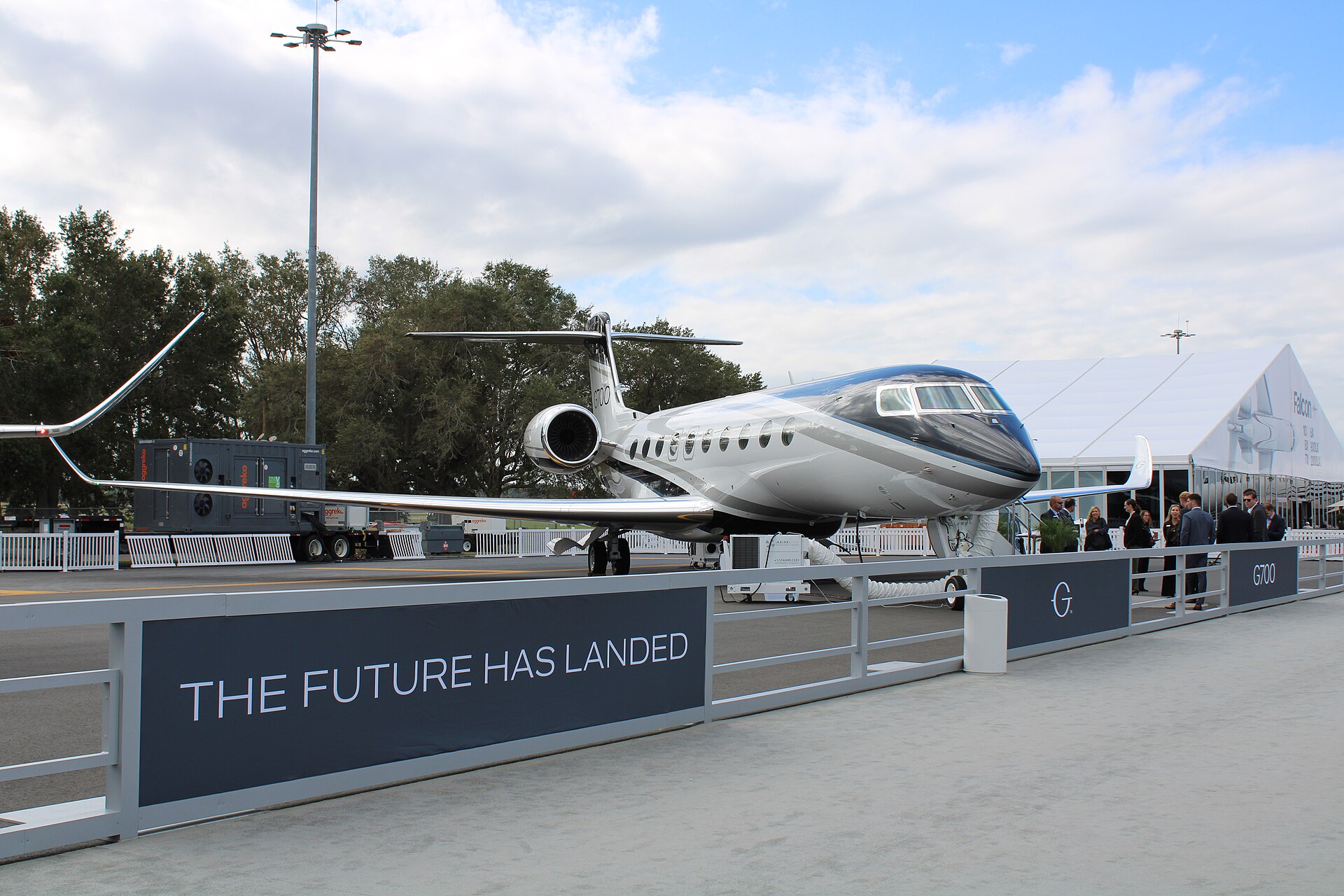
The ultra-long-range segment is where manufacturers put their best engineering and their highest margins, and where buyers in Asia, the Middle East and North America compete for delivery positions. Three aircraft define it: the Gulfstream G700, in service since 2024; the Bombardier Global 7500, the incumbent since 2018 and now joined by the faster, longer-legged Global 8000; and the Dassault Falcon 10X, which flew for the first time in June 2026 and will not enter service until 2029. This comparison looks at what each offers today and what a buyer signing in 2026 is actually buying.
The numbers
| Gulfstream G700 | Bombardier Global 7500 | Dassault Falcon 10X | |
|---|---|---|---|
| Certification | FAA March 2024, EASA 2024 | Transport Canada 2018 | Targeted 2029 |
| Range at Mach 0.85 | 7,750 nm | 7,700 nm | 7,500 nm (target) |
| High-speed cruise | Mach 0.90 | Mach 0.90 | Mach 0.90 |
| Maximum operating speed | Mach 0.935 | Mach 0.925 | Mach 0.925 |
| Engines | Rolls-Royce Pearl 700 | GE Passport | Rolls-Royce Pearl 10X |
| Cabin length | 56 ft 11 in | 54 ft 5 in | 53 ft 10 in |
| Cabin width | 8 ft 2 in | 8 ft 0 in | 9 ft 1 in |
| Cabin height | 6 ft 3 in | 6 ft 2 in | 6 ft 8 in |
| Cabin windows | 20 | 24 | 38 |
| Cabin altitude at 41,000 ft | 2,840 ft | 2,900 ft | 3,000 ft (target) |
| Typical seating | 13-19 | 14-19 | 12-16 |
| Takeoff distance (MTOW, sea level) | 6,250 ft | 5,800 ft | under 6,000 ft (target) |
| List price (2026, typical equipped) | approx. 78 million USD | approx. 76 million USD | approx. 75 million USD at launch |
| Aircraft in service (mid-2026) | over 150 | over 250 | 0 |
The G700 and Global 7500 are close enough on range and speed that the difference on any real mission is measured in minutes. The Falcon 10X gives away a few hundred miles of range on paper but wins outright on cabin cross-section: its 9 ft 1 in width is the widest of any purpose-built business jet, and its 6 ft 8 in height means a tall passenger stands without thinking about it.
Cabin
G700. Gulfstream's approach is a long, bright tube: 20 of its signature oval windows, up to five living areas, an optional stateroom with a fixed bed and a shower, and the industry's lowest cabin altitude. Gulfstream's circadian lighting system and the 100 percent fresh-air environmental system are both genuinely useful on a 14-hour flight. The galley can be placed forward or aft. The G700 also inherits the Symmetry flight deck with active-control sidesticks, which pilots rate highly.
Global 7500. Bombardier's cabin is divided into four true zones with a full-size bed in the rear stateroom, a Nuage seat design that reclines through a floating base, and the largest galley in the class. The 7500 has been in service long enough that its cabin is thoroughly refined, and Bombardier's Smooth Flex Wing gives it a reputation for the softest ride in turbulence. The Global 8000, delivered from December 2025, brings a new cabin altitude of 2,900 ft at 41,000 ft, Mach 0.94 capability and 8,000 nm of range in the same fuselage.
Falcon 10X. Dassault has taken a different path: fewer, larger windows (38 of them, each the biggest on any business jet), a cabin wide enough for a genuine queen-size bed across the fuselage, and a design that borrows heavily from the company's Rafale fighter in its flight control system and from its yacht-like design language inside. The 10X will also offer a large galley area and a modular layout the manufacturer calls the most customisable in the class.
Range and real-world missions
On paper the three aircraft cover the same map: New York to Hong Kong, Los Angeles to Singapore, Dubai to Los Angeles, London to Sydney with one stop. In practice:
- The G700 and Global 7500 both make Hong Kong to New York westbound in summer with a full cabin, and with eight passengers in winter under most conditions. Both need favourable winds for Singapore to New York, a mission the G800 and Global 8000 were built to secure.
- The Falcon 10X's 7,500 nm target will likely deliver similar missions with slightly less margin, though Dassault has a record of exceeding its targets on the 6X and 8X.
- All three have excellent short-field capability for their size, and the Falcon lineage is traditionally the best at steep approaches such as London City, though the 10X's certification for that airport has not been announced.
Speed
Speed is where the G700 and Global 8000 have pulled ahead. Both have demonstrated supersonic dives in test and cruise routinely at Mach 0.90. On a 6,000 nm flight the difference between Mach 0.85 and Mach 0.90 is roughly 40 minutes; between Mach 0.85 and the 8000's Mach 0.94 it approaches an hour. Whether that is worth the fuel penalty is a matter of taste, but for owners who fly Asia to Europe weekly it adds up.
Systems, support and dispatch reliability
Gulfstream's Savannah-centred support network and its company-owned service centres in the US, Europe, Asia and the Middle East give the G700 a strong record on dispatch reliability. The Pearl 700 engine is new but shares its architecture with the Pearl 15 on the Global 5500 and 6500, which have accumulated meaningful hours.
Bombardier's Passport engine has now flown millions of hours on the 7500 fleet, and the company has expanded its own service network in Singapore, Melbourne, Miami and London Biggin Hill. The 7500's maturity is its strongest argument: the aircraft's teething problems are years behind it.
Dassault's Falcon support network is strong in Europe and North America and improving in Asia; the 10X's entry into service in 2029 means the earliest customers will inevitably be part of the fleet's learning curve.
Delivery timelines and pricing
This is the decisive difference in 2026. A new G700 or Global 7500 delivery position signed today falls in 2028 or 2029, and pre-owned or near-new positions trade at a premium to list. The Falcon 10X has no near-term deliveries at all; Dassault's July 2026 announcement that entry into service has slipped from 2027 to 2029, citing stricter certification standards for all-new designs, adds roughly two years to a programme launched in 2021. Buyers who want a 10X are, in effect, buying a 2029 aircraft; some will bridge with a Falcon 8X or a pre-owned 7500.
Which one?
- Choose the G700 if speed, a high-quality US support network and Gulfstream's residual values matter most, and you can accept a longer wait or pay for a nearer position.
- Choose the Global 7500 if you want the most mature aircraft in the class, the smoothest ride and the widest choice of pre-owned examples. Consider the Global 8000 if you fly the longest sectors.
- Wait for the Falcon 10X if cabin width and height are your priority, you value Dassault's engineering pedigree, and 2029 is soon enough.
There is no wrong answer among the three. There is only the question of what you need the aircraft to do, and when.
Mentioned in this story
More insights

What luxury really means on a VIP airliner
A VIP airliner is not just a larger private jet. Its real luxury is measured in certified space, sleep, quiet systems, completion time, crew workflow and the ability to carry a household or delegation across oceans without turning the cabin into theatre.
Farnborough, Biggin Hill or Luton: choosing a London private jet airport
Compare the final ground destination, operating window, aircraft requirements and handling arrangements before choosing a London airport.
Teterboro, Westchester or Morristown: choosing a New York private jet airport
Compare the airport and ground destination together, then check handling, timing, noise requirements and a fallback before accepting a charter proposal.