Why So Many Billionaires Choose the Gulfstream G650
The Gulfstream G650 became the billionaire jet of the 2010s by joining intercontinental range, high cruise speed, a large cabin and a strong resale market. Even after production ended in 2025, scarcity has kept the model in demand.
By JetAtlas · Published 2026-09-21 · 7 min read · How we check facts
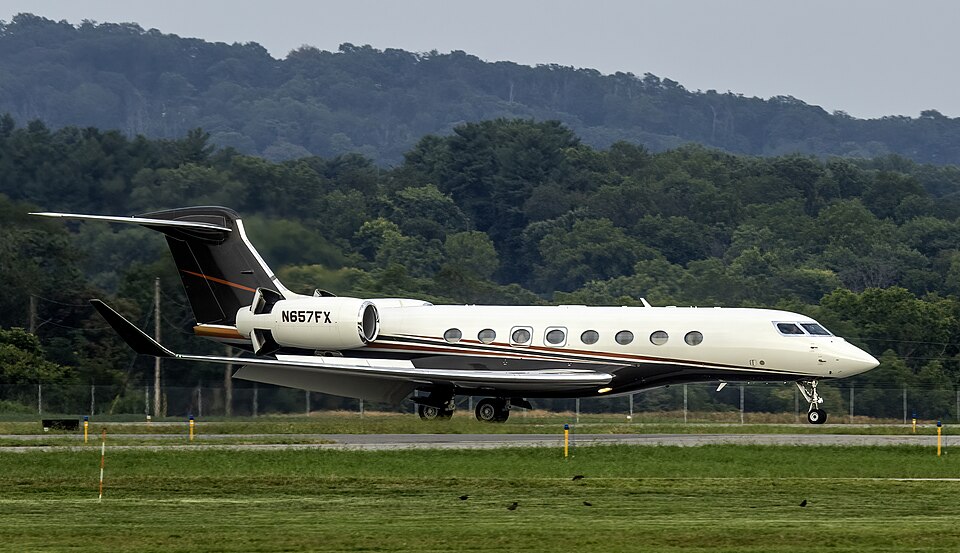
On February 12, 2025, the last Gulfstream G650 rolled off the production line in Savannah, Georgia. The moment closed a run of more than 13 years for a jet that had become a kind of moving office for the highest tier of private aviation: founders, investors, media owners, athletes and family offices with calendars spread across continents.
The G650 was not the largest private aircraft a billionaire could buy. A Boeing Business Jet or Airbus Corporate Jet offers more floor space. It was not cheap, either. JetAtlas figures put the original G650 new price at $64.5 million, with a typical hourly variable cost of about $4,900. The extended-range G650ER pushes operating cost higher.
Yet the aircraft found a sharper sweet spot. It could cross oceans at airliner speeds, use more airports than a converted airliner, and still give passengers a true long-haul cabin. That combination explains why the G650 family became shorthand for the modern billionaire jet.
The G650 hit the billionaire mission almost exactly
Billionaires rarely buy aircraft for one route. They buy time over a year: a board meeting in New York, a plant visit in Texas, a dinner in London, a family stop in the Mediterranean, a speech in Singapore. The G650’s pitch was that many of those trips could happen nonstop, without moving into an airliner-sized aircraft.
The baseline G650 is a 7,000-nautical-mile aircraft in JetAtlas reference figures. The G650ER stretches that to 7,500 nautical miles. Gulfstream’s own G650ER data lists a long-range cruise of Mach 0.85, high-speed cruise of Mach 0.90 and maximum operating Mach of 0.925. In plain English: it can be flown for distance, or it can be flown fast when the clock matters.
That matters because the G650 is often used by people whose schedules are worth more than the aircraft’s fuel bill. Saving an hour on a transatlantic sector, landing closer to the final meeting, or avoiding a fuel stop in the middle of the night is the product.
Key reasons the aircraft fits billionaire travel:
- Range without a BBJ footprint. The G650ER can connect many city pairs that once required larger aircraft or a fuel stop.
- Speed as a practical tool. Mach 0.90 high-speed cruise is not just a number for brochures; over repeated long sectors it changes arrival times.
- Cabin space for work and sleep. The G650ER cabin can be arranged with up to four living areas, according to Gulfstream.
- Global brand recognition. Gulfstream is familiar to flight departments, lenders, insurers, brokers and buyers.
- Strong resale demand. Scarcity in 2026 has made clean examples difficult to buy quickly.
The numbers behind the appeal
The G650 is no longer the newest Gulfstream flagship. The G700 and G800 have moved above it in the catalogue, and Bombardier’s Global 7500 is a major rival. But the older Gulfstream still sits in a narrow, valuable lane: long range, high speed, established support and immediate owner recognition.
| Aircraft | Production status | Range | Max Mach | Cabin length | Typical passengers | JetAtlas new price figure |
|---|---|---|---|---|---|---|
| Gulfstream G650 | Out of production | 7,000 nm | 0.925 | 46.8 ft | 14 | $64.5 million |
| Gulfstream G650ER | Out of production | 7,500 nm | 0.925 | 46.8 ft | 14 | — |
| Gulfstream G700 | In production | 7,750 nm | 0.935 | 56.9 ft | 13 | $78 million |
| Gulfstream G800 | In production | 8,200 nm | 0.935 | 46.8 ft | 13 | $81.5 million |
| Bombardier Global 7500 | In production | 7,700 nm | 0.925 | 54.4 ft | 13 | $78 million |
The newer jets beat the G650 in specific ways. The G700 has a longer cabin. The G800 has more range. But aircraft buying is not a simple leaderboard. A buyer who wants a proven airplane now may not want to wait for a new-build delivery slot. A flight department may already know the type. A principal may prefer a cabin already configured for the way they travel.
That is why an out-of-production aircraft can remain hot. It is not nostalgia. It is utility with a known maintenance and resale story.
It arrived early and stayed relevant
The G650 entered service in 2012, and the G650ER followed in 2014. That timing gave Gulfstream a major lead in the ultra-long-range segment. Business Jet Traveler reported that by September 2022, Gulfstream had delivered the 500th aircraft in the G650 family. It also reported that the G650 and G650ER held about 80 percent of the market for business jets capable of more than 7,000 nautical miles.
Those years matter. Wealthy buyers do not only watch certification dates. They watch dispatch reliability, residual values, pilot availability, maintenance familiarity and how a model behaves after thousands of real trips. The G650 had time to build that record before newer rivals arrived in numbers.
It also carried symbols that buyers understood immediately. Gulfstream’s oval windows became an external signature. The cabin was big enough for separate zones: a forward club area, a dining or conference section, divans, a private aft compartment, lavatories and galley choices. On long flights, those zones turn into social rules. Staff can work forward. Guests can sleep aft. A principal can take calls without clearing the whole cabin.
Famous owners made it visible, but usefulness made it stick
The G650’s public image has been shaped by the names associated with it. Forbes reported in 2023 that student flight tracker Jack Sweeney had been tracking Elon Musk’s $65 million Gulfstream G650. Business Insider reported in 2024 that Michael Jordan appeared to have taken delivery of a Gulfstream G650ER with a custom paint scheme and a tail number using his initials.
Public aircraft records, operating companies and tracking data can make ownership hard to describe with absolute certainty, especially when jets are held through trusts or limited liability companies. But the wider pattern is clear: the G650 became a regular fixture around tech wealth, finance wealth, entertainment money and sports fortunes.
That visibility cuts both ways. The same ADS-B signals that help air traffic surveillance also feed a culture of online jet watching. Forbes described how some owners tried to use the FAA’s Privacy ICAO Aircraft Address program, only to find that determined trackers could still connect aircraft movements to public figures. For billionaires, the G650 solves one privacy problem by avoiding airline terminals, but it creates another when the aircraft itself becomes recognizable.
Scarcity now helps the legend
Production ending did not make the G650 irrelevant. It made good examples more interesting.
Corporate Jet Investor reported in April 2026 that the G650 resale market was being pulled by two forces: very low supply and the coming flow of owners moving into the G700 and G800. The same report said just one aircraft was available from a fleet of 592 when Jet Match was finalizing its analysis, equal to about 0.2 percent of the fleet. It also cited a 2014 G650 with a $35 million asking price that sold at asking.
That is a remarkable afterlife for a jet whose replacement is already certified. General Dynamics announced in April 2025 that the G800 had received FAA and EASA certification with an 8,200-nautical-mile range at Mach 0.85. Gulfstream delivered the first G800 later in 2025. In many product categories, that would push buyers away from the older model. In large-cabin private aviation, it can do the opposite for buyers who do not want to wait.
A used G650 may be older technology than a G800, but it is also a known aircraft available on the open market, if one can be found. For a family office or corporate flight department, that can outweigh the appeal of being first on a newer type.
Why billionaires still choose it
The G650 endures because it sits at the intersection of four billionaire requirements: time, privacy, range and liquidity.
Time is the obvious one. The aircraft can turn a punishing itinerary into a same-day or one-stop plan. Privacy is imperfect in the age of flight tracking, but a G650 still avoids commercial terminals, public cabins and airline schedules. Range gives owners options when geopolitics, weather or security concerns change a routing. Liquidity matters because even very rich buyers dislike stranded capital. A jet with an active resale market is easier to explain to advisers than a niche aircraft with thin demand.
The result is a machine that works as both transport and signal. To passengers, it is a quiet room above the weather. To brokers, it is a blue-chip asset. To plane spotters, the oval windows and long wing are enough to identify it before the registration comes into view.
The final G650 has left Savannah, but the type has not left the billionaire circuit. It still appears on ramps at Teterboro, Van Nuys, Palm Beach and Luton: white fuselage, dark window line, two Rolls-Royce engines cooling after another ocean crossing.
Sources
- AIN: End of an Era as the Last G650/650ER Rolls Off Gulfstream’s Production Line
- Business Jet Traveler: Gulfstream Delivers 500th G650/650ER
- Corporate Jet Investor: G650 market shaped by two opposing forces
- Gulfstream G650ER technical specifications PDF
- General Dynamics: Gulfstream G800 Earns FAA and EASA Certifications
- Forbes: Elon Musk May Have Given Up On Privacy For His Jet Travels
Mentioned in this story
More insights
What a jet card really costs versus charter
Jet cards buy price certainty, not automatic savings. The real comparison with on-demand charter turns on minimums, peak days, repositioning, taxes, aircraft category and the cost of tying up cash.

How Private Jets Handle Turbulence and Storms
Private jets do not defeat bad weather so much as plan around it: crews use forecasts, radar, air traffic help and conservative cabin procedures to keep storms off the nose and passengers in their seats. The aircraft’s altitude, wing, avionics and operating rules all matter, but the simplest protection remains a fastened belt.

Inside the training of a business-jet flight attendant
Business-jet flight attendants train for far more than polished service: fire, smoke, medical events, ditching, evacuation, food safety and the oddities of each cabin. The job is often optional by regulation on smaller jets, but the training is built around the moment when the pilots are busy and the cabin has to act.