The 60-Year Story of the Business Jet in 10 Aircraft
From a Swiss fighter jet that became the Learjet to a Global 8000 that touched Mach 1, the business jet has been reinvented roughly once a decade. Ten aircraft explain how a rich man's toy became an 854-a-year industry.
By JetAtlas · Published 2026-08-04 · 8 min read · How we check facts
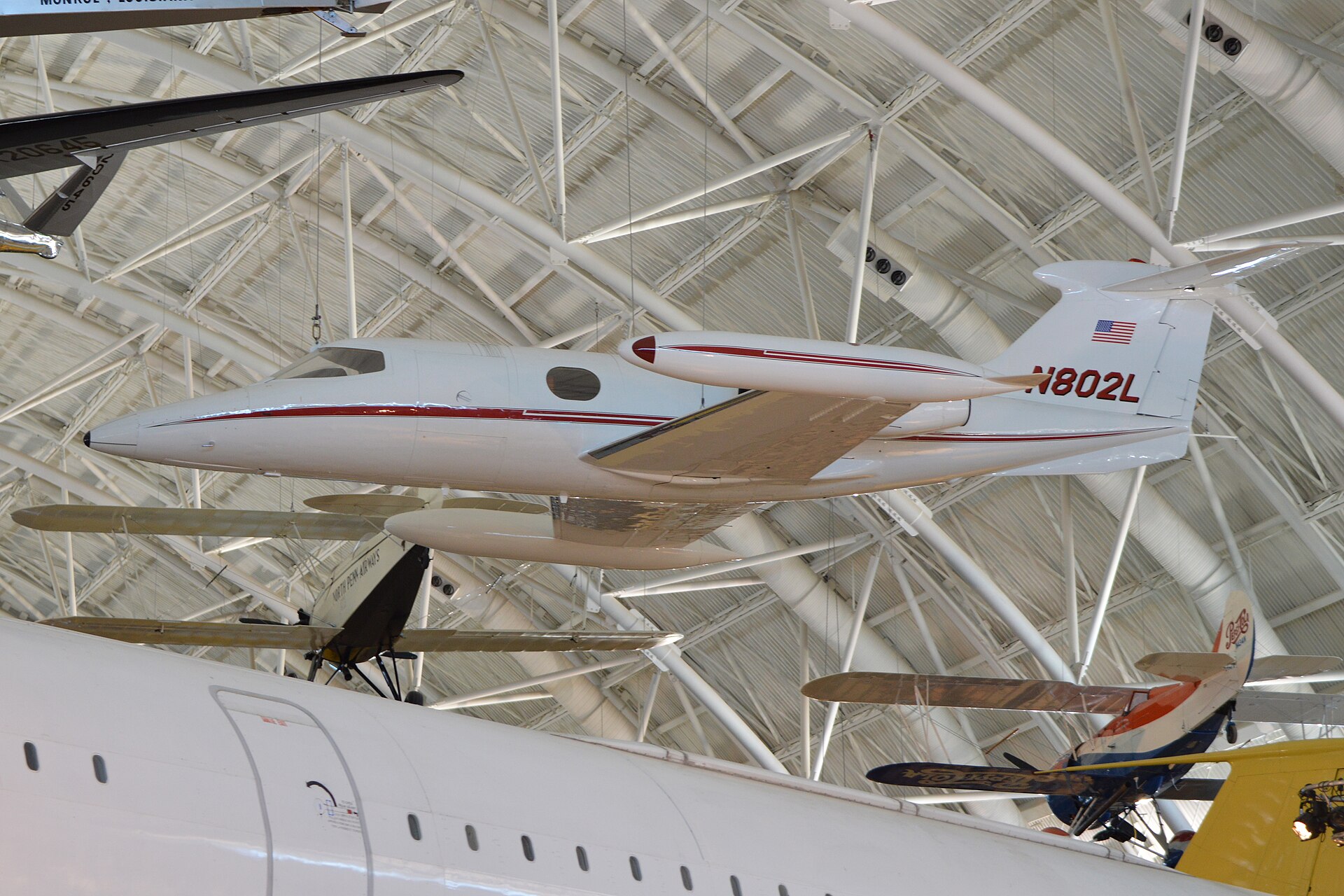
In 1963 a business jet was a novelty that a few dozen companies owned and airlines considered a fad. In 2025 manufacturers delivered 854 of them, worth most of a record $31 billion in general-aviation airplane billings, and the largest of them could fly from New York to Singapore without stopping. The story of how that happened can be told in ten aircraft. Each one changed what customers expected, and each one's rivals had to respond.
A brief prologue: the first purpose-built business jets were the Lockheed JetStar (first flight 1957) and the North American Sabreliner (1958). They proved the idea and sold modestly. The revolution came from a man who had never built an aircraft.
1. Learjet 23 (first flight 7 October 1963)
Bill Lear, a radio and autopilot inventor with no aircraft company, bought the rights to a cancelled Swiss fighter, the FFA P-16, and turned its wing into a six-passenger jet built in Wichita. The Learjet 23 was small, fast (over 500 mph), climbed like a fighter, and cost about $650,000, a fraction of a JetStar. It also came with Lear's genius for publicity: within a few years "Learjet" was a generic word, and Frank Sinatra owned one. Deliveries began in October 1964; 101 were built before the improved Model 24 replaced it. The Learjet 23 created the light-jet category and the idea that a mid-sized company could own a jet.
2. Hawker Siddeley HS.125 (first flight 13 August 1962)
The British answer, developed by de Havilland and flown a year before the Learjet, took the opposite approach: a roomier cabin, docile handling, and a wing that could use short runways. It was less exciting and more useful, and it became the longest-running business-jet line in history. Renamed the Hawker through several owners, it was built in Britain and then Wichita until 2013, with more than 1,600 delivered. The 125 established the midsize cabin and the idea that a business jet should be comfortable rather than merely fast.
3. Dassault Falcon 20 (first flight 4 May 1963)
Dassault, a fighter manufacturer, applied Mirage engineering to a 10-seat jet and won the endorsement that made it: Charles Lindbergh, consulting for Pan Am, saw the prototype and telegrammed "I've found our bird". Pan Am's business-jet division ordered 40. The Falcon 20 also became the first aircraft of a small Memphis freight start-up called Federal Express. It established the Falcon line and the French habit of building business jets that handle like fighters.
4. Gulfstream II (first flight 2 October 1966)
Grumman's Gulfstream I was a turboprop. The II put two Rolls-Royce Spey engines on a new swept wing and a large stand-up cabin, and created the large-cabin, long-range category in one move. It could cross the Atlantic. The Gulfstream III, IV, and V that followed were evolutions of the same idea: the biggest cabin and the longest legs in the market, at the highest price.
5. Cessna Citation (first flight 15 September 1969)
Cessna entered the jet market from below. The Citation 500 was slow (pilots called it the Slowtation), but it was cheap, quiet, easy to fly, certified for a single pilot, and could use the short runways that Learjets could not. It sold to owner-pilots and small companies that had never considered a jet, and the Citation family has since passed 8,000 deliveries, more than any other business-jet line.
6. Canadair Challenger 600 (first flight 8 November 1978)
Bill Lear again, indirectly. Lear sketched a widebody business jet, the LearStar 600, and sold the concept to Canadair in Montreal. The result was the Challenger, with the widest cabin of any purpose-built business jet of its era and a supercritical wing. The programme nearly bankrupted Canadair and led to its purchase by Bombardier, but the airframe went on to become the Challenger 604, 605, 650, and, stretched, the CRJ regional airliner. The Challenger established that cabin width was a selling point worth paying for.
7. Bombardier Global Express (first flight 13 October 1996)
By the mid-1990s Gulfstream's GV and Bombardier's Global Express were racing to build the first business jet that could fly 6,500 nautical miles: New York to Tokyo non-stop. Both entered service around 1998, and the ultra-long-range category was born. The Global's wider cabin and the GV's earlier certification split the market in two, a duopoly that persists with the G700 and Global 7500.
8. Cessna Citation X (first flight 21 December 1993)
The speed chapter. Cessna, tired of the Slowtation jokes, built a Mach 0.92 super-midsize jet with airliner engines and a 37-degree swept wing. Arnold Palmer took the first one. It was the fastest business jet in the world for two decades, upgraded to Mach 0.935 as the X+, and it sold modestly, 339 aircraft, because its cabin was narrow and its fuel burn was high. The Citation X taught the industry that speed wins headlines and cabins win orders.
9. Gulfstream G650 (first flight 25 November 2009)
The G650 entered service in 2012 and reset every large-cabin benchmark at once: Mach 0.925, 7,000 nautical miles (7,500 as the G650ER), a cabin 8 feet 6 inches wide, a 51,000-foot ceiling, and a cabin altitude below 5,000 feet at the top. It was the first business jet to command a premium on the used market over its own list price, with early positions reselling for millions above cost. Over 500 have been built.
10. Bombardier Global 8000 (entered service December 2025)
The current state of the art. The Global 7500 of 2018 had already pushed range to 7,700 nautical miles and introduced four full living zones. The Global 8000 stretches that to 8,000 nautical miles and a Mach 0.94 cruise, faster than any civil aircraft since Concorde; a test aircraft exceeded Mach 1 in a controlled dive in 2021. Transport Canada certified it in November 2025 and the FAA on 19 December 2025. Its rival, the Gulfstream G800, delivers 8,000 nautical miles at Mach 0.85 and a lower cabin altitude. Sixty-two years after the Learjet 23, the two companies are once again arguing over a few knots and a few hundred miles.
The pattern across six decades
| Decade | Defining aircraft | What changed |
|---|---|---|
| 1960s | Learjet 23, HS.125, Falcon 20, Gulfstream II | The category is invented; speed, comfort, and range each get a champion |
| 1970s | Citation 500, Challenger 600 | Jets for small companies; the wide cabin |
| 1980s | Gulfstream IV, Falcon 900, Learjet 55 | Glass cockpits, trijets, 4,000-nm range |
| 1990s | Global Express, GV, Citation X | Intercontinental range; the speed race |
| 2000s | Falcon 7X, Phenom 300, Citation Mustang | Fly-by-wire; very light jets; Embraer arrives |
| 2010s | G650, Global 7500, Pilatus PC-24 | 7,000-plus nm; four-zone cabins; jets on gravel runways |
| 2020s | G700, Global 8000, Falcon 10X | 8,000 nm, Mach 0.94, five living areas |
The ones that nearly made the list
- Gulfstream IV (1985): the first business jet with a full glass cockpit, and the aircraft that made 4,000-nautical-mile trips routine
- Dassault Falcon 7X (2005): the first fly-by-wire business jet, with fighter-derived flight controls
- Embraer Phenom 300 (2008): the best-selling light jet of the past decade, and the aircraft that made a Brazilian airliner builder a business-jet major
What has not changed
The Learjet 23 carried six people at 500 mph for about 1,800 miles and cost about $650,000, roughly $6.5 million in 2026 dollars. A Phenom 300E carries six to eight people at 520 mph for 2,000 miles and costs about $12 million. Sixty years of engineering bought a quieter, safer, far more efficient aircraft with a much better cabin, and the fundamental product, a small group of people going exactly where they want exactly when they want, is the same one Bill Lear sold. The Learjet name itself ended in 2022 when Bombardier stopped production. The idea did not.
Mentioned in this story
More insights

What luxury really means on a VIP airliner
A VIP airliner is not just a larger private jet. Its real luxury is measured in certified space, sleep, quiet systems, completion time, crew workflow and the ability to carry a household or delegation across oceans without turning the cabin into theatre.
Farnborough, Biggin Hill or Luton: choosing a London private jet airport
Compare the final ground destination, operating window, aircraft requirements and handling arrangements before choosing a London airport.
Teterboro, Westchester or Morristown: choosing a New York private jet airport
Compare the airport and ground destination together, then check handling, timing, noise requirements and a fallback before accepting a charter proposal.