How Pilots Get to Fly a Gulfstream: Training, Hours, Type Ratings, and the $400,000 Seat
Nobody walks out of flight school into the left seat of a G650. Here is the 10-to-15-year path, what each step costs, what a corporate captain earns, and what a working day actually looks like.
By JetAtlas · Published 2026-07-21 · 8 min read · How we check facts
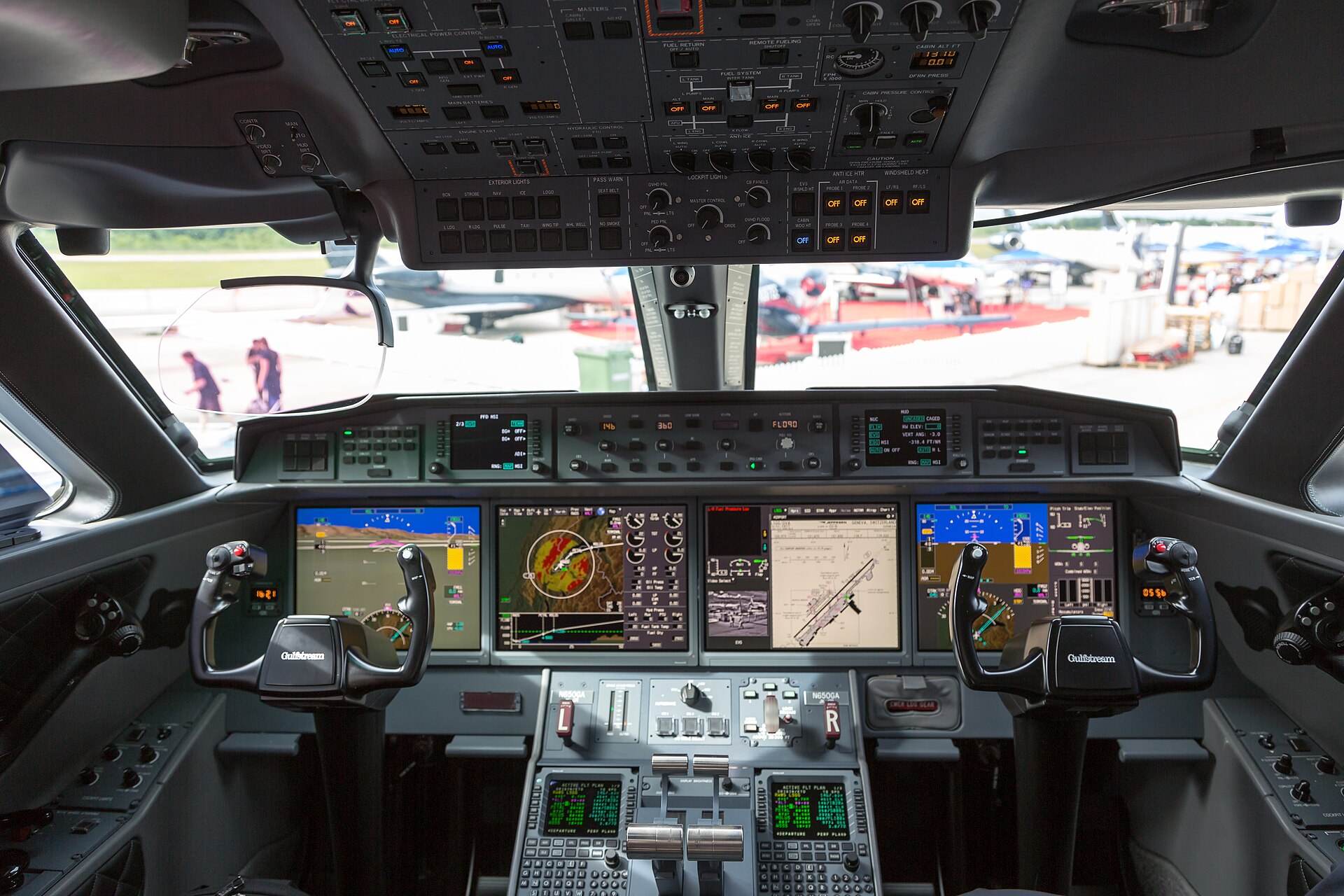
The pilot who flies a billionaire's Gulfstream to Tokyo did not start there. She probably started in a Cessna 172 at a small airport, paid for it herself, taught other people to fly for two years at $30 an hour, flew freight or a King Air for a regional company, spent a decade in progressively larger aircraft, and passed an $80,000 course to be allowed to touch the Gulfstream. Then someone died, retired, or moved, and she got the seat.
Here is how it works, with numbers.
Step one: licences and the 1,500-hour wall
The path begins with a private pilot licence (roughly $12,000 to $18,000 in the U.S. in 2026 and 60 to 80 flight hours), then an instrument rating, then a commercial licence, then a multi-engine rating. All-in, a self-funded student reaches a commercial licence with about 250 hours for $80,000 to $120,000. University aviation programmes bundle this with a degree for $150,000 to $250,000.
Then comes the wall. Since 2013 U.S. rules have required an Airline Transport Pilot certificate, and with it 1,500 hours of flight time, to fly as a crew member for an airline. Business aviation under Part 135 charter rules requires 1,200 hours for a captain and less for a first officer, and Part 91 private flying technically requires only a commercial licence, but insurers set the real bar: an underwriter will not cover a jet flown by a 400-hour first officer.
Most pilots bridge the gap by instructing (1,000 hours in two years at low pay), flying skydivers, towing banners, or flying cargo in small twins. Some get on with a charter operator flying a King Air or Citation as a second-in-command at around $60,000 a year.
Step two: the first jet and the type rating
Every jet over 12,500 pounds requires a type rating, a certificate specific to that model. Getting one means two to four weeks at a training centre (FlightSafety International, CAE, and Simcom dominate the business-jet market), split between classroom systems training and a full-motion simulator, ending with a check ride in the simulator.
The cost depends on the aircraft:
| Type rating (initial) | Duration | Approx. cost (2026) |
|---|---|---|
| Cessna Citation CJ series (single-pilot) | 2 to 3 weeks | $25,000 to $35,000 |
| Citation XLS / Phenom 300 | 3 weeks | $35,000 to $45,000 |
| Challenger 350 / 3500 | 3 to 4 weeks | $45,000 to $60,000 |
| Gulfstream G550 | 4 weeks | $60,000 to $75,000 |
| Gulfstream G650 / G700 | 4 to 5 weeks | $75,000 to $95,000 |
| Global 7500 / 8000 | 4 to 5 weeks | $75,000 to $95,000 |
Costs are JetAtlas estimates from training-centre pricing and operator budgets; employers pay in nearly all cases. Pilots who pay for their own type rating on a Gulfstream are rare and usually regret it.
The employer's investment does not end there. Regulators and insurers require recurrent training, typically a week in the simulator every six or twelve months, at $15,000 to $40,000 a year per pilot on a large-cabin type. A flight department with four Gulfstream pilots spends well over $100,000 a year keeping them current.
Step three: the long middle
The middle of a corporate pilot's career is a slow climb up the aircraft ladder: Citation to Hawker or Learjet, to Challenger or Falcon, to Gulfstream or Global. Each step typically requires 500 to 1,000 hours on the previous type, a clean record, and a job opening. A Gulfstream G650 captain at a major flight department will typically have 8,000 to 15,000 hours, be in their late 40s or 50s, and have flown four or five types.
The other route in is the airlines. Some corporate captains are former airline pilots who left for a schedule, a bigger salary at a specific flight department, or an interest in international flying without a seniority list. Some go the other way; the mandatory airline retirement age of 65 sends a stream of experienced captains into corporate cockpits every year, since business aviation has no such limit.
What it pays
Business aviation pay is not published on a scale the way airline pay is; it is negotiated, varies by aircraft and employer, and has risen sharply since 2021 as airlines poached corporate pilots. Rough 2026 U.S. figures:
- Light-jet captain (Citation CJ, Phenom): $110,000 to $170,000
- Midsize and super-midsize captain (Challenger 350, Praetor 600): $160,000 to $240,000
- Large-cabin and ultra-long-range captain (G650, Global 7500): $250,000 to $400,000
- First officer on a large-cabin jet: $130,000 to $240,000
- Chief pilot or director of aviation at a large corporate flight department: $300,000 to $450,000-plus
One large operator's published scale for the G700 and G800 runs from $187,700 for a first-year first officer to $434,500 for a senior captain, and job postings for G550 and G650 captains at $275,000 to $340,000 are routine. Fractional operators pay less than the best corporate flight departments but offer schedules and seniority. Charter operators pay least and work pilots hardest.
What a day looks like
A corporate flight department day starts about two hours before the passengers arrive. The crew checks weather and NOTAMs, files the flight plan (international trips need permits, customs arrangements, and handling agents booked days ahead), reviews the aircraft's maintenance status, and does a walk-around preflight. The cabin attendant, if there is one, loads catering and sets the cabin.
The passengers arrive 15 minutes before departure and the aircraft leaves. A domestic trip might be Chicago to Los Angeles, a four-hour flight, a five-hour wait at an FBO, and a four-hour flight home: a 14-hour duty day. Part 91 corporate flying has no regulatory duty limits, so responsible flight departments set their own, usually a 14-hour duty day and 10 hours of rest. Part 135 charter has legal limits: 14 hours of duty, 10 hours of rest, and a maximum of 8 or 10 flight hours depending on crew.
International trips are different. A Gulfstream flying New York to Hong Kong carries three or four pilots who rotate through a crew rest area on a 16-hour flight. On arrival the crew stays in a hotel for three or four days until the boss is done, then flies back. A senior Gulfstream captain might be away from home 12 to 15 nights a month.
The variable that surprises outsiders is the waiting. Corporate pilots spend a great deal of time in FBO crew lounges and hotel rooms, on call, unable to go far, unpaid for the waiting in any explicit way. It is the reason the job pays what it does.
The unglamorous truths
- You are not the client's friend. The best corporate pilots are discreet to the point of invisibility. Owners who fly with the same crew for a decade may know their pilots' names and little else.
- The aircraft is a $70 million responsibility. A hard landing, a runway excursion, or a violation ends a career.
- It is a small world. There are perhaps 2,000 to 3,000 G650-rated pilots on Earth. Reputations travel.
- The pilot shortage is real. Airlines hired aggressively through 2025, flight departments lost captains, and pay rose accordingly. For a 25-year-old starting today, the path to a Gulfstream is shorter than it has been in a generation. It is still a decade.
Mentioned in this story
More insights

What luxury really means on a VIP airliner
A VIP airliner is not just a larger private jet. Its real luxury is measured in certified space, sleep, quiet systems, completion time, crew workflow and the ability to carry a household or delegation across oceans without turning the cabin into theatre.
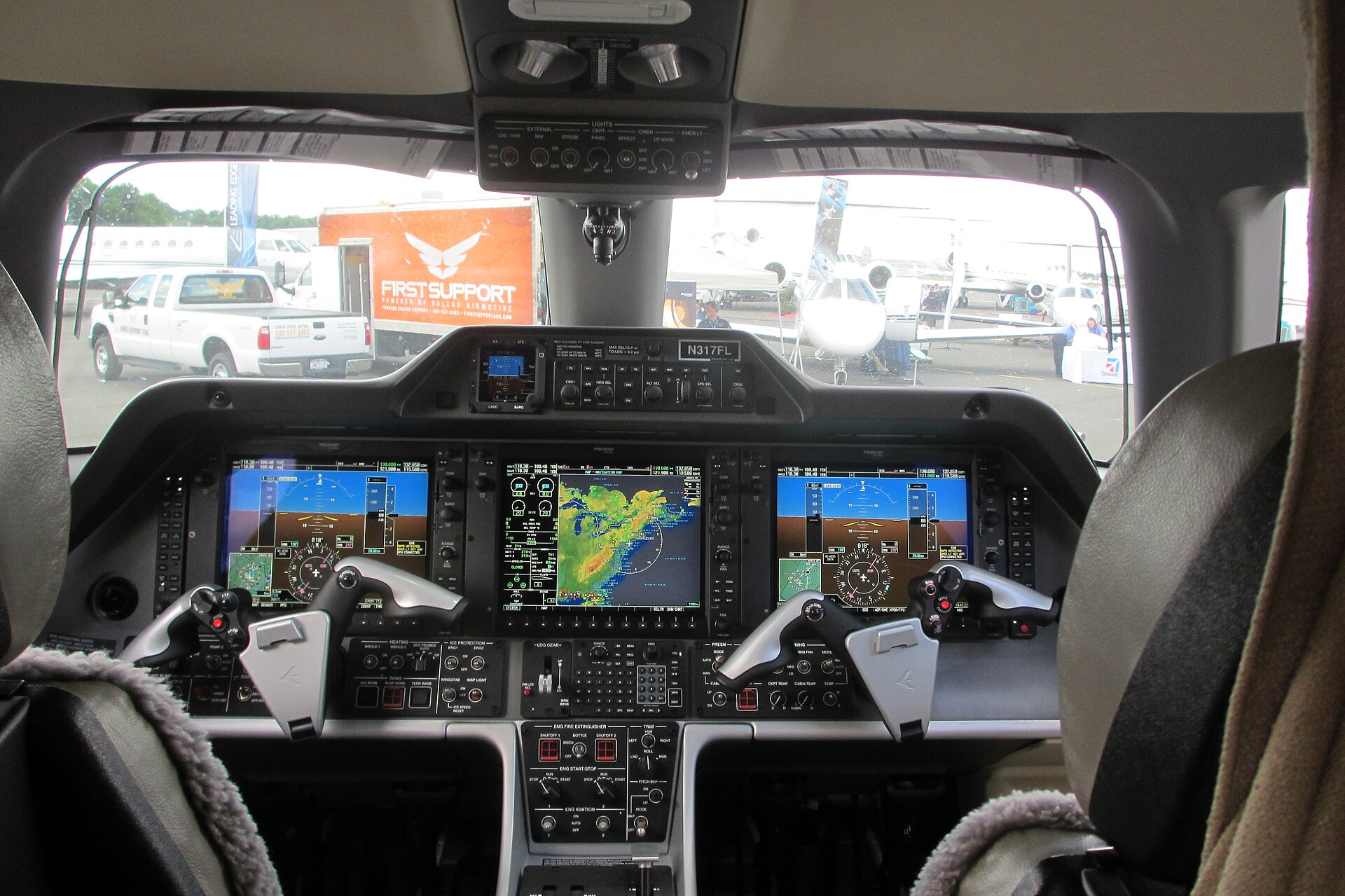
Farnborough, Biggin Hill or Luton: choosing a London private jet airport
Compare the final ground destination, operating window, aircraft requirements and handling arrangements before choosing a London airport.
Teterboro, Westchester or Morristown: choosing a New York private jet airport
Compare the airport and ground destination together, then check handling, timing, noise requirements and a fallback before accepting a charter proposal.